Introduction
Welcome to Walpole, New Hampshire—a village whose quiet streets and dignified buildings offer one of the most intact windows into the aspirations of early nineteenth-century New England. As you begin this walking tour, you’ll notice a recurring architectural language: bold pediments, columned porticos, crisp white façades, white clapboard siding and simple, harmonious proportions. These are the hallmarks of Greek Revival architecture, the style that flourished in the United States during the early decades of the 1800s and shaped Walpole’s appearance at the moment when the town was entering its greatest era of prosperity.
In communities across New England, Greek Revival architecture embodied far more than decorative taste; it expressed the values and ambitions of a young republic. Americans looked to ancient Greece as the birthplace of democracy, and in adopting its forms they aligned their civic buildings, churches, and homes with ideals of self-governance, rational order, and integrity. In Walpole, this architectural vocabulary helped signal the town’s confidence in its future and its belief in the virtues of citizenship, learning, and public life. These same ideals also shaped the intellectual currents of the era, ideas that would later prompt New Englanders to look beyond institutions and outward forms, toward nature, conscience, and the inner life, themes we will return to at the close of this tour.
At the same time, Greek Revival’s adaptability made it ideal for the expanding settlements of the Connecticut River Valley. Builders could translate its clear forms into everything from grand meetinghouses to modest dwellings, giving Walpole a unified visual character that has endured for nearly two centuries. As we walk through the village, you’ll see how this style contributed to Walpole’s distinct sense of place—a village where democratic ideals are expressed in everyday buildings, where simplicity creates beauty, and where the architecture mirrors New England’s long history of community life, public responsibility and cultural ambition.
On this tour you will encounter a range of architectural styles, among them the earlier, more formal Georgian and Federal styles, and the later Romantic expressions of the Italianate, Gothic and Queen Anne styles. Each contributes its own chapter to Walpole’s architectural story. Yet despite these variations, the village’s overall character remains firmly rooted in the Greek Revival, whose clean lines and balanced proportions form the prevailing visual language of the streetscape.
This tour highlights not only individual buildings, but also the people whose lives, beliefs, and aspirations they embody, revealing how architecture, landscape, and ideas together shaped Walpole’s enduring character. We hope you will appreciate how Greek Revival ideals helped shape Walpole into a village of enduring architectural and historical distinction.
Walking Time Estimate
The tour comprises approximately 40 stops arranged in a loop through the village center, covering roughly 2.0 to 2.5 miles of walking distance. The route begins at 20 Westminster Street, proceeds east through the business district, backtracks on Westminster Street to Elm Street, loops south through Elm Street and Washington Street, crosses to Middle Street, turns south on Main Street with a detour to Wentworth Road, another detour up Union Street, continues north along Old North Main Street and returns to Fountain Square.
Overview-only tour (reading the brief paragraph at each stop, pausing to look at each building): approximately 1.5 to 2 hours. This assumes 1–2 minutes per stop for reading and observation, plus walking time between stops at a leisurely pace.
Full tour (following links to read the detailed entries at each stop): approximately 3 to 4 hours. Several entries — the Aaron Howland House, Walpole Academy, the Josiah Bellows House, Fountain Square — warrant extended reading time.
Shortened route: Visitors pressed for time may wish to focus on the Main Street corridor (William Buffum House, Walpole Academy, Philip Peck House, Bridge Memorial Library, Isaiah Thomas Print Shop) and Old North Main Street (Historic House, Silas Bates House, Josiah Bellows House), concluding at Fountain Square. This abbreviated loop covers roughly 1 mile and can be walked in about 45 minutes to 1 hour.
Notes: The terrain is generally flat with paved sidewalks throughout the village center. The Wentworth Road/Knapp House detour involves a brief uphill walk, as do the detours up Union Street and High Street. Rest opportunities include benches at the Town Common, Fountain Square, and the Walpole Foundation Pocket Park (78 Main Street). The Benjamin Bellows Homestead (297 Main Street) is too far from the village to be included in this walking tour and is best reached by car; however, given Bellows’s role as Walpole’s founder, we are obliged to mention him. If the journey is undertaken on foot, including the Bellows Homestead adds approximately 0.5 miles round trip along a road without continuous sidewalks.
Begin Your Tour
Each listing contains a brief overview of the site and its significance. Headings contain a link to each site’s page where you will find details about the site and its history. Begin the tour at the Aaron Howland House at 20 Westminster Street.
20 Westminster Street — Aaron Howland House
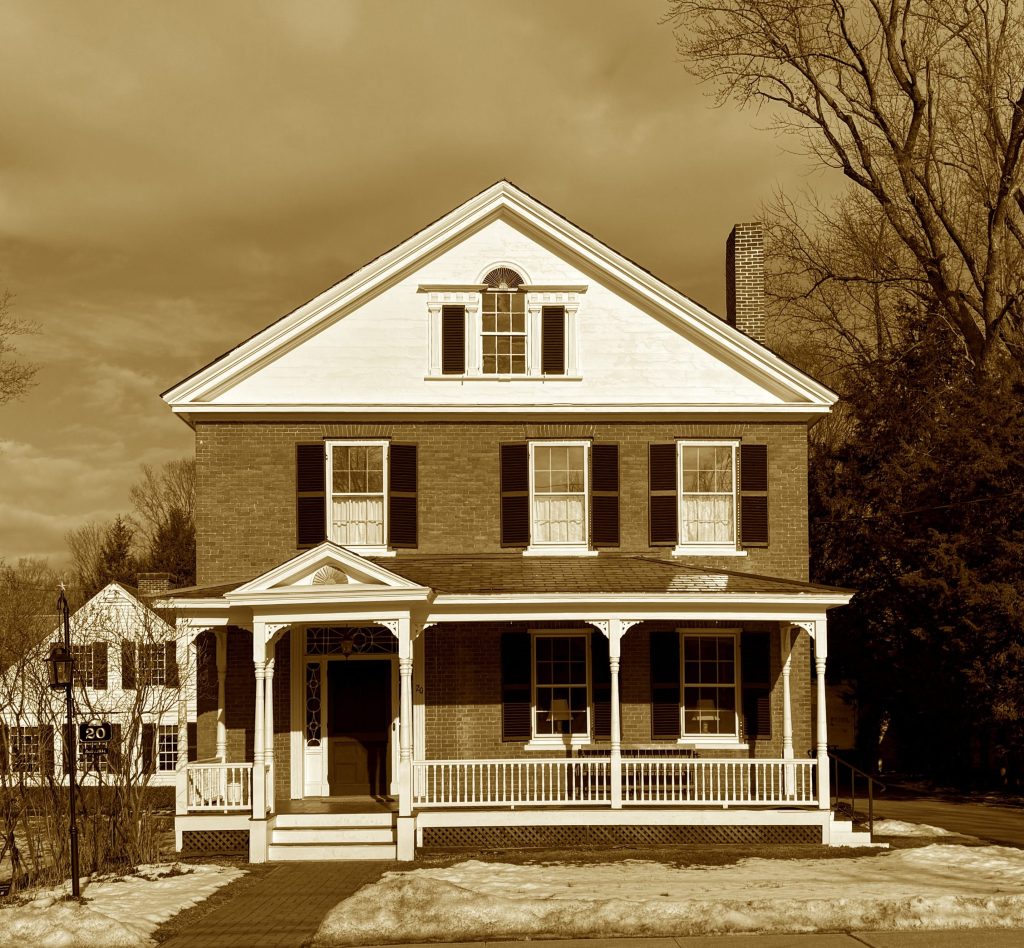
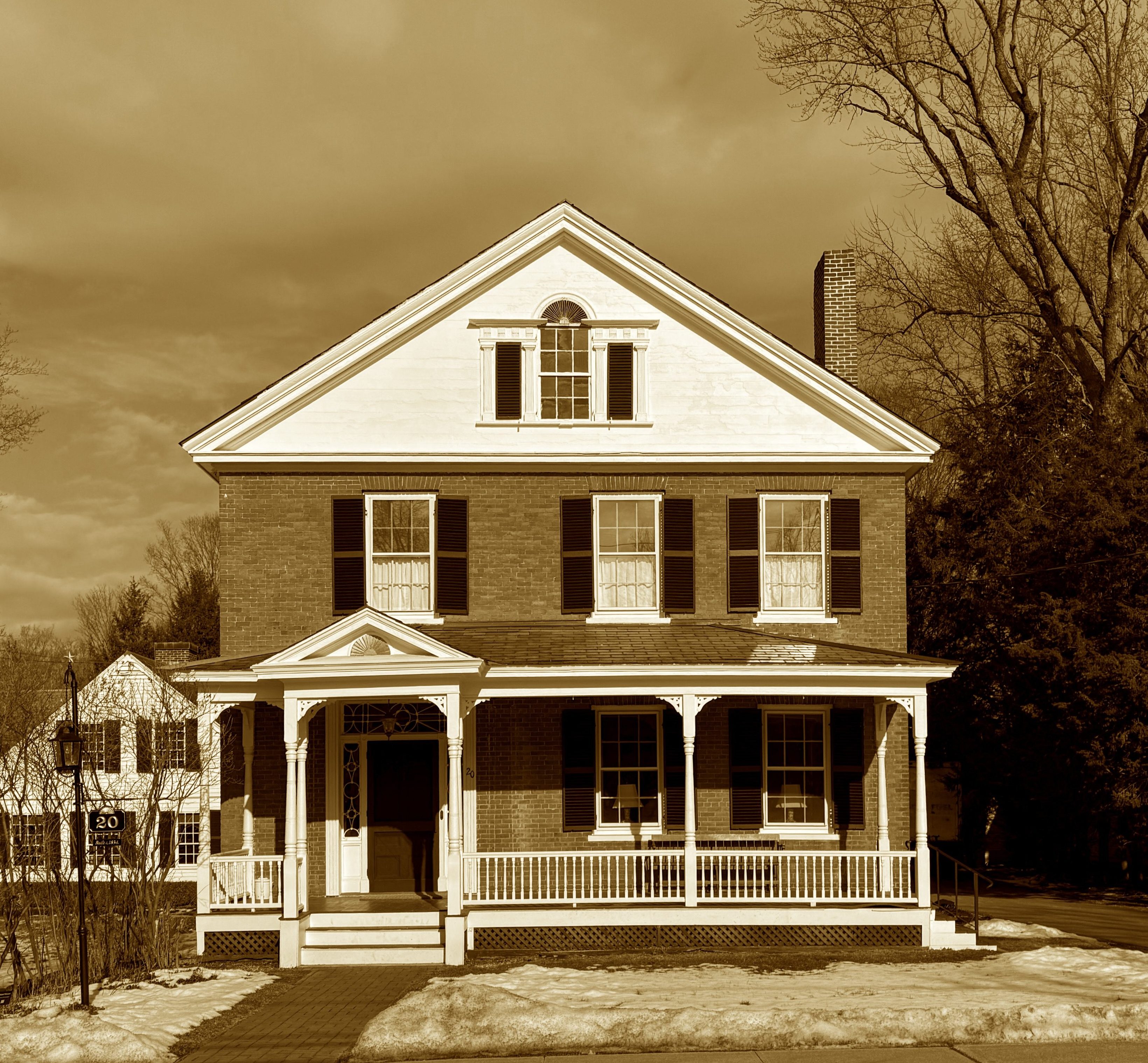
Built in 1834 by master craftsman Aaron P. Howland, this distinguished brick residence is one of Walpole’s finest expressions of Greek Revival architecture. Its prominent siting near the junction of Westminster Street and Main Street places it at the historic crossroads of the village’s transportation, commerce and civic life. Architectural details inspired by Asher Benjamin, most notably the pedimented façade with a Palladian window, reflect Howland’s skill and the ambitions of early nineteenth-century Walpole. Later owners, including stagecoach entrepreneur Otis Bardwell, former owner Jennie Spaulding, and preservationist Guy H. Bemis, link the house to successive chapters of the town’s economic, social, and preservation history.
Walk East on Westminster Street

In the early nineteenth century, much of the block where the Aaron Howland House now stands was part of a large tract owned by Dr. Ebenezer and Esther Crafts Morse, spanning most of the area bounded by Main, Turnpike, Elm and Westminster Streets. They sold the property, minus a few existing lots, to Nathaniel Holland, who operated a tavern on the site. Holland’s tavern property, including its buildings and roughly three acres, was sold to George Huntington in 1833, who continued the tavern operation and began subdividing the land. His sales of house lots along Westminster Street and north of the tavern on Main Street created the parcels that would eventually host 20, 16, 14, 10, and 8 Westminster Street. These subdivisions established the neighborhood that would later include the Aaron Howland House.
16 Westminster Street — Griswold Place
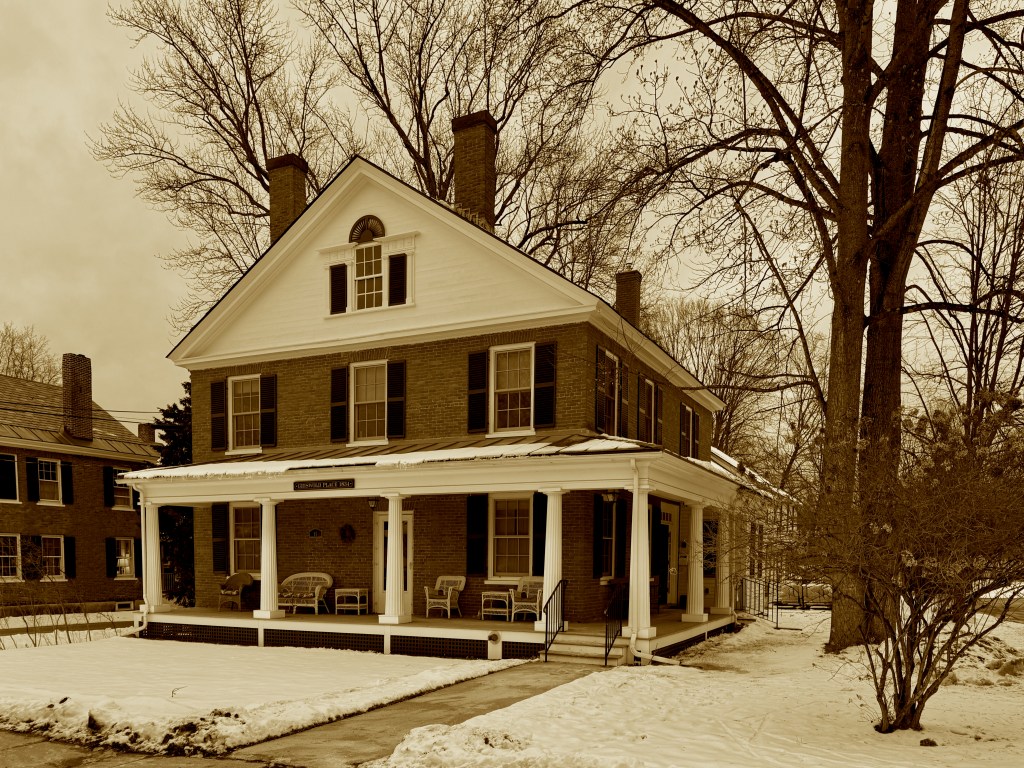
Built circa 1834 for tailor Jonathan Weymouth, this refined brick house is a close architectural companion to the neighboring Aaron Howland House and is widely attributed to Howland’s hand. Its pedimented front gable with a Palladian window, along with its balanced proportions and restrained Greek Revival detailing, speaks to the ambitions of the inhabitants of early nineteenth-century Walpole. Later known as the Rodney Wing House and today as Griswold Place, the building has adapted to changing uses, including service as an annex to the Walpole Inn during the town’s heyday as a regional destination. Now owned by The Walpole Foundation, it continues to serve the community while preserving the historic character of Westminster Street.
14 Westminster Street — Tin Shop Lot

Known historically as the Tin Shop Lot, this narrow parcel reflects Walpole’s nineteenth-century village economy rooted in skilled trades and everyday commerce. Acquired by Aaron P. Howland in 1833 and defined by a distinctive lot line established in 1835, the site was long occupied by a tin shop serving essential household and industrial needs. Over time, successive tenants produced and repaired stoves, pipes, cookware, pumps, and other metal goods vital to daily life. Though modest in scale, the site preserves the story of the artisans and small businesses that sustained Walpole as a working village.
10 Westminster Street — Village Tavern

This prominent parcel was part of the historic Village Tavern property and has long been a hub of changing commercial life in Walpole. During the nineteenth century it housed a boot and shoe shop, meat market, furniture store, oyster saloon, drug store, and even a dancing hall as the village’s needs and tastes evolved. Fires, changing ownership, and shifting enterprises continually reshaped the building while preserving its role as a center of activity. Under the stewardship of The Walpole Foundation, the site continues its mixed-use tradition with a restaurant at street level and apartments above, anchoring the vitality of Westminster Street.
8 Westminster Street — Old Fire House

Built in the early 1950s on a parcel sold by Emma Graves, whose late husband Russell had operated a livery stable with 32 horses on this site, this modest mid-century building served for decades as Walpole’s fire station. Its construction marked the village’s transition from horse-powered services to modern municipal infrastructure. When emergency services outgrew the space, the building was retired and acquired by The Walpole Foundation, which converted it to commercial use. Now home to an Edward Jones office, the former firehouse illustrates the continuing evolution of Westminster Street from a nineteenth-century service corridor to a mixed residential and commercial streetscape.
11 Westminster Street — Site of The Walpole Inn
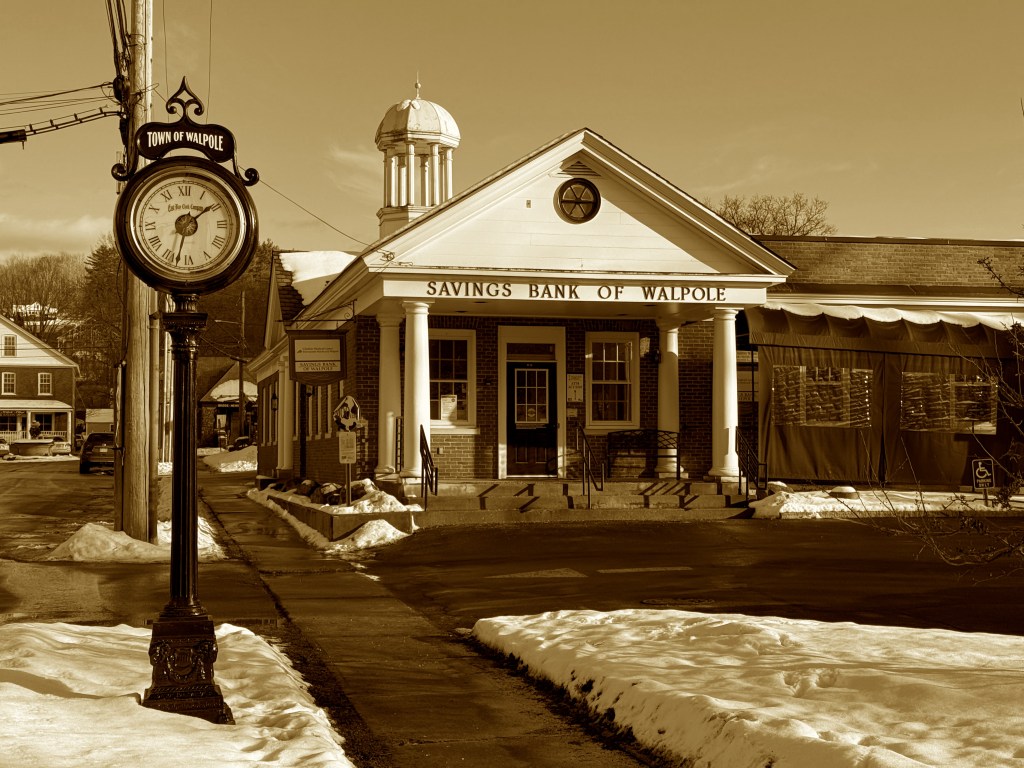

Originally developed circa 1841 as a substantial private residence for William Mitchell, this prominent site later became one of Walpole’s most important landmarks. In 1902, Copley Amory transformed the house into The Walpole Inn, expanding it into a popular destination while also advancing modern village infrastructure through new water and sewer systems. For decades, the Inn served travelers, summer residents and social life in Walpole before falling into decline. Although the building was demolished in 1962, the site continues to serve the community as the home of the Savings Bank of Walpole and the Dartmouth-Hitchcock Clinic, carrying forward its long civic role.
51 Main Street — Jake’s Market & Deli

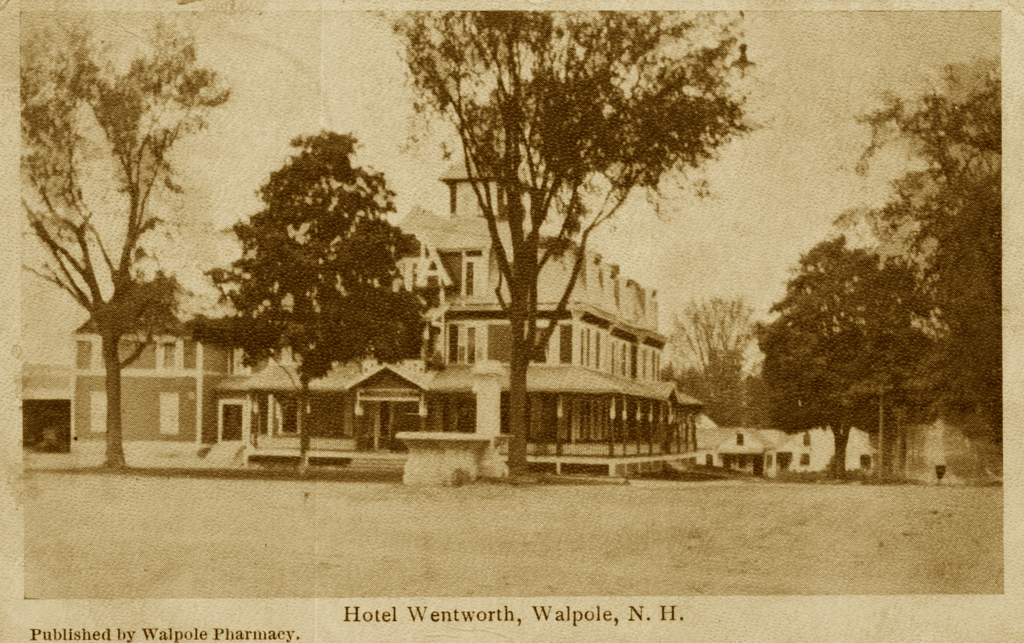
This busy corner has been a center of travel and commerce in Walpole since the early nineteenth century. First established as Craft’s Tavern before 1793, and later known as The Hotel Wentworth, it served as a major stagecoach stop on routes linking Boston, the Connecticut River Valley, and northern New England. Closely associated with stage operator Otis Bardwell, the tavern provided lodging, meals, and stabling at a time when Walpole was a vital transportation crossroads. Although the original building is gone, today’s market and filling station continue the site’s long tradition of serving travelers and the village alike.
Turn around and walk West past 20 Westminster Street
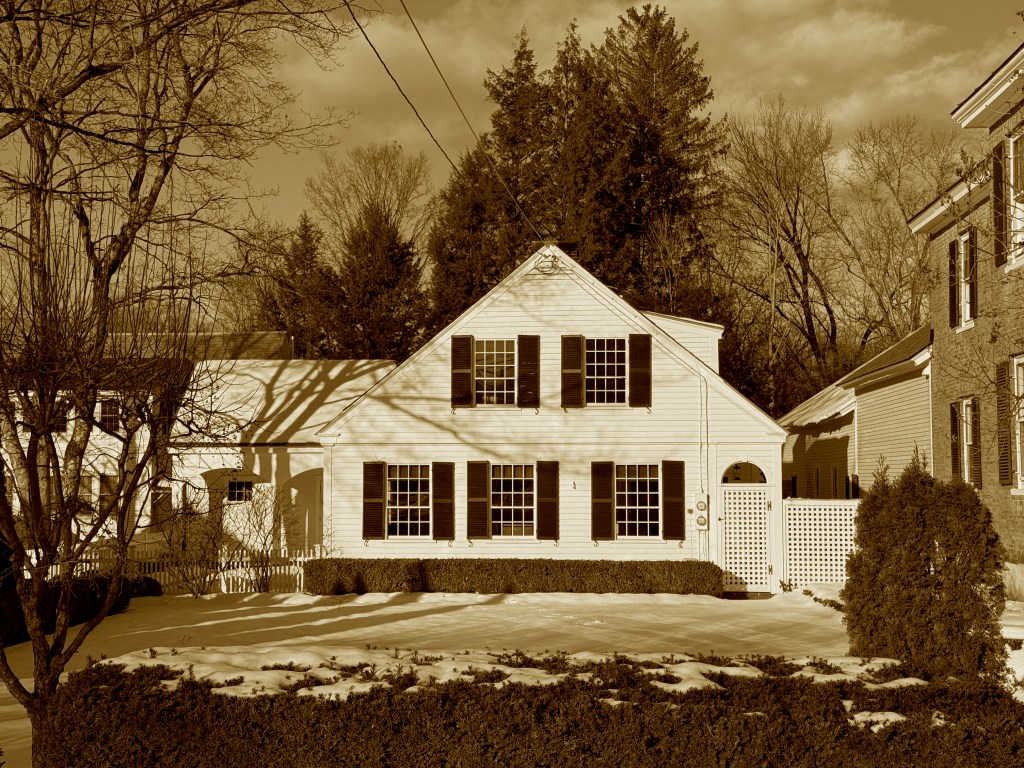
Originally built circa 1790 in neighboring Westmoreland, this house was carefully dismantled and relocated to Walpole about 1940 by P. Lucile Tucker (Hawley) Bragg. Reassembled on Westminster Street, the timber-frame structure retains the proportions and character of a late eighteenth-century New England dwelling. Local lore surrounding its placement, reportedly positioned deliberately close to the neighboring Aaron Howland House, adds a human dimension to its history. The house contributes an earlier architectural layer to the streetscape, linking Westminster Street to the region’s colonial building traditions and personal village stories.
24 Westminster Street — Susan Robeson House

Built circa 1821 for Susan Bellows Robeson, granddaughter of Col. Benjamin Bellows, Walpole’s founder, this refined house is considered the town’s earliest example of Greek Revival architecture. Modest in scale yet elegant in proportion, it reflects both changing architectural tastes and the aspirations of Walpole’s early nineteenth-century families. The home is closely associated with Susan Robeson’s strength of character and civic spirit, remembered in local tradition at the time of her death. Later owned by antiques dealer and preservation-minded P. Lucile Tucker (Hawley) Bragg, the house continues to embody the layered personal and architectural history of Westminster Street.
Excursus: Col. Benjamin Bellows (1712-1777), Founder of Walpole
297 Main Street — Bellows Homestead

Col. Benjamin Bellows (1712–1777) was the central figure in the founding of Walpole, New Hampshire. A surveyor by trade, he secured the original grant for “Number 3” in 1736, organized the first proprietors and led early settlers in establishing the community, serving as militia colonel, magistrate, and principal landholder. His homestead, while outside the village center (and too far removed from the village to include in this tour), remained prominent through successive owners, including Copley Amory, who preserved and enhanced the property in the early twentieth century. Later the house became The Stagecoach Inn and is now The Bellows Walpole Inn. Bellows’ leadership and vision laid the foundations for Walpole’s enduring civic and social life.
Turn Right (North) on Elm Street
15 Elm Street — Stephen Rice House
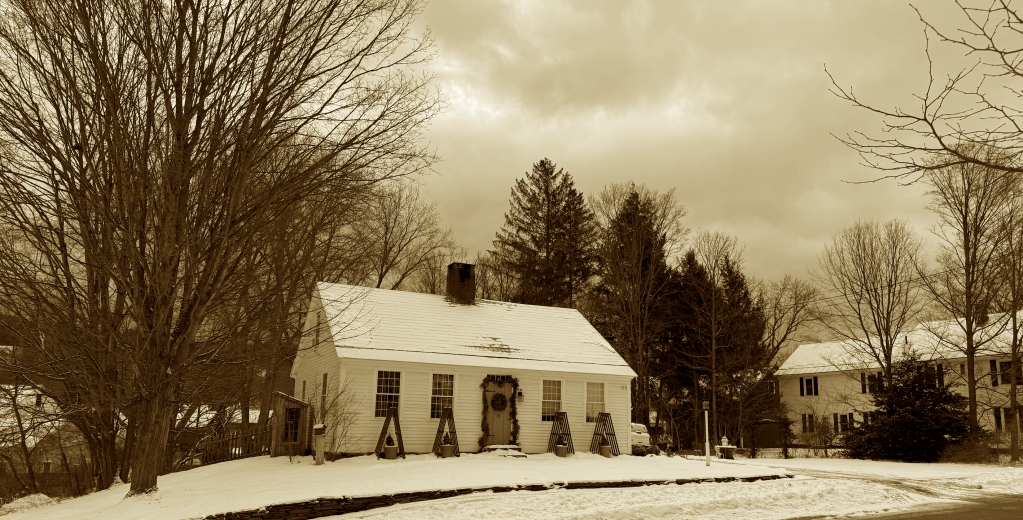
15 Elm Street is a modest, well-preserved early–nineteenth-century Cape, distinguished by its low profile, central chimney, symmetrical façade, and simple doorway—features typical of Walpole’s post-Federal rural domestic architecture and suggesting practical craftsmanship rather than display.
14 Elm Street — Howland–Schofield House
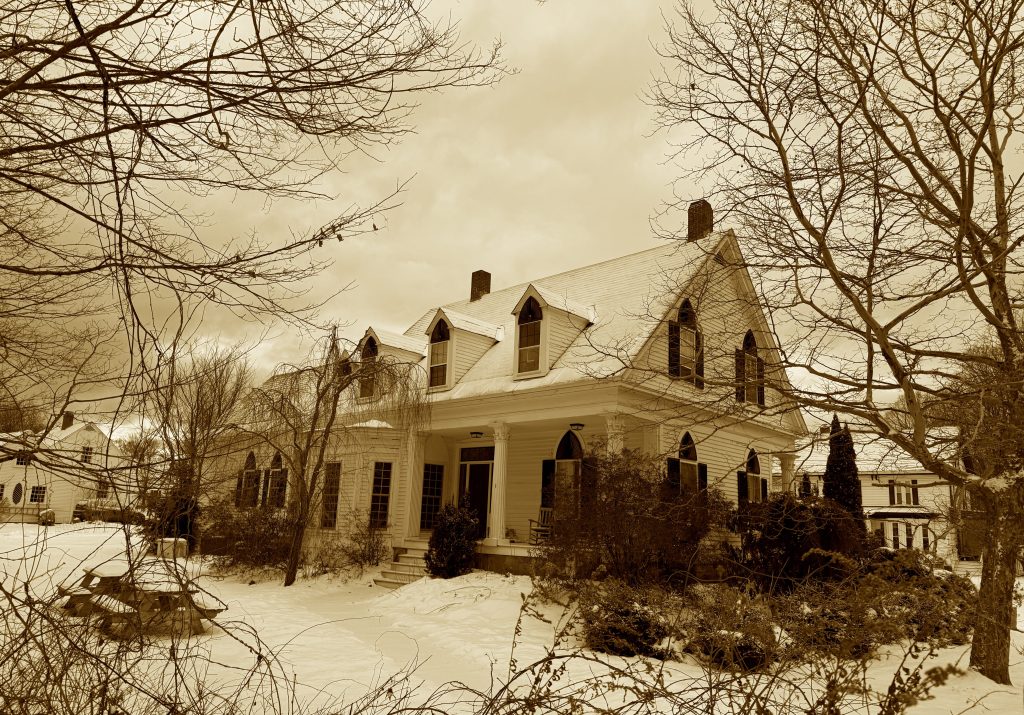
Built in 1844 by master builder Aaron P. Howland for his own family, this distinctive residence showcases an unusual blend of Greek Revival and Gothic Revival design. Classical elements, including a double front portico with Corinthian columns inspired by Asher Benjamin, are paired with pointed-arch pediments that give the house a picturesque Gothic character. The craftsmanship reflects Howland’s experimentation and confidence at the height of his career. The house continues its legacy of creativity as the home of Florentine Films, linking Walpole’s architectural heritage to nationally significant storytelling.
Return to Westminster Street
36 Westminster Street — St. John’s Episcopal Church
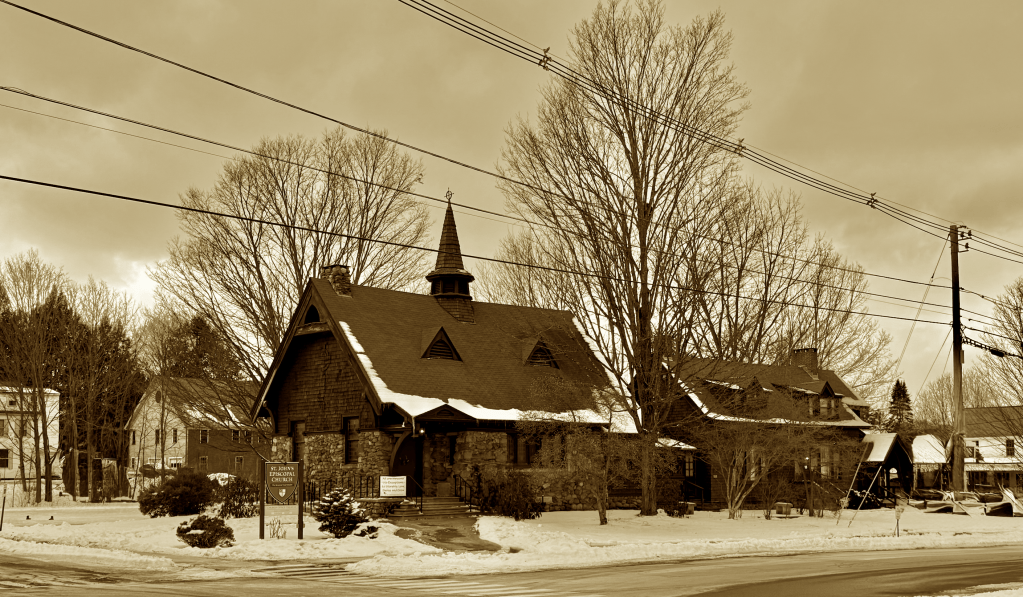
St. John’s Episcopal Church, built in 1902–1903, occupies a site long central to Walpole’s community life. Originally home to a village schoolhouse, the church was built through the generosity of Hudson E. Bridge, who donated the land in memory of his young daughter Katherine. Designed by the prominent St. Louis firm Mauran, Russell & Garden, the building blends Arts and Crafts and Gothic Revival influences in a carefully crafted structure. Consecrated in 1903, St. John’s serves as both a memorial and an enduring architectural landmark, illustrating the impact of summer residents and local philanthropy on Walpole’s civic and spiritual landscape.
Turn Right (West) on Westminster Street
40 Westminster Street — Holland House

Built circa 1833 on land owned by John Bellows, this house originally reflected the transitional Federal-to-Greek Revival style typical of the period. Over the decades, it was altered with a third floor addition and other updates, transforming it into a larger, more flexible residence. In 1907, Mary Holland established it as The Holland House, a small lodging that welcomed visitors to Walpole’s summer community. Converted into apartments, the building preserves layers of architectural and social history, from its early nineteenth-century origins to its role in early twentieth-century village hospitality.
43 Westminster Street — Stephen Rowe Bradley House

Built circa 1808 for lawyer and legislator Francis Gardner, this Federal-style house later became the home of Vermont statesman Stephen Rowe Bradley. Instrumental in Vermont’s entry into the Union, Bradley lived here from 1817 to 1830, making the house a hub of family, legal, and political activity. Its 2½-story frame, hip roof, and well-proportioned Federal details embody the elegance and symmetry of the style favored during the early republic. The property’s later use by the New Hampshire Asylum for the Insane and its return to private ownership underscores its enduring prominence in Walpole.
48 Westminster Street — John Bellows House

Built in 1833 by John Bellows upon his return to Walpole after a successful business career in Boston, this house overlooks the Connecticut River and showcases a striking Greek Revival temple-front portico that wraps three sides. Its long ell connecting to the barn blends Federal-era refinement with emerging Greek Revival details, reflecting the architectural transition of the 1830s. Bellows, a prominent businessman and civic leader, was remembered by his son as a man of intellect, integrity,and public spirit. The house stands as both an elegant example of its era and a testament to the Bellows family’s influence on Walpole.
Return to Elm Street; turn Right (South)
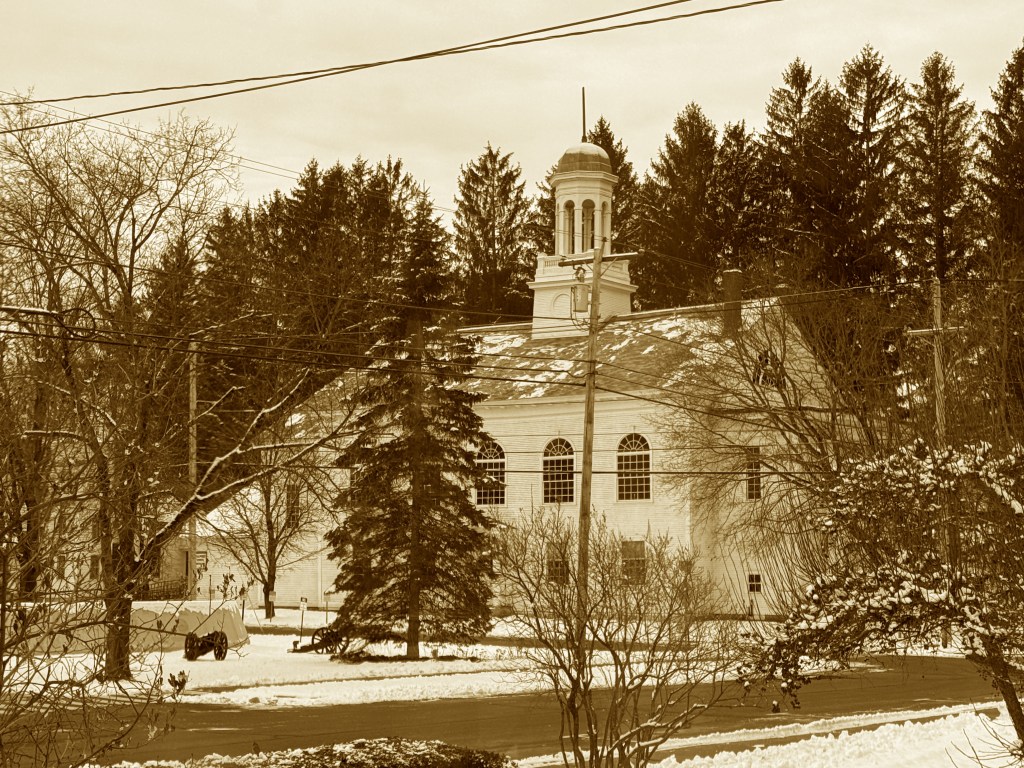
Walpole’s Town Hall has been the village’s center of civic life for over two centuries. Its origins trace to the 1792 Prospect Hill Meetinghouse, which was dismantled and moved to the village common in the 1820s, serving both as a place for town meetings and church services until 1844. When the old Town Hall was struck by lightning and destroyed by fire in 1917, the current building was designed by James Purdon (1873-1966) of Boston. The Town Hall continues to house town offices, meetings and public gatherings, linking modern Walpole to its longstanding tradition of self-governance and community involvement.
Town Common — Washington Square
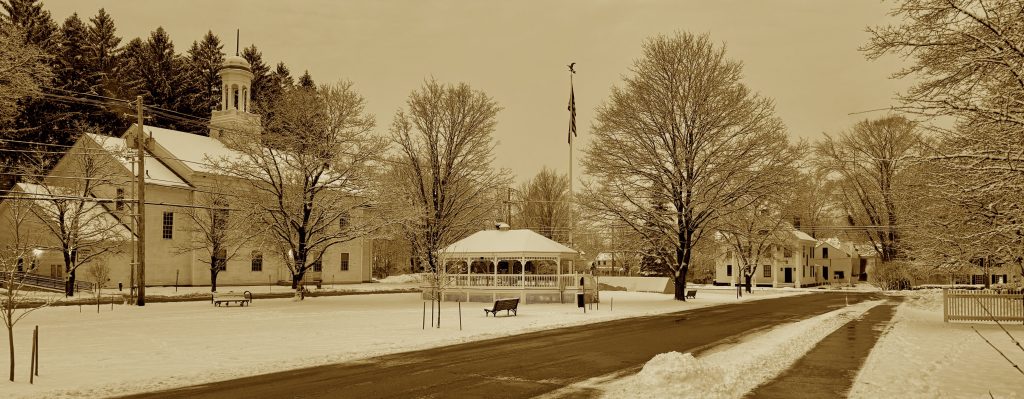
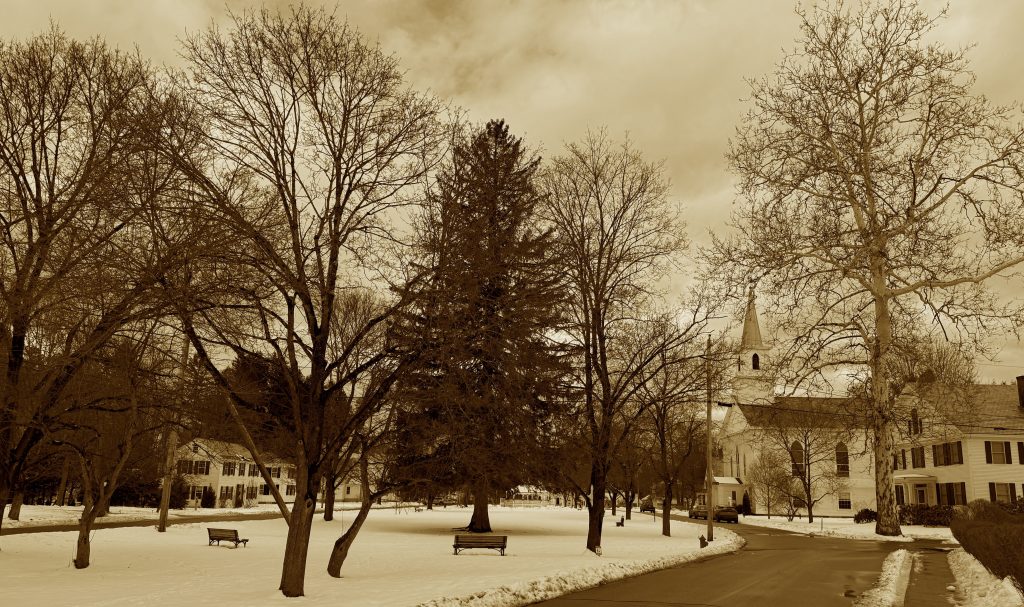
Washington Square, Walpole’s Town Common, has served as the village’s physical and symbolic center since the eighteenth century. Originally a shared open space for military drills, meetings, and everyday social interaction, it later hosted recreational activities like tennis and baseball while remaining carefully regulated to preserve its character. In the twentieth century, the Common gained new commemorative features, including the War Memorial and the village Christmas tree, connecting past and present. Surrounded by historic buildings, it continues to be a gathering place for seasonal events, civic functions and daily life, embodying the town’s enduring commitment to community and shared space.
38 Elm Street — River Valley Church
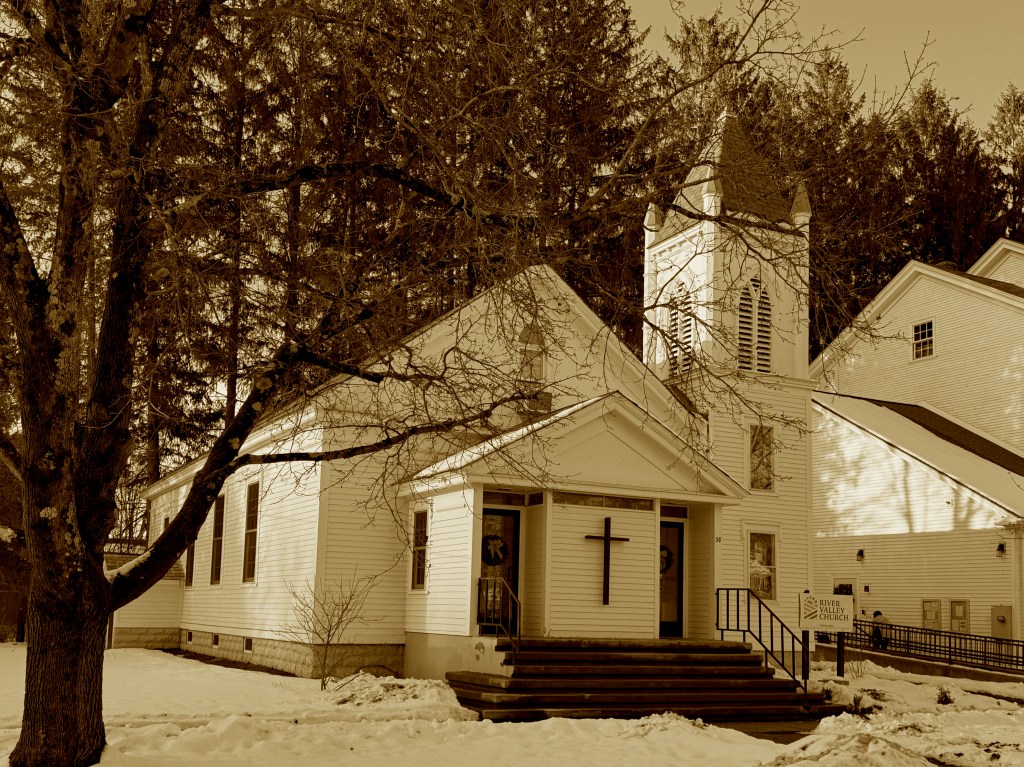
Built in 1845, this building has served a remarkable succession of congregations — Methodist, Episcopalian, Catholic and now Evangelical
— illustrating the evolving religious life of Walpole over nearly two centuries. Sold to the Methodist Church in 1848, it was purchased for the Episcopalians by James L. Mitchell in 1868, then passed to the Catholic Church a few years later. After St. Joseph’s Catholic Church relocated to North Walpole in 2011, the building found new life as River Valley Church, an Evangelical congregation that began services in 2024.

44 Elm Street is a representative village house, illustrating the solid, restrained dwellings that formed the everyday fabric of Walpole in the years following the Revolution. Standing on land once owned by Samuel and Phebe Bellows Grant, it illustrates the gradual subdivision of large house lots around Washington Square and the close relationship between prominent families and village growth.
Look at the buildings across the Common on Washington Street
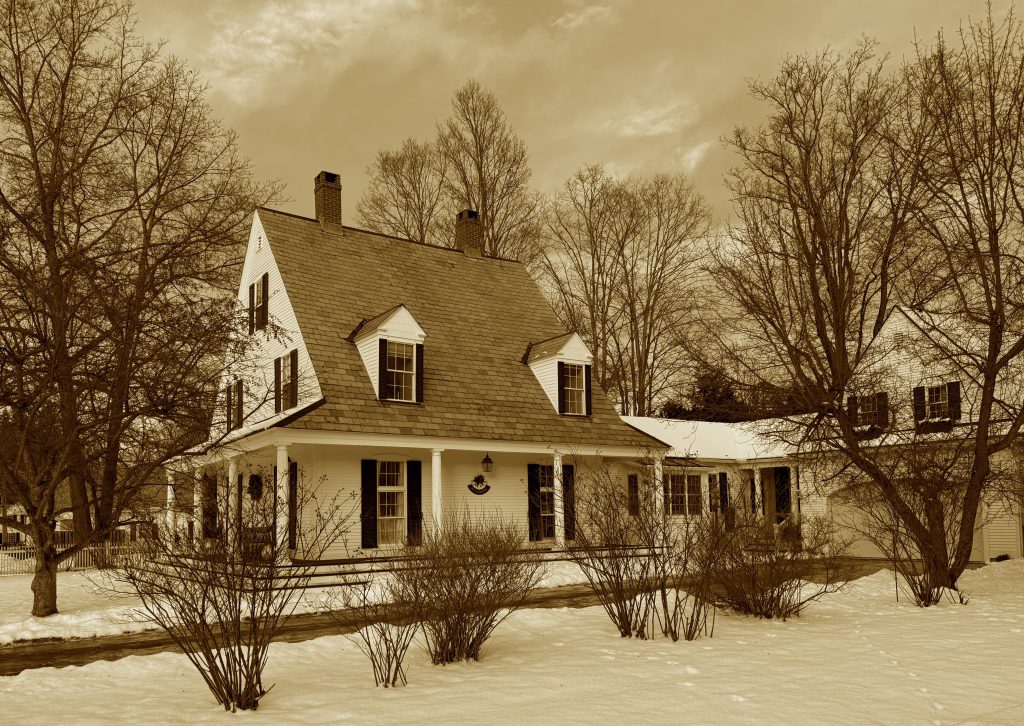
Built in 1839, this house is a well-preserved example of Walpole’s late Federal–early Greek Revival architecture. Its steep front-facing gable, symmetrical façade, and classical porch illustrates the town’s taste for dignified restraint. Likely built for John Williams of Cambridgeport, it later became home to three women of the Williams family, highlighting a lesser-noticed but important pattern of women-centered households in nineteenth-century village life. Over time, the house passed through a series of regional owners, yet it has remained remarkably true to its original 1840s character.
15 Washington Street — First Congregational Church
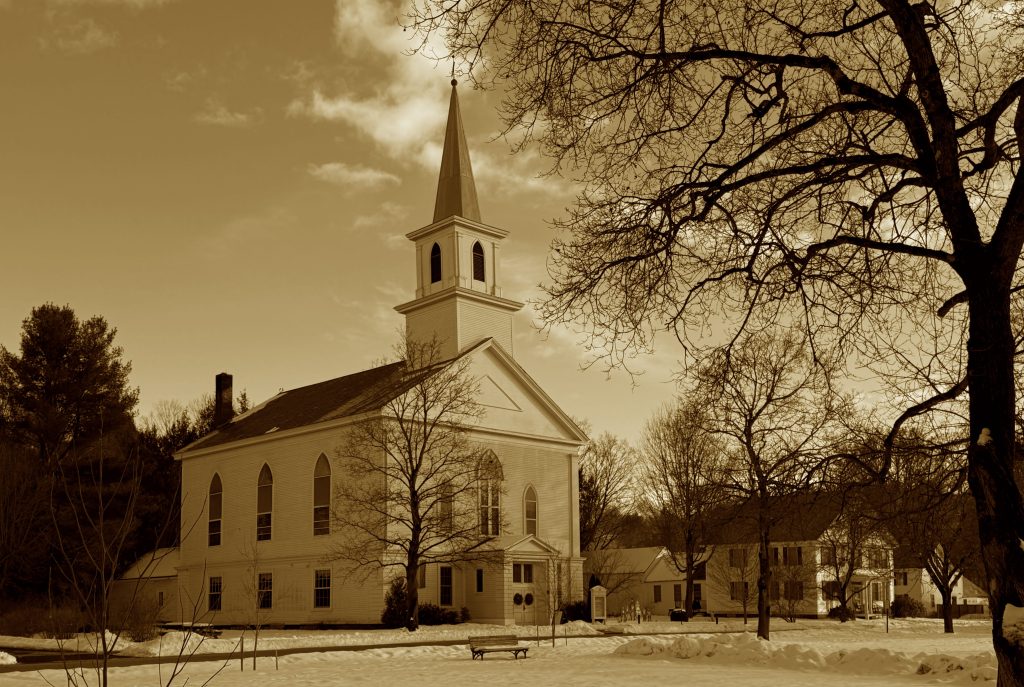
Established in late 1832 when a group of Congregationalists withdrew from the Unitarian “hill” society, the First Congregational Church was built over the following year and a half on the Town Common, establishing a new center for worship and community life. In 1873, the building underwent a striking modification; it was raised 10 feet and a vestry and kitchen were added beneath the sanctuary, expanding its role as a hub for social gatherings as well as worship.
19 Washington Street — Congregational Church Parsonage
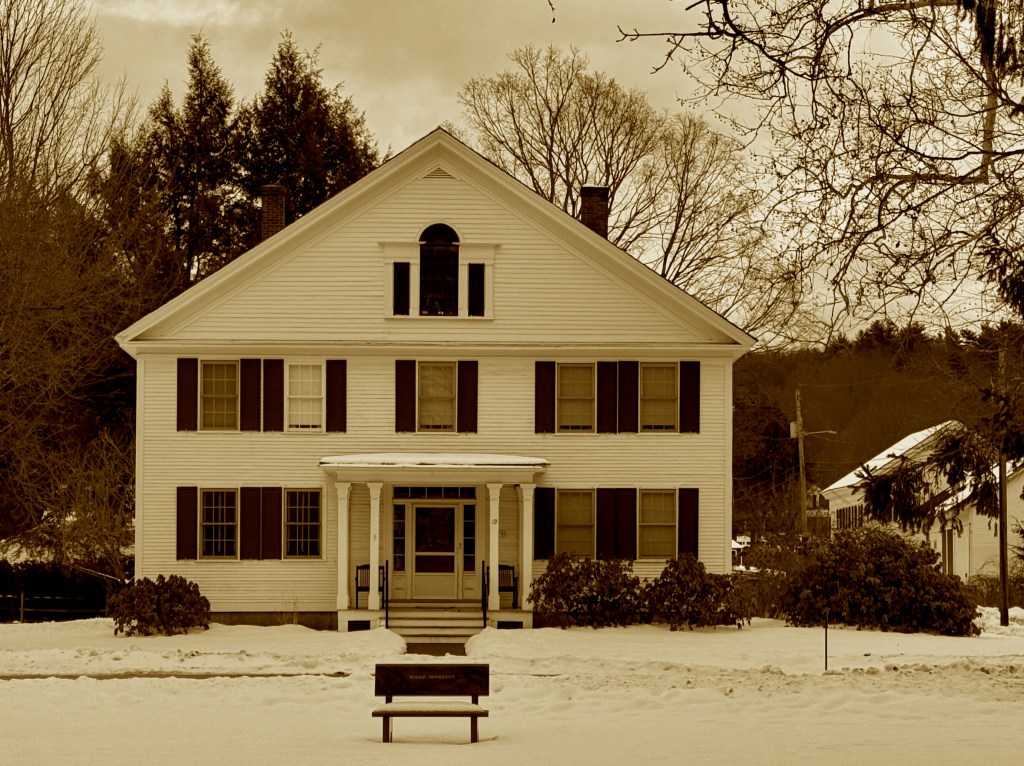
The Congregational Church parsonage is a prominent late-eighteenth-century village house, likely built in the 1790s by cabinet-maker Nicanor Townsley, and later refined with Greek Revival details. Its symmetrical façade, arched attic window, and classical porch speak to Walpole’s early prosperity and taste. Long associated with the Dana, Bellows, and Grant families, the house was a center of domestic and intellectual life before being given to the Congregational Church in 1883, securing its enduring role in the religious and architectural history of Walpole.
Continue South on Elm Street

Built circa 1811 by fur trader David Stone, this house blends Federal and Georgian architectural elements, including a fanlight, Palladian window, and two-story pilasters. In the mid-nineteenth century, it became a cultural hub, hosting performances by the Walpole Amateur Dramatic Company, including a notable 1855 production featuring Louisa May Alcott. Operating as the Elmwood Inn and later, the Old Colony Inn, it hosted James Michener while he researched his novel “Hawaii,” drawing inspiration from Walpole for his fiction. Now a private residence, the house preserves its architectural charm and its rich connections to Walpole’s artistic and literary heritage.
Cross the Town Common (East) to the corner of Washington Street and Middle Street; Head East on Middle Street
As you cross the Common, you may notice the black granite bench centered on the porch of the Congregational Church parsonage. It is dedicated to Ronald Edward Frankiewicz (1946–2017), who was born in nearby Bellows Falls, Vermont, and spent his entire life in Cheshire County, residing in Walpole, Keene and neighboring Hillsdale, New Hampshire. In 2021, his widow, Marcia Frankiewicz, petitioned the village to place a memorial bench on the Common in his honor (at her expense). The Select Board chose this location, linking a personal remembrance to the shared landscape of the Common.

Built circa 1793 by tanner David Stevens and moved to its current site circa 1839, this house features a Georgian-inspired façade with quoined corners, pilasters, and a central-hall plan. A later Colonial Revival porch blends historical styles, reflecting evolving architectural tastes. Beyond its design, the house played a significant social role in the mid-nineteenth century, sheltering runaway slaves as part of the local abolitionist network. It stands as a testament to both Walpole’s architectural heritage and the moral courage of its residents.
Continue East on Middle Street to Main Street; turn Right (South)
25 Main Street — William Buffum House

Built circa 1785 with a Georgian core, the William Buffum House was extensively remodeled in the 1830s into a striking Greek Revival residence by merchant William Buffum. Its most prominent features include a two-story Doric portico, a pedimented façade with a Palladian window, and Greek Revival door and window detailing, while much of the original Georgian structure remains visible on the north side. The house exemplifies Walpole’s architectural evolution, blending post-colonial craftsmanship with nineteenth-century aspirations, and remains a cornerstone of the village’s historic Main Street.
Look South up the hill to Wentworth Road
The road you climb to the south of the village is named for Governor Benning Wentworth (1696–1770), who served as colonial governor of New Hampshire from 1741 until 1766.
Wentworth played a key role in granting many of the early town charters that shaped the settlement of New Hampshire’s Connecticut River Valley. One of these grants (in 1752) went to Col. Benjamin Bellows; Bellows and his associates laid out what became the town of Walpole, New Hampshire — then called “Bellowstown.”
Because of that history, Wentworth’s name and the road bearing it connect us directly to the colonial origins of the town — a reminder of its roots in eighteenth‑century land grants, surveying, and settlement patterns that shaped the region long before modern Walpole developed.
31 Wentworth Road — Knapp House
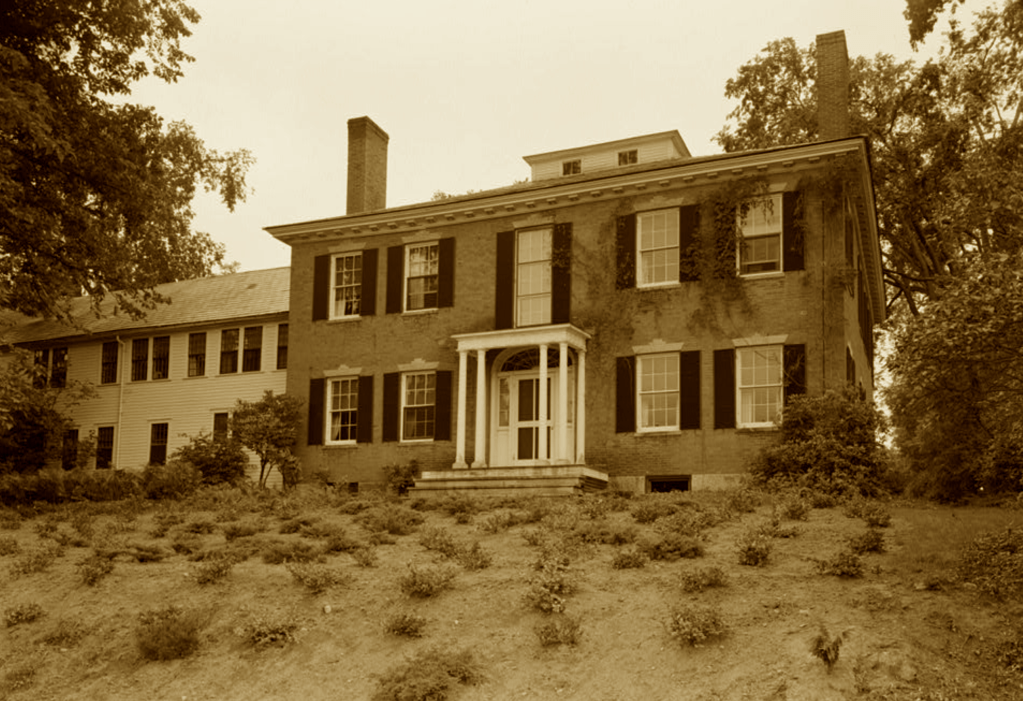
Built in 1812 by Josiah Bellows II and later owned by the Knapp family for over a century, this brick residence is one of Walpole’s finest examples of Federal (Adam‑style) architecture. Its refined proportions, elliptical portico, delicate columns, and four end chimneys reflect early nineteenth-century innovations in style and domestic planning. The interior preserves remarkable features, including original hand-painted French scenic wallpaper by Joseph Dufour. The house’s long Knapp family tenure, preserved grounds, and lilac hedge—linked in local lore to Louisa May Alcott’s “Under the Lilacs”—connect architecture, landscape, and village cultural memory, making it a defining landmark on the approach from Main Street.
Cross Main Street at Union Street and walk East on Union Street
18 Main Street — Walpole Unitarian Church

The Walpole Unitarian Church, completed in 1843, became a separate center of worship after the town assumed control of the old meetinghouse. A clock from the Walpole Academy was added to its tower in 1844, marking the building as a local landmark. After the roof collapsed under heavy snow in 1920, the church was rebuilt and rededicated in 1922, continuing its long-standing role in village religious and civic life.
14 Union Street — Hastings House
Adjacent Hastings House, built in 1896 as the church’s parish house by Thomas Nelson Hastings in memory of his wife, Amy Bridge Hastings, reflects restrained late-Victorian design and has historically hosted Sunday School, social clubs and community groups. Hastings House remains active as a gathering place for classes, meetings, and celebrations, sustaining its role as a center for education, fellowship and civic engagement.
16 Union Street — Unitarian Church Parsonage
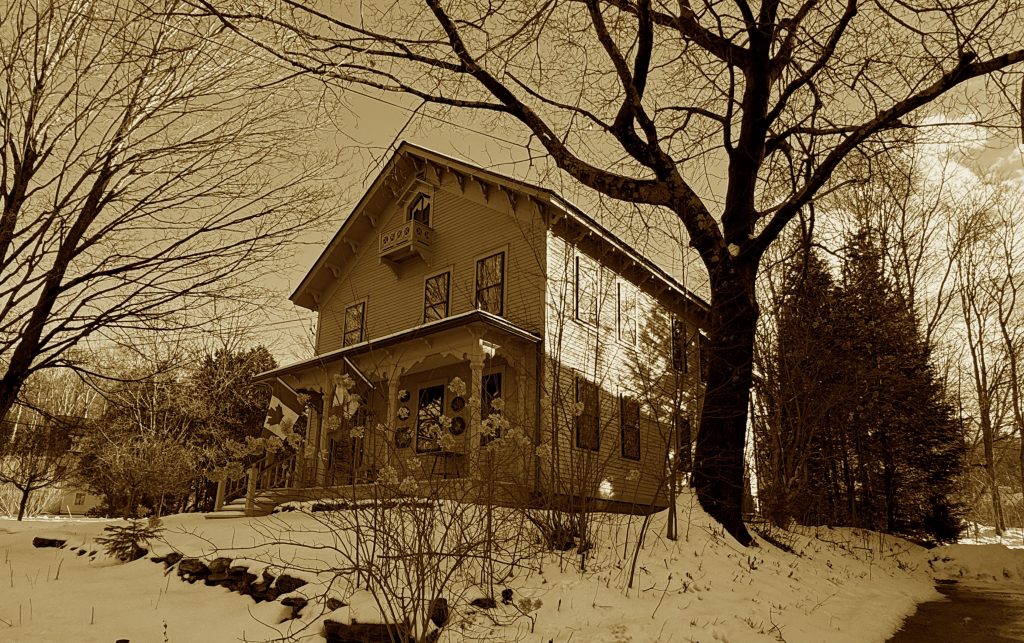
Completed in 1850 through the efforts of the Unitarian Ladies Society, this house provided a permanent home for the church’s ministers, who had previously boarded elsewhere in the village. Its design blends Greek Revival and Italianate elements, including a Juliet balcony in the front pediment, and the interior features a curved staircase, double parlors, and coffered ceilings. The building served as the church’s parsonage for over 160 years and is now a private residence, preserving both its architectural charm and its connection to Walpole’s religious history.
13 Union Street — David Buffum House

Built in 1835 for merchant and civic leader David Buffum, this two-story Greek Revival house was designed to be one of the finest in Walpole. The home features high ceilings, broad floorboards, six fireplaces, folding interior shutters, a sweeping front stairway, and frosted and etched sidelights at the entrance, with later additions including marble fireplaces. Buffum, active in town affairs as a bank president, legislator, and library founder, spared no expense in its construction, signaling both his wealth and status. Restored in the late 1960s and early 1970s, the house remains a prime example of Greek Revival elegance and a testament to the social and civic prominence of its original owner.
Return to Main St; turn Right (North)
28 Main Street — Dr. Abel Parker Richardson House

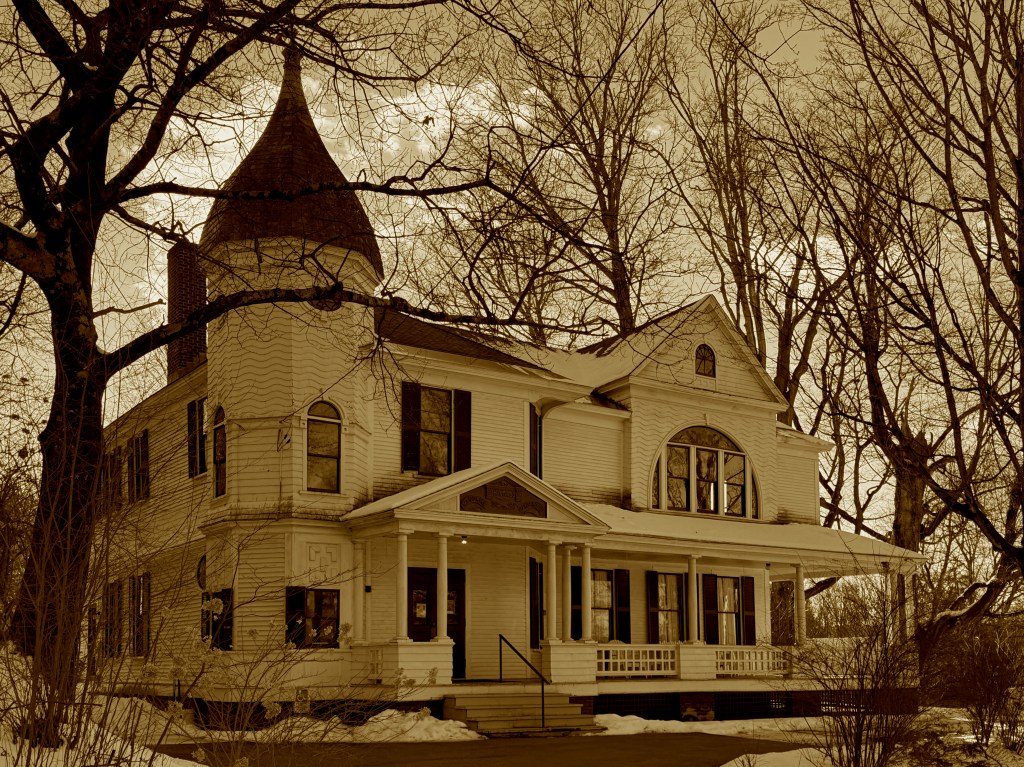
Built in 1889 for Dr. Abel Parker Richardson (1834-1900), a prominent Walpole physician and longtime town clerk, this striking Queen Anne–style house replaced the earlier 1766 Gen. Benjamin Bellows house that had stood on this site for more than a century. Its asymmetrical massing, prominent corner tower with conical roof, varied shingle textures, decorative gable ornament, and expansive wraparound porch with turned posts and balustrades all embody the late-Victorian taste for picturesque design. Before entering medicine, Richardson served as principal of the Walpole High School in 1857; he received his medical degree from Dartmouth Medical College in 1864 and practiced in Walpole for nearly thirty years.
32 Main Street — Walpole Academy

Built in 1831 by master builder Aaron P. Howland, the Walpole Academy is a distinguished example of Greek Revival architecture, with a classical temple-front portico, Doric columns, and pedimented gable. Originally a private academy founded in 1825, the building became Walpole’s public high school in 1853 and educated generations until 1950. Today it houses the Walpole Historical Society. Its well-preserved design reflects the style’s association with learning, civic virtue and national identity, making it a landmark of both architecture and education in the village.
Turn Around – Three Greek Revival Landmarks
At the corner of Main and Middle Streets, three Greek Revival landmarks—Walpole Academy (1831), the William Buffum House (1785/1840), and the Philip Peck House (1840) offer a striking glimpse of the village’s nineteenth-century architectural character. Walpole Academy, with its front-facing gable, Doric portico, and classical pediment, served as the town’s high school until 1950 and now houses the Walpole Historical Society. The William Buffum House blends a Georgian core with Greek Revival updates, including a two-story Doric portico and a Palladian attic window, and was once home to publisher David Carlisle Jr. The Philip Peck House completes the trio with its balanced proportions and refined ornamentation. Together, these buildings, some built or remodeled by master builder Aaron P. Howland, showcase Walpole’s civic pride and embrace of Greek Revival style.
27 Main Street — Philip Peck House
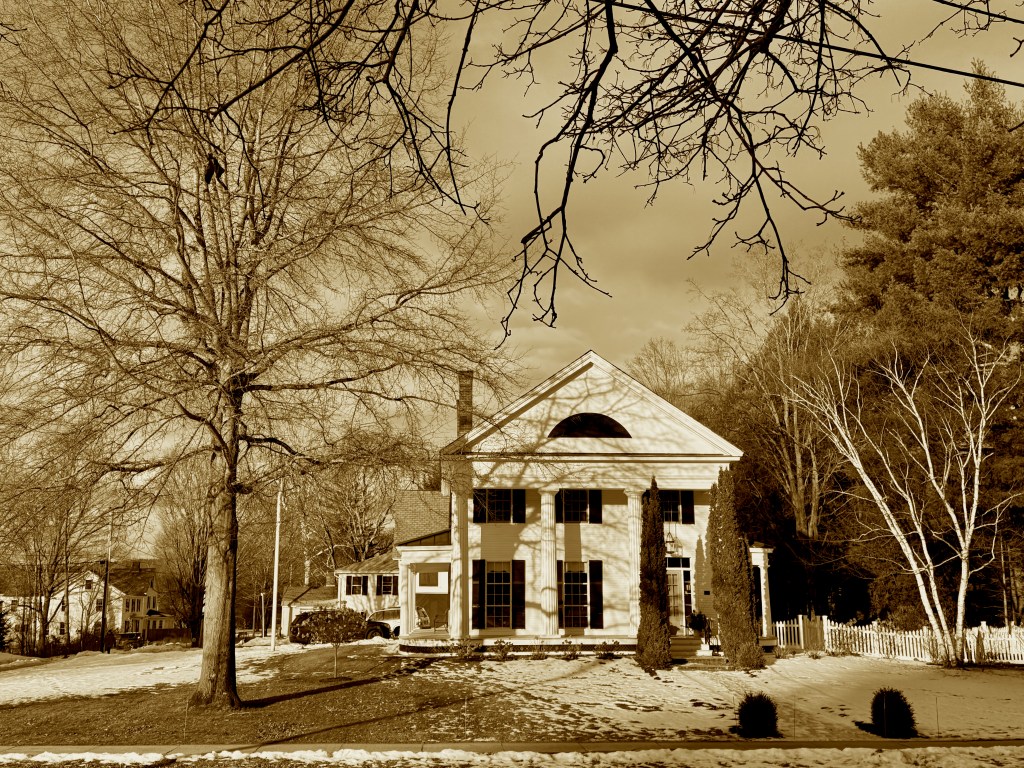
The Philip Peck House, also known as the Margaret Porter House, was built circa 1840 by Philip Peck (1812-1875), a merchant who had moved to Walpole from Massachusetts and married Martha Eleanor Bellows, great-granddaughter of the town’s founder. A superb example of Greek Revival architecture, the house is noted especially for its pedimented prostyle portico with four two-story fluted Doric columns and rare double side porches — an unusual feature in New Hampshire. A rear wing links the residence to an attached barn, integrating domestic and agricultural spaces. Peck relocated the earlier circa 1793 Georgian house to the rear of the lot, where it became 12 Middle Street.
35 Main Street – Amasa Allen House
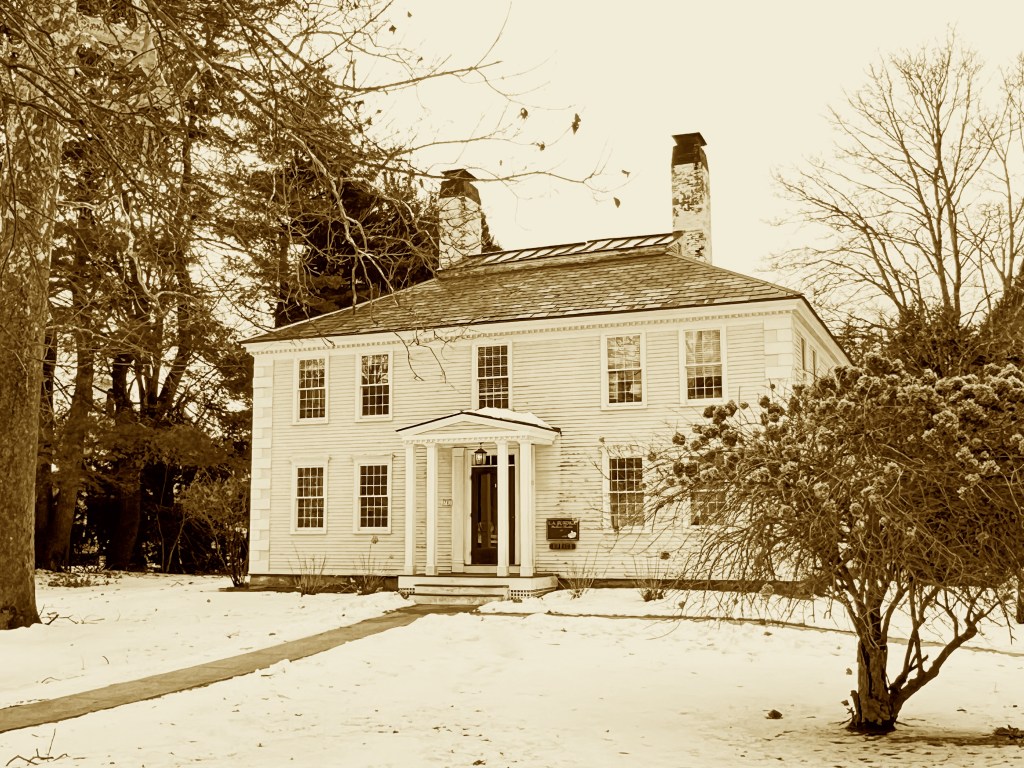
The Amasa Allen House (also known as the Tatem–Peck House), built in 1792 by General Amasa Allen, is one of Walpole’s finest examples of late-Georgian architecture, featuring a low hip roof, corner quoining, a symmetrical five-bay façade, and a central-hall plan with multiple fireplaces. Allen, a prominent local figure, lived here until 1821, and the house later passed to notable families including Dr. William Tatem and the Pecks. Today it houses the headquarters of L.A. Burdick Chocolates, maintaining its prominent role in the village while preserving its historic character. The house exemplifies both the architectural traditions and civic prominence of Walpole’s influential residents.
40 Main Street — Charles Hooper House

Built circa 1863, the Charles Hooper House is a distinguished Italianate residence in Walpole, noted for its bracketed eaves, tall arched windows, and a cupola that echoes the building’s elegant arch motifs. Hooper, a successful ship owner, used the home to showcase his prosperity, engaging in a rivalry with neighboring shirt manufacturer Silas Bates. In 1926, Dr. Bayard Mousley converted the carriage house into Walpole’s first hospital, giving the property lasting significance in the town’s social as well as architectural history. The house exemplifies mid-nineteenth-century style while reflecting the economic and civic vitality of the period.
42 Main Street — Bellows–Grant House
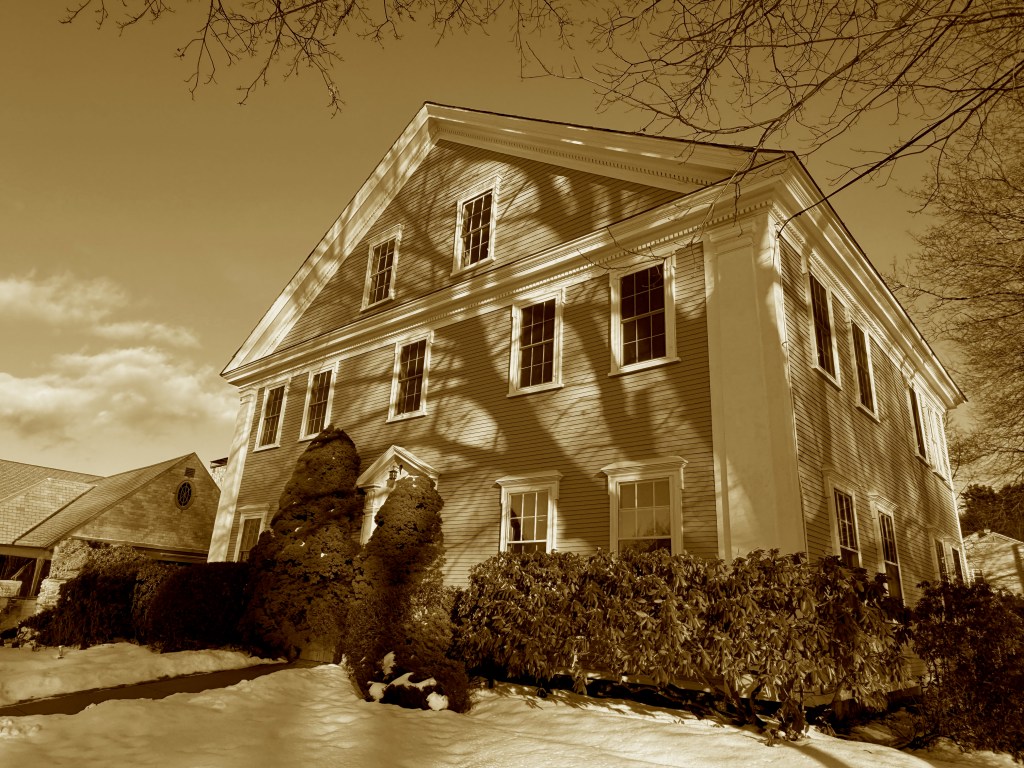
Built circa 1791 by General Benjamin Bellows as a wedding gift for his daughter Phebe, the Bellows–Grant House is a substantial late-Georgian residence with transitional Federal details, including corner pilasters, a dentilled cornice, and a symmetrical seven-fireplace façade. Its size and refined craftsmanship signaled the status of the Bellows family and the aspirations of the newly married couple. Later owners, including Benjamin Willis Jr. and the Jennison family, added Greek revival updates and maintained the property for over a century. The house illustrates both Walpole’s architectural evolution and the prominence of the families who shaped the village’s early civic and social life.
47 Main Street — Commercial Block
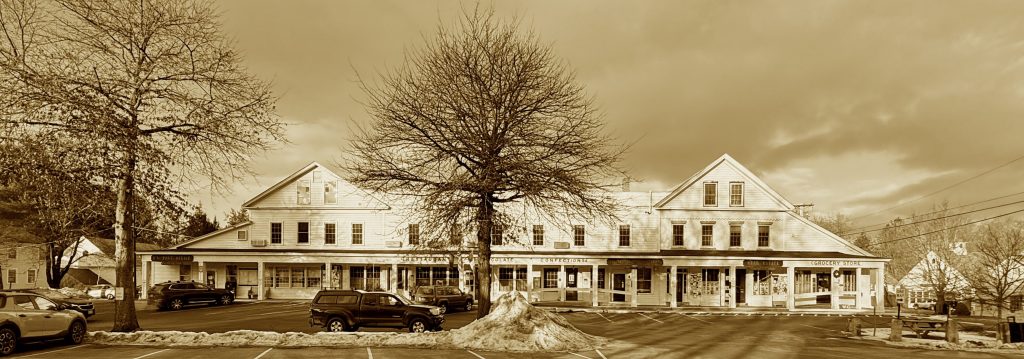
47 Main Street has been Walpole’s commercial heart since at least 1807, hosting shops operated by prominent local families such as the Buffums, Pecks, Bellows and Allens. The original “brick block” burned in 1849, making way for the current commercial row, long known as Davis’ Block, which continued to house general stores, law offices, and specialty shops. 47 Main Street remains a vibrant center of village life, including the post office, local markets, cafés, and small businesses, maintaining a two-century tradition of commerce and community gathering.
48 Main Street — Bridge Memorial Library

The Bridge Memorial Library, built of native stone in 1891, was a gift to Walpole from Hudson E. Bridge in memory of his father. Designed in the Richardsonian Romanesque style, the building features heavy masonry, broad rooflines, deep-set windows, and a welcoming central entrance, expressing the late-nineteenth-century ideal of a dignified public institution. Inside, the library offers open reading rooms, built-in shelving, and meeting spaces, emphasizing accessibility and community use. The library remains a lasting symbol of the Bridge family’s connection to Walpole and a cornerstone of the town’s cultural and civic life.

Easy to overlook, this is one of Walpole’s oldest business buildings, in use since the 1790s. For more than two centuries it’s been a place to shop, chat, get shaved, or pick up everyday necessities. Today, that tradition lives on with local art at the Walpole Artisans Cooperative and flowers at In the Company of Flowers.
Take a detour – turn Right (East) on High Street
15 High Street — Alcott Apartments

The Alcott Apartments on High Street, originally a mid‑nineteenth-century duplex, served as the Walpole home of Louisa May Alcott and her family from 1855 through 1857. Relocated from beside the Bellows–Grant House, the residence provided stability after the family’s earlier hardships and offered Louisa space for creative growth while caring for her ailing sister, Elizabeth. The family’s time in the house bears the influence of Amos Bronson Alcott’s Transcendentalist ideals, shaping Louisa’s thinking on education, abolition and women’s rights. The building stands as a testament to Louisa Alcott’s formative years in Walpole and her enduring literary and cultural legacy.
Return to Main Street; turn Right (North)
54 Main Street — Former Isaiah Thomas Print Shop

This modest building at 54 Main Street, now a law office, belies the extraordinary literary history that unfolded within its walls. In the 1790s, it housed the Walpole print shop of Isaiah Thomas (1749-1831), one of the most influential printers and publishers of the early United States, who printed books, pamphlets, and newspapers here for a rapidly growing readership in northern New England. Most notably, the gifted young writer Joseph Dennie (1768-1812) served as editor of The Farmer’s Weekly Museum, transforming it into one of the most admired newspapers in the country, with circulation stretching from Maine to Georgia.
Continue North on Old North Main Street
11 Old North Main Street —“The Historic House”
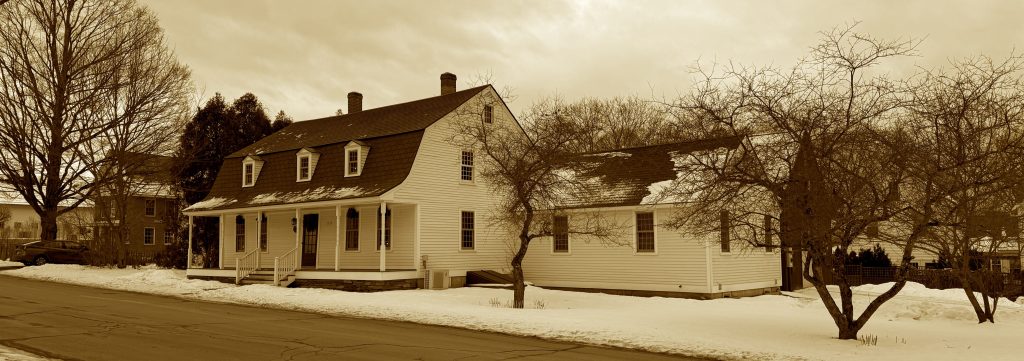
11 Old North Main Street, known as the “Historic House,” is Walpole’s oldest surviving dwelling, built circa 1761 by Asa Baldwin. It features a distinctive pulvinated overhang and a saltbox form, reflecting mid-eighteenth-century New England craftsmanship with rare stylistic touches. A notable early resident was stagecoach operator Otis Bardwell, and the house briefly served as the parsonage for Rev. Jonathan Leavitt, linking it to both local commerce and early religious life. Saved from demolition in 1930 by concerned townspeople, it became the first home of the Walpole Historical Society. Now a private residence, the house stands as a tangible record of the village’s architectural, social and cultural history.
Cross Colonial Drive; continue North on Old North Main Street

Built circa 1811 by tanner Daniel W. Bisco, this house is a notable example of rural Federal-period architecture, distinguished by its large ell connecting the main house to the barn. The home features a symmetrical façade, finely proportioned windows, and understated ornament typical of the Federal style. Tradition holds it was the first house in Walpole with an indoor bathroom, attesting to the progressive tastes of its early owners. In 1905, a front portico and two-story bay were added, blending Colonial Revival and late-Victorian elements with the original design. The house illustrates Walpole’s evolving architectural tastes and long-standing tradition of careful adaptation over two centuries.
34 Old North Main Street — Silas Bates House
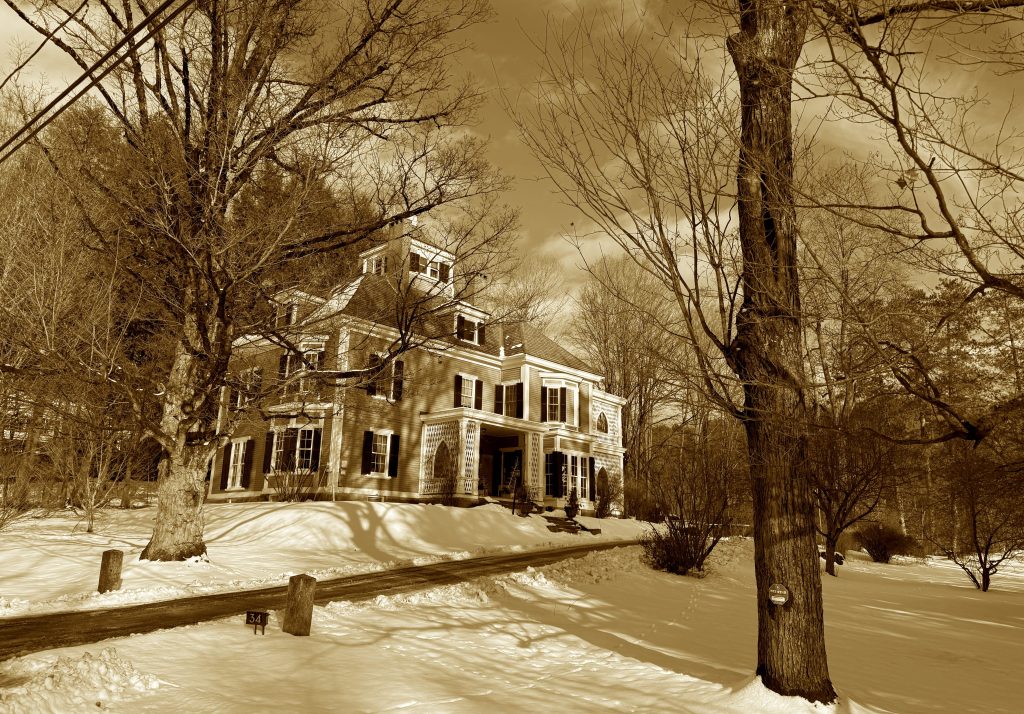
Built circa 1867 for shirt manufacturer Silas Bates, this house is a striking example of high Victorian architecture in Walpole. The house features Moorish arches, Gothic windows, projecting bays, and a richly detailed façade that displays both wealth and eclectic Victorian tastes. A dramatic belvedere, accessed via a spiral staircase, offers commanding views of the village and surrounding hills. Bates’ home embodies the era’s industrial prosperity and love of architectural experimentation. It remains one of Old North Main Street’s most visually distinctive and historically significant residences.
42 Old North Main Street — Josiah Bellows III House

Built circa 1814 for Josiah Bellows III, this house is an elegant Georgian/Federal residence that remained in the Bellows family for over a century. The house features a hipped roof, central hall plan, and a Greek Revival portico, with later Italianate and Colonial Revival updates reflecting evolving tastes. Bellows, a civic leader and War of 1812 captain, made the home a center of family and local prominence. The property exemplifies refined early nineteenth-century architecture while illustrating the Bellows family’s long-standing influence in Walpole.
56 Old North Main Street — Bates Cottage
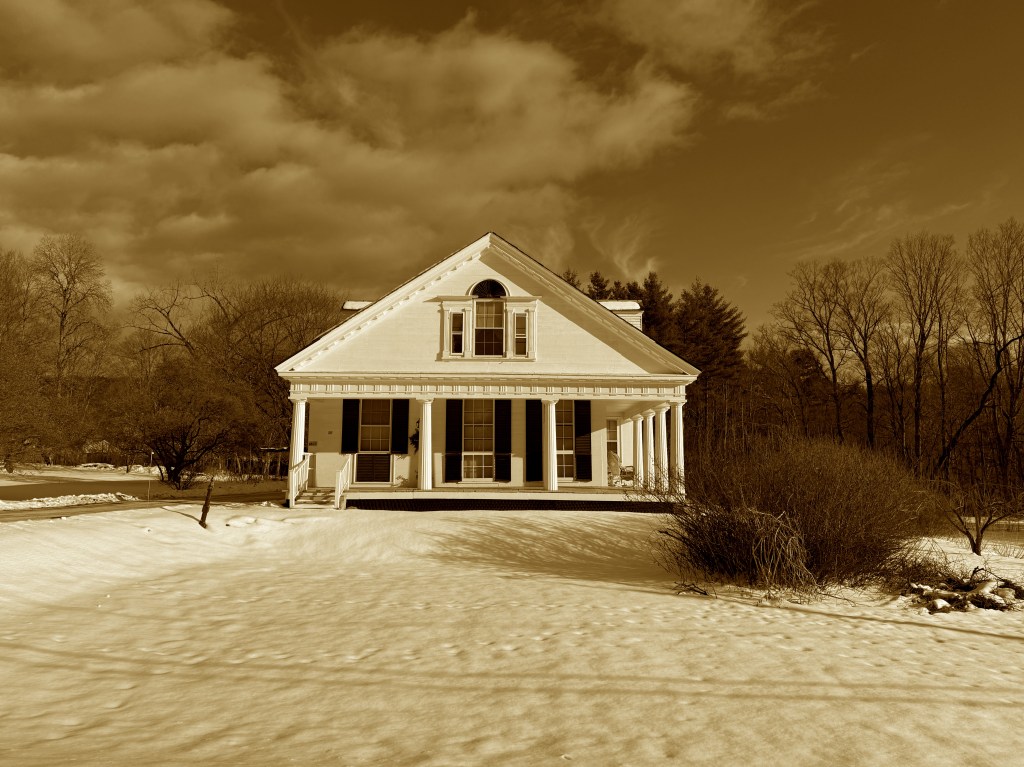
56 Old North Main Street, known as the Bates Cottage, was built in 1832 for widowed Louisa Bellows Hayward and later became associated with Mary Georgiana Bates, a founding director of the Walpole Historical Society. The modest house reflects the domestic scale and restrained elegance typical of Aaron P. Howland’s early nineteenth-century work. Its long connections to the Bellows and Bates families tie it to Walpole’s civic and social history. The cottage remains a visible reminder of the town’s architectural traditions and the personal stories that shaped the village.
67 Old North Main Street — Josiah Bellows House
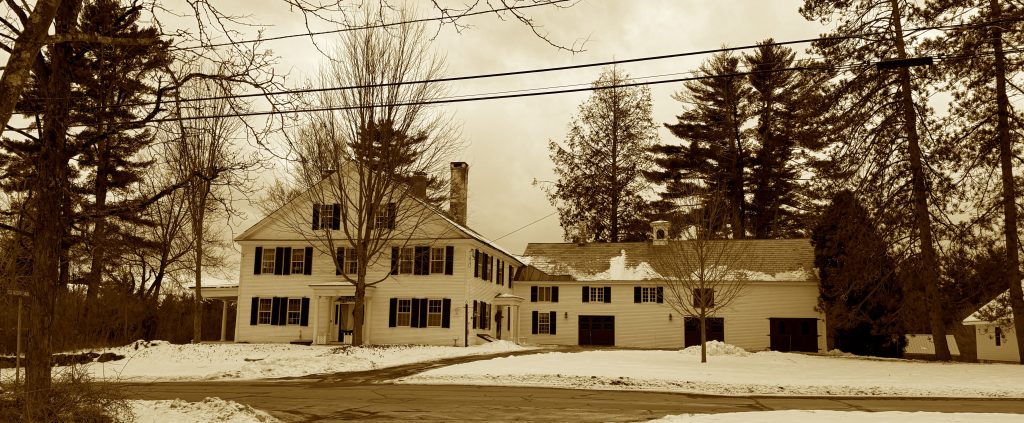
67 Old North Main Street, the Josiah Bellows House, occupies the site of Walpole’s first meetinghouse, begun in 1761 but never completed. Circa 1788, Josiah Bellows (1767-1846), youngest son of Col. Benjamin Bellows, built the present house, expanding it over time to accommodate his large family — he and his two wives, sisters Rebecca and Mary Sparhawk, had eleven children between them. The interior retains notable early decorative features, including a rare panoramic wallpaper by Zuber et Cie of Rixheim, France, called Eldorado (1848), a luxury import that speaks to the refinement and aspirations of the home’s mid-nineteenth-century occupants.
Turn around and walk South to Rogers Street; turn Right (West) on Rogers Street to Main Street
78 Main Street — Walpole Foundation Pocket Park
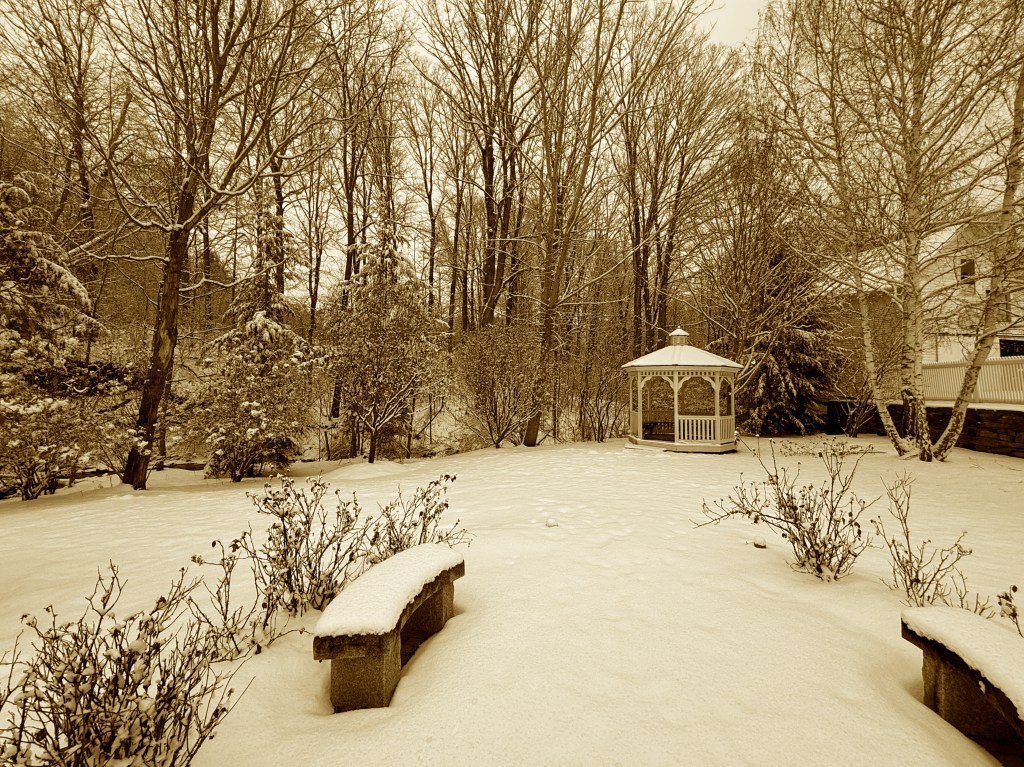
This pocket park at 78 Main Street, owned by the town and maintained by The Walpole Foundation, was created when a derelict house was demolished to make way for a professionally designed public green space. Seating, plantings, and a welcoming stream-side gazebo offer a restful pause along the village’s principal thoroughfare.
Cross Main St to the Sidewalk, turn Left (East) and walk one block to Fountain Square
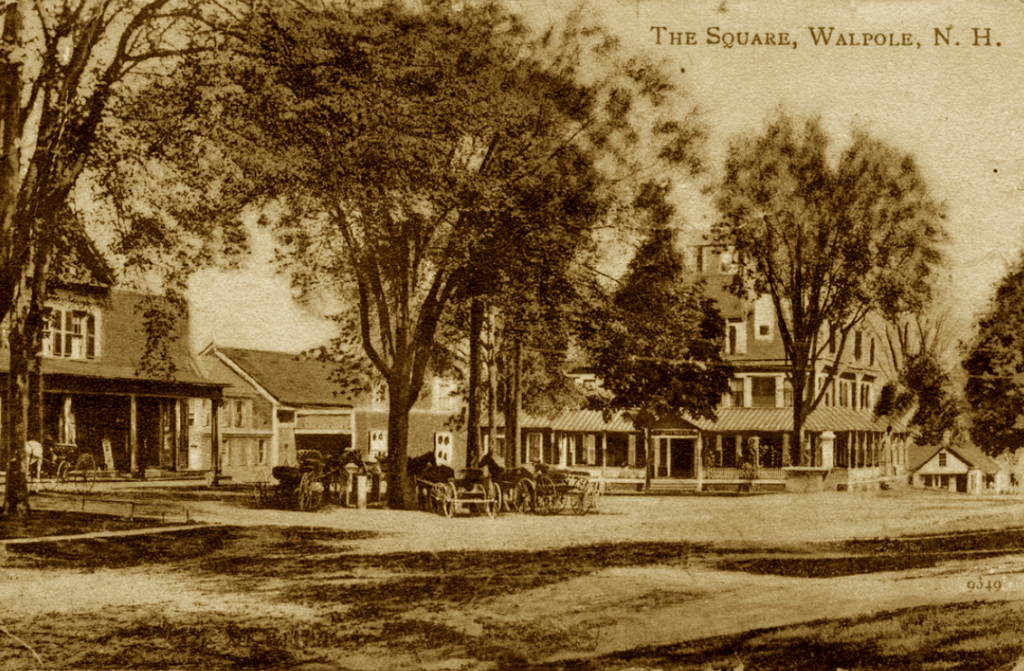
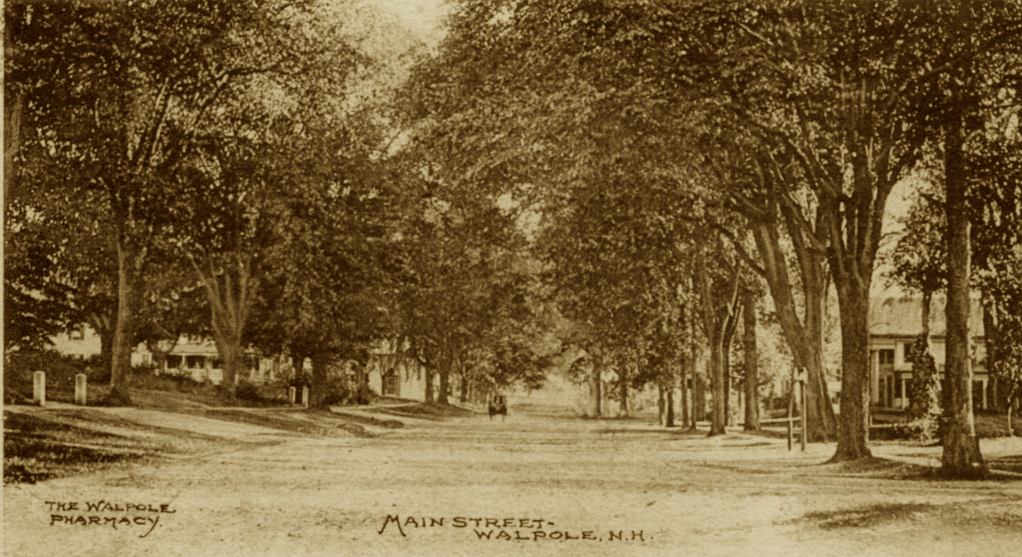
Main Street, once part of the Third New Hampshire Turnpike, forms the backbone of Walpole’s village life. For more than two centuries, it carried travelers, freight, and ideas, shaping the placement of homes, inns, shops and civic institutions. Walking it today, one can see how the road’s alignment and the village’s architecture together reflect continuity, community, and the rhythms of life that have long defined Walpole.
Conclusion of the Walking Tour: Fountain Square
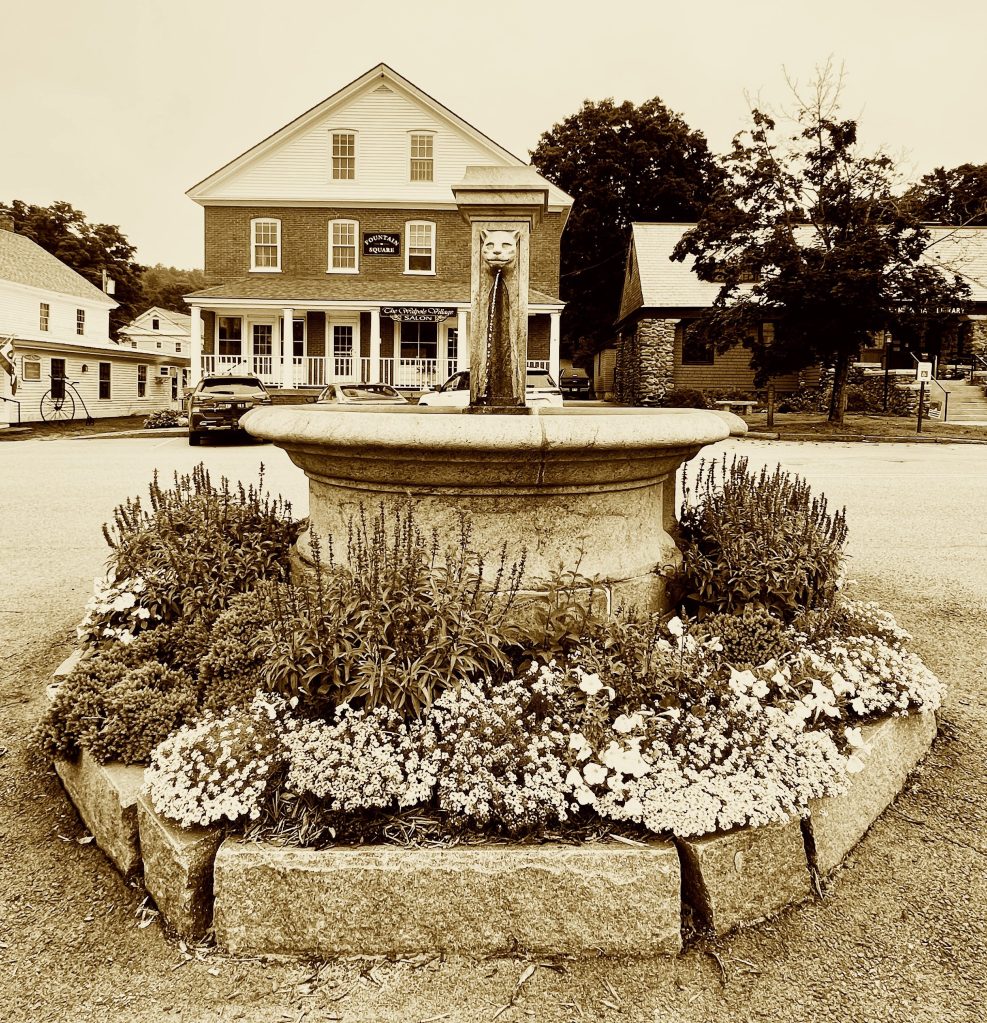
Fountain Square brings the walking tour to its conclusion, where Walpole’s Greek Revival buildings and the Delano & Aldrich fountain converge to tell the village’s story. The classical architecture embodies early nineteenth-century civic ideals—democracy, moral purpose and cultural aspiration—while the fountain, inscribed with lines from Ralph Waldo Emerson’s poem Monadnoc, evokes the Transcendentalist reverence for nature, self-reliance and moral insight. Together, these elements highlight the influences that shaped this community: public virtue expressed through architecture, and introspection inspired by the natural world, particularly the legendary catamount and Mount Monadnock. The site exemplifies Walpole’s layered history, where reason and reflection, civic pride and personal contemplation coexist. Standing here, visitors are invited to appreciate both the village’s built heritage and its philosophical inheritance.
Take the bounty of thy birth — Taste the lordship of the earth

the State of New Hampshire Department of Parks & Recreation
Architectural Terms
The following terms appear in the Walking Tour text. Definitions are tailored to the buildings described on the tour.
Balustrade — A railing supported by a row of short, shaped posts (balusters), typically found along a porch, balcony, or roofline. See the Richardson House (28 Main Street) wraparound porch.
Bay — A vertical division of a building’s façade defined by windows or other openings. A “five-bay façade” has five regularly spaced window or door openings across its front. See the Amasa Allen House (35 Main Street).
Belvedere — A rooftop structure or tower designed to provide panoramic views. Distinguished from a cupola by being large enough to stand inside. See the Silas Bates House (34 Old North Main Street).
Bracket / Bracketed eaves — Decorative supports projecting from the wall beneath the eaves. Characteristic of the Italianate style. See the Charles Hooper House (40 Main Street).
Clapboard — Horizontal wooden boards, tapered in cross-section, overlapping one another to form the exterior wall surface. The standard exterior finish of New England frame buildings.
Central-hall plan — An interior layout organized around a central hallway running from the front door to the rear, with rooms arranged symmetrically on either side. Common in Georgian and Federal houses.
Coffered ceiling — A ceiling divided into a grid of recessed panels (coffers), often square or rectangular, creating a decorative pattern of depth and shadow. See the Unitarian Church Parsonage (16 Union Street).
Colonial Revival — An early-twentieth-century style that revived elements of earlier colonial architecture (Georgian, Federal, and early Classical forms). Often seen in later porches, additions, or renovations to older buildings. See additions at 12 Middle Street and 26 Old North Main Street.
Cornice — The projecting horizontal molding at the top of a building or wall, finishing the transition between wall and roof. In Greek Revival buildings, the cornice often mimics classical temple entablatures.
Cupola — A small dome or windowed turret atop a roof, providing light, ventilation, or ornament. See the Hooper House (40 Main Street) and Town Hall (34 Elm Street).
Dentil / Dentilled cornice — A cornice decorated with a row of small, evenly spaced rectangular blocks resembling teeth. See the Bellows–Grant House (42 Main Street).
Doric column — The simplest of the classical column orders, with a plain, fluted shaft and no base. The Doric order was especially popular in Greek Revival buildings. See the Walpole Academy (32 Main Street) and the Philip Peck House (27 Main Street).
Ell — A wing or addition extending at a right angle from the main body of a building. Commonly used in New England to connect a house to its barn or outbuildings. See 26 Old North Main Street.
Entablature — The horizontal assembly resting on top of the columns in a classical building, comprising (from bottom to top) the architrave, frieze, and cornice.
Façade — The front face of a building, especially the principal elevation facing the street.
Fanlight — A semicircular or fan-shaped window above a door, with radiating glazing bars. Characteristic of Federal-style architecture. See 50 Elm Street.
Federal style — An American architectural style (roughly 1780–1830) emphasizing refined proportions, delicate ornament, and symmetry. Draws on the work of Scottish architect Robert Adam. Known as “Adam style” in Britain. See the Knapp House (31 Wentworth Road) and 26 Old North Main Street.
Fluted — Having shallow, parallel grooves running vertically down a column shaft or pilaster. See the Philip Peck House’s Doric columns.
Gable — The triangular wall section formed by the two slopes of a pitched roof. A “front-facing gable” presents this triangular face to the street, a hallmark of Greek Revival design.
Georgian style — A formal, symmetrical architectural style (roughly 1720–1780 in America) characterized by balanced proportions, hip roofs, and classical detailing. Named for the British monarchs during whose reigns it flourished. See the Amasa Allen House (35 Main Street).
Gothic Revival — A nineteenth-century style drawing on medieval European forms, including pointed arches, steep gables, and tracery. See Gothic window elements at the Silas Bates House (34 Old North Main Street).
Greek Revival — The dominant American architectural style from roughly 1825 to 1860, inspired by the temples of ancient Greece. Characterized by pedimented gables, columned porticos, bold cornices, and symmetrical proportions. The prevailing style on the Walpole tour. Key examples: Walpole Academy, Philip Peck House, David Buffum House, William Buffum House, Aaron Howland House, Griswold Place.
Hip / Hipped roof — A roof where all four sides slope downward from a central ridge, rather than having vertical gable ends. See the Amasa Allen House (35 Main Street) and the Josiah Bellows III House (42 Old North Main Street).
Italianate style — A mid-nineteenth-century style inspired by Italian Renaissance villas, featuring bracketed eaves, tall arched windows, low-pitched roofs, and sometimes a cupola or tower. See the Charles Hooper House (40 Main Street).
Juliet balcony — A narrow, railed balcony projecting from a window or door opening, without a full-depth platform. See the Unitarian Church Parsonage (16 Union Street).
Palladian window — A three-part window with a tall, arched central section flanked by two shorter, rectangular sidelights. Named for Renaissance architect Andrea Palladio. See the Aaron Howland House (20 Westminster Street) and the William Buffum House (25 Main Street).
Pediment / Pedimented gable — A low triangular form crowning the front of a building, derived from the triangular gable end of a Greek temple. When supported by columns, it forms a classical temple front. See the Walpole Academy (32 Main Street).
Piazza — In New England usage, a porch or veranda, often covered. Used interchangeably with “porch” in nineteenth-century building contracts.
Pilaster — A flat, shallow column attached to a wall surface, projecting only slightly. Used decoratively to suggest classical columnar structure. See corner pilasters at 50 Elm Street and the Bellows–Grant House.
Portico — A porch with a roof supported by columns, typically at the main entrance. A “prostyle portico” has free-standing columns. See the Philip Peck House (27 Main Street) and the Knapp House (31 Wentworth Road).
Pulvinated overhang — A rounded, cushion-like projection of an upper story beyond the wall plane below. A rare early colonial detail. See “The Historic House” (11 Old North Main Street).
Queen Anne style — A late-nineteenth-century style characterized by asymmetrical massing, varied surface textures (shingles, clapboards), decorative gable ornament, corner towers, and wraparound porches. See the Dr. Abel Parker Richardson House (28 Main Street).
Quoining / Quoined corners — Decorative blocks of stone or wood at the corners of a building, alternating large and small to create a distinctive pattern. See the Amasa Allen House (35 Main Street) and 12 Middle Street.
Richardsonian Romanesque — A style popularized by architect H. H. Richardson in the 1870s–1880s, using heavy masonry, round arches, deep-set windows, and broad rooflines. See the Bridge Memorial Library (48 Main Street).
Saltbox — A house form with a long, sloping rear roofline descending to the first story, creating an asymmetrical profile. See “The Historic House” (11 Old North Main Street).
Sidelight — A narrow vertical window flanking a door. See the David Buffum House (13 Union Street).
Temple front — A building façade designed to resemble the front of a classical Greek or Roman temple, with a pediment supported by columns. The signature motif of Greek Revival civic architecture.
Sources
George Aldrich, Walpole: As It Was, and As It Is, Claremont, NH: Claremont Manufacturing Co., 1880.
Ray Boas, As It Was … and Still Is … Walpole, New Hampshire, Walpole, NH: Self-published, 2014.
Frank T. Cole, The Early Genealogies of the Cole Families in America, Columbus: Hann & Adair, 1887.
Ralph Waldo Emerson, Poems, Boston: James Munroe & Co., 1847; Poems: Household Edition, Boston & New York: Houghton Mifflin and Company, 1904.
Martha McDonalds Frizzell, A History of Walpole, New Hampshire, Vol. I & II, Walpole: Walpole Historical Society, 1963.
Library of Congress, Historic American Buildings Survey, National Park Service, U.S. Department of the Interior, 1959 (Various records and photographs of buildings in Walpole, New Hampshire).
Thomas Bellows Peck, The Bellows Genealogy, or John Bellows, the Boy Emigrant of 1635 and His Descendants, Keene, NH: Sentinel Printing Company, 1898.
Bill Ranauro, Frontier Elegance; The Early Architecture of Walpole, New Hampshire, 1750-1850, Portsmouth, NH: Piscatagua Press, 2019.
Marjorie Whalen Smith, Historic Homes of Cheshire County, New Hampshire, Vol. I, II & III, Brattleboro, VT: Griswold Offset Printing, (I) 1968, (II) 1971, (III) 1979.
Austin Stevens, et al, ed., Walpole ’76, North Adams, MA: Excelsior Printing Company, 1976.
Henry David Thoreau, Poems of Nature, Boston, New York and London: Houghton, Mifflin & Co. & The Bodley Head, 1895.
Walpole Historical Society, Images of America: Walpole, Charleston SC: Arcadia Publishing, 2009.
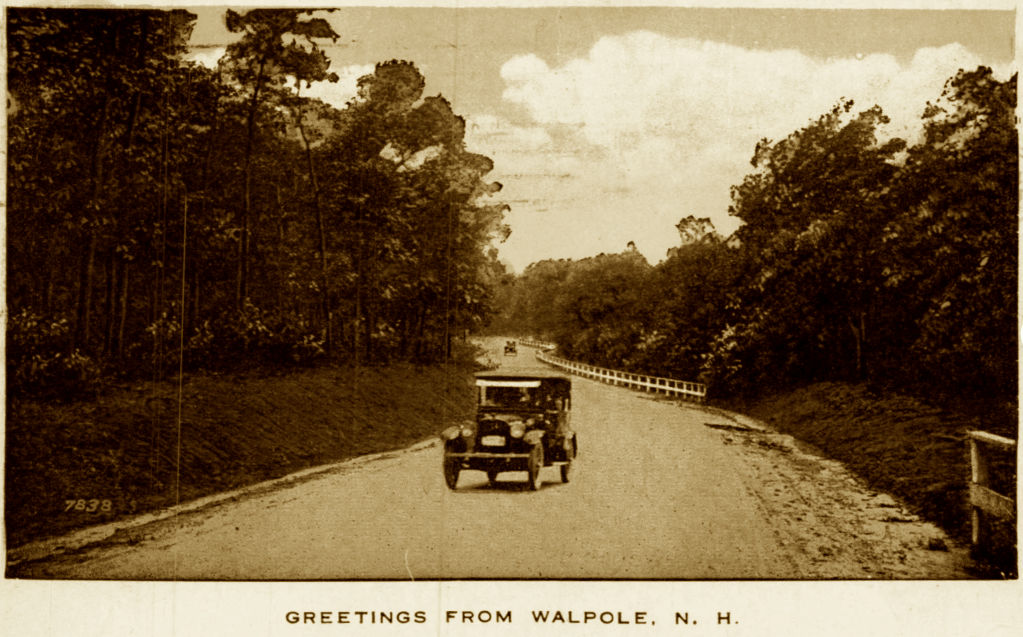
Photographs are by the author unless otherwise noted. Postcard images are in the public domain.


