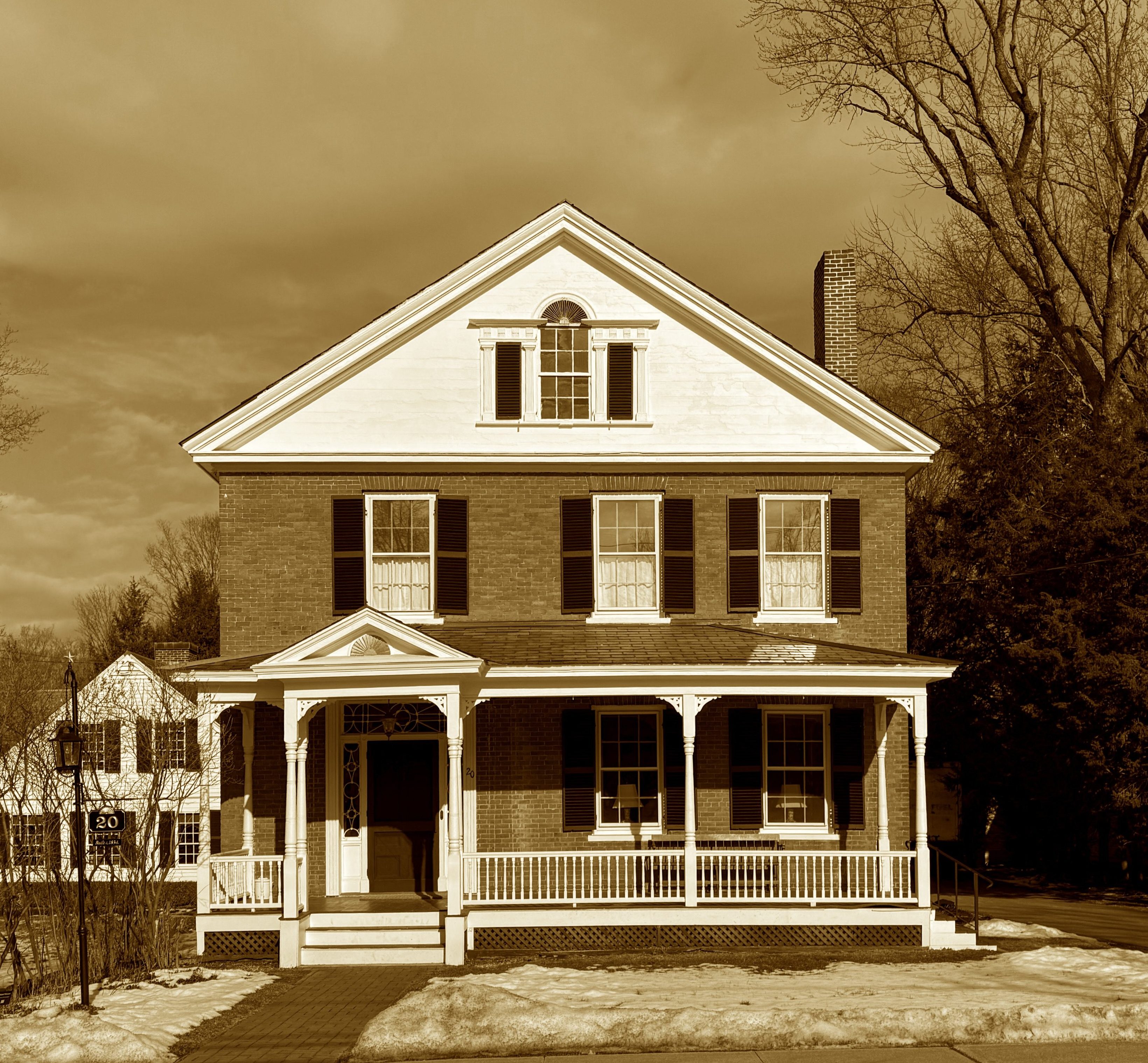

This kind of early-nineteenth-century Cape is one of Walpole’s most enduring house forms. Compact, efficient, and well-proportioned, such houses were built to meet everyday needs rather than to announce status. Constructed of white painted clapboard, their simplicity reflects a building tradition grounded in function, local materials and continuity rather than fashion.
Stephen Rice acquired the lot in 1818, lost and regained it amid financial trouble, and died insolvent by 1846, leaving a tangled estate settled by others. Over the next century the house passed through a succession of owners whose occupations—master carpenter, merchant-tailor, farmer, cabinetmaker, undertaker—trace the changing and often precarious working lives that sustained Walpole.
15 Elm Street stands not just as a representative house form, but as a reminder that modest buildings often witnessed complex personal histories marked by effort, adaptation, and uncertainty behind their calm and orderly exteriors.

