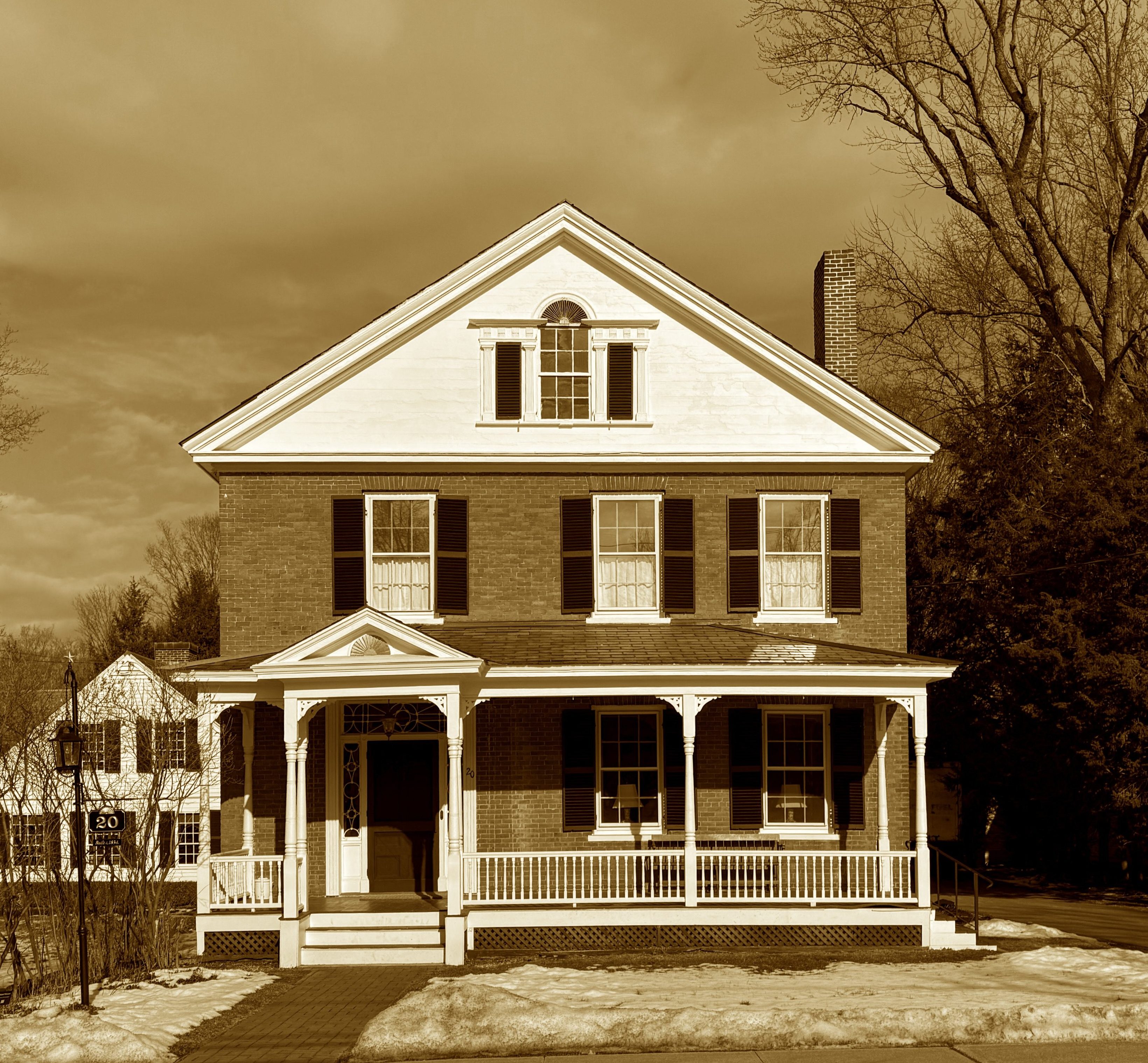
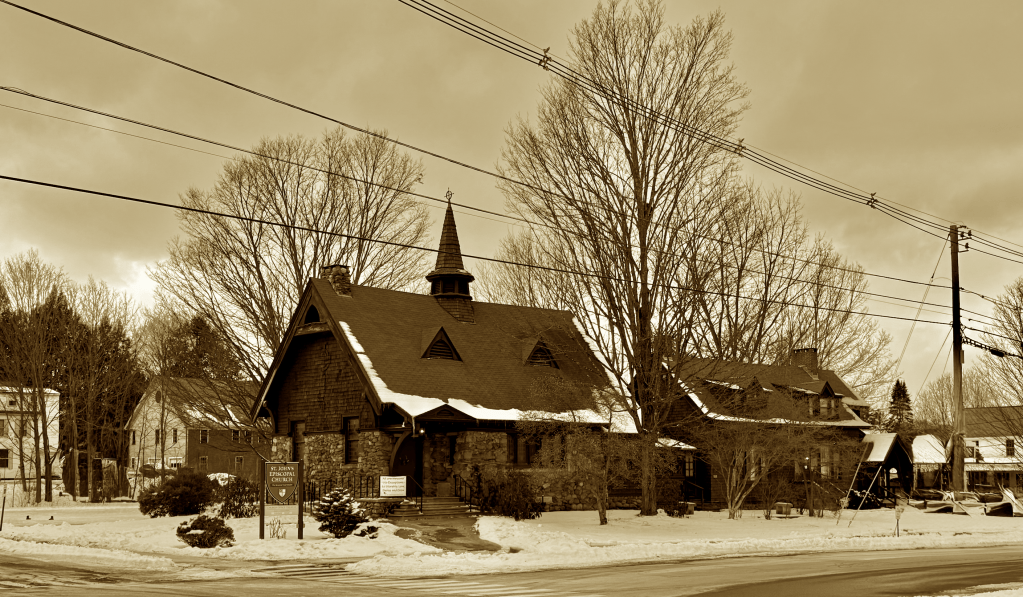
This site has been a center of community life in Walpole for more than two centuries. The first building here was a village schoolhouse erected in 1807. Designed with three classrooms and an expansive second-floor exhibition hall, it served younger students from the village until 1854, when the new elementary school opened on School Street behind The Walpole Academy. After its educational use ended, the building found a second life as R. L. Ball’s shoemaker’s shop, a reminder of the small trades that once supported daily life in Walpole. The old schoolhouse was eventually demolished to make way for the present church.
The land for St. John’s Episcopal Church was a gift from Hudson E. Bridge (1858-1934), presented to the parish on August 1, 1902, as a memorial to his young daughter Katherine Bridge (1897–1900). Katherine died at the age of three, and her photograph is still displayed inside the church on the west end of the south wall; it remains a poignant reminder of the personal loss that shaped the church’s origins.
Hudson E. Bridge was a member of a prominent midwestern industrial family. The Bridges were influential in St. Louis, where they helped establish one of the nation’s largest hardware firms, H. E. & A. F. Bridge Company, descended from the well-known Bridge & Beach Manufacturing Company. Although the family’s primary business interests were centered in Missouri, they maintained connections to New England, and Hudson Bridge spent extended periods in Walpole. His gift of land reflects the pattern of affluent summer residents shaping Walpole’s civic landscape in the early twentieth-century.
The church building was designed by the distinguished St. Louis architectural firm Mauran, Russell & Garden, which was uniquely qualified to execute this building. John Lawrence Mauran was a nationally recognized architect, Ernest Russell contributed significantly to the firm’s ecclesiastical work, and William DeForest Garden had New England roots that may have helped connect the firm to the Walpole commission.
The partnership was known for adapting Arts and Crafts and Gothic Revival influences into refined, well-crafted buildings, qualities that are evident in St. John’s Church.
Groundbreaking took place in 1902, and construction moved swiftly. The first service was celebrated in 1903, followed by the laying of the cornerstone. The formal consecration occurred on September 5, 1903, led by The Rt. Rev. William Woodbury Niles, D.D., Bishop of the Episcopal Diocese of New Hampshire. Bishop Niles (1832–1914) was a respected scholar and church leader, serving as bishop from 1870 until his death. He oversaw a period of significant growth in the diocese, supporting the establishment of churches in both rural and urban communities.
St. John’s stands as both an architectural landmark and a memorial woven into the personal history of one family and the broader story of Walpole’s development at the turn of the twentieth-century.

