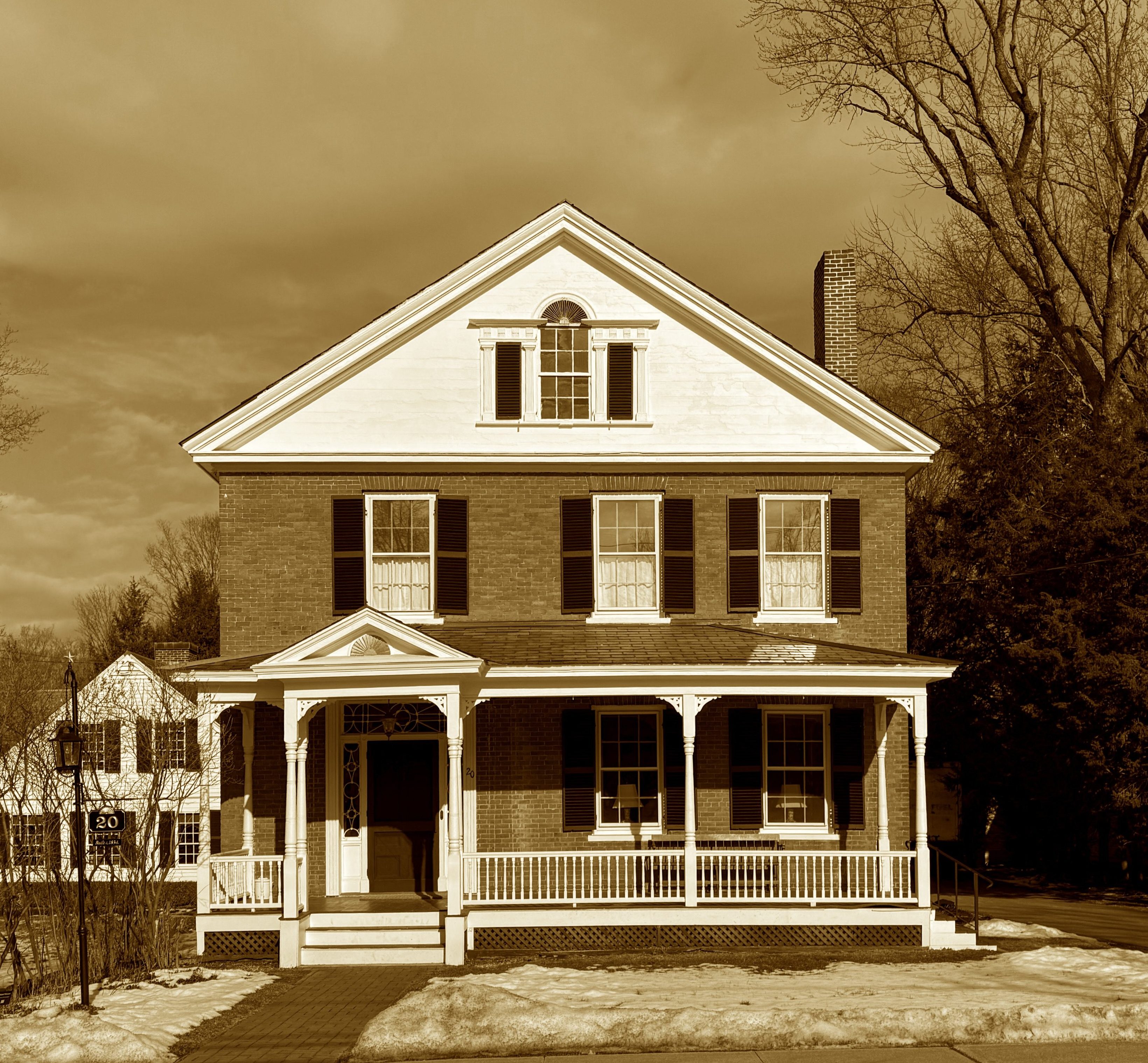
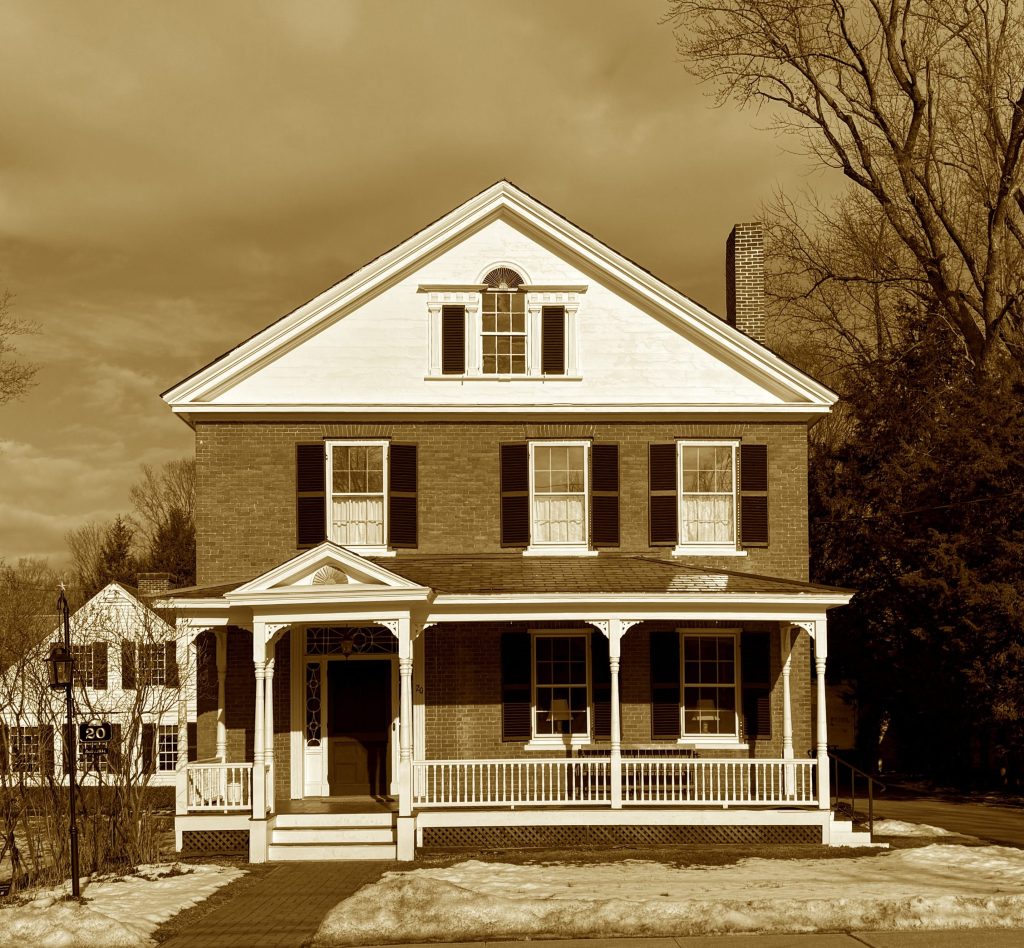
The Aaron Howland House, built in 1834 by master craftsman Aaron P. Howland (1801–1867), is among the most architecturally distinguished residences in Walpole. Standing near the meeting point of Westminster Street and Turnpike Road (now Main Street), the two oldest and most important transportation corridors in the village, the house occupies a strategic position in Walpole’s early street network. The house is not simply a refined example of Greek Revival design; it is also a material testament to Walpole’s role as a crossroads community shaped by travel, commerce and the flow of ideas through the Connecticut River Valley.
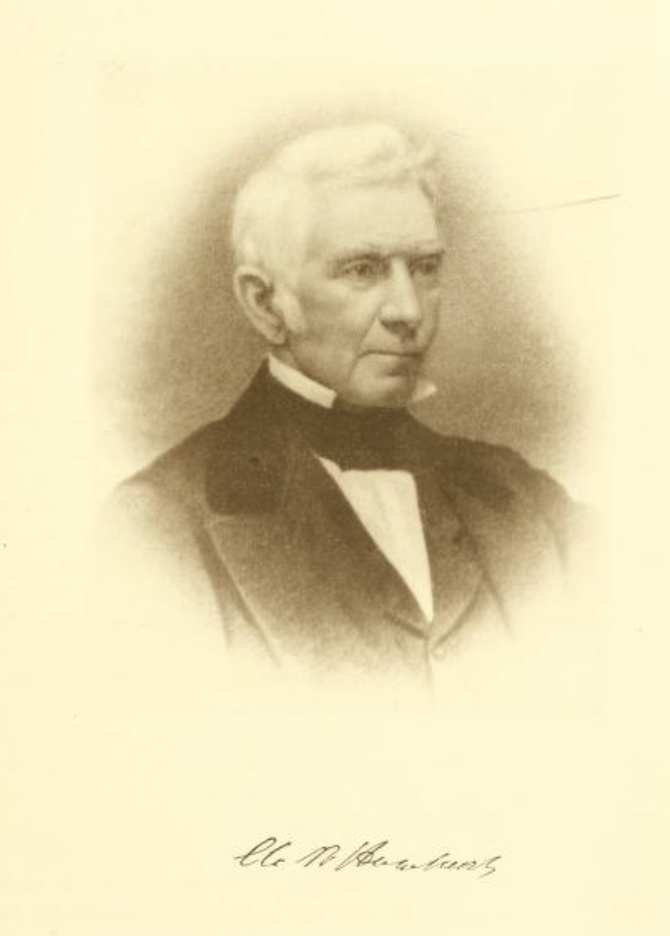
Long before the house existed, its site occupied a strategic position within Walpole’s early street network. Westminster Street led directly to one of the region’s earliest bridges across the Connecticut River (built in 1807), which was a critical eighteenth-century crossing that linked New Hampshire with Vermont and with trade routes leading deep into western New England and New York. Main Street, originally the Charlestown–Walpole Turnpike, carried steady north–south traffic through the growing village. For a brief period Westminster Street was also known as Depot Street, because it led directly from the village to the railroad depot and railyard by the Connecticut River (built circa 1849), a reminder of Walpole’s important mid-nineteenth-century rail connections and of how successive transportation technologies reshaped the same civic landscape.
These roads formed the crossroads of the commercial and civic heart of Walpole. By the 1830s, when Aaron P. Howland erected his elegant brick dwelling just steps from their convergence, the village had become a minor regional hub, supporting stage lines, taverns, small industries, and a concentration of professional and civic life. The Howland House emerged from this context: a refined brick landmark rising along the same transportation network that would later shape the fortunes of some of its most prominent owners.
Howland’s craftsmanship is unmistakable. The warm Connecticut River Valley brick provides the backdrop for a façade grounded in the principles of the Greek Revival, then at the height of fashion. Like many skilled builders of his generation, Howland drew inspiration from the pattern books of Asher Benjamin, whose architectural guides democratized classical design for American towns and helped translate abstract civic ideals into everyday buildings.
The front-gabled façade is crowned by a bold pediment enclosing a Palladian window, a design flourish that appears again in several other Howland-attributed houses across Walpole. The main entrance, framed by fluted pilasters and a transom with sidelights, a detail echoed in the nearby William Buffum House on Main Street, further cementing Howland’s stylistic fingerprint.
Inside, the house retains original random-width floors, crisp moldings, and folding interior shutters in the parlors and stair hall—features both practical and elegant. Fireplaces equipped with perforated heating tubes illustrate early experimentation with improved home heating in the decades before central furnaces.
Howland sold the house in 1842 to Anson Dale (1798-1855), who made a fortune in the California gold-fields and later lost it by speculating in Cheshire Railroad stock. His tumultuous career illustrates the volatility of mid-nineteenth-century ventures that touched even small New England towns. His story underscores how even refined houses like this one were enmeshed in the risks and opportunities of a rapidly changing national economy.
The next owner, Otis Bardwell (1792–1871), ties the house directly to Walpole’s transportation economy—an economy shaped by the very roads that passed its door. Before purchasing the Howland House, Bardwell had lived for 25 years in the “Historic House” at 11 Old North Main Street, Walpole’s oldest surviving dwelling. During that period, he prospered as a stagecoach operator, eventually becoming the proprietor of several major stage and mail lines serving the Connecticut River Valley. His livelihood depended on the infrastructure of Main Street and Westminster Street, whose steady flow of passengers, mail, and freight made Walpole an important node in regional travel before the arrival of railroads.
Bardwell’s later roles as the first president of the Walpole Savings Bank and as an administrator of local trusts cemented his place among Walpole’s civic leaders. His ownership gives the Howland House a direct connection to the era when movement, communication, and enterprise shaped village life.
The property next passed from Bardwell’s heirs to Alfred W. Burt (1817-1891), a cabinetmaker, and later to his son George F. Burt (1852-1915), whose heirs sold it in 1895 to Jennie M. Spaulding (1863–1929). The deed conveyed ownership solely to Jennie, an uncommon assertion of women’s property rights at a time when married women were still navigating restrictive legal norms.
During the ownership of Jennie and her husband Frank A. Spaulding, the house took on its early-twentieth-century appearance. Around 1900, they added the broad Victorian portico that now spans the front façade.
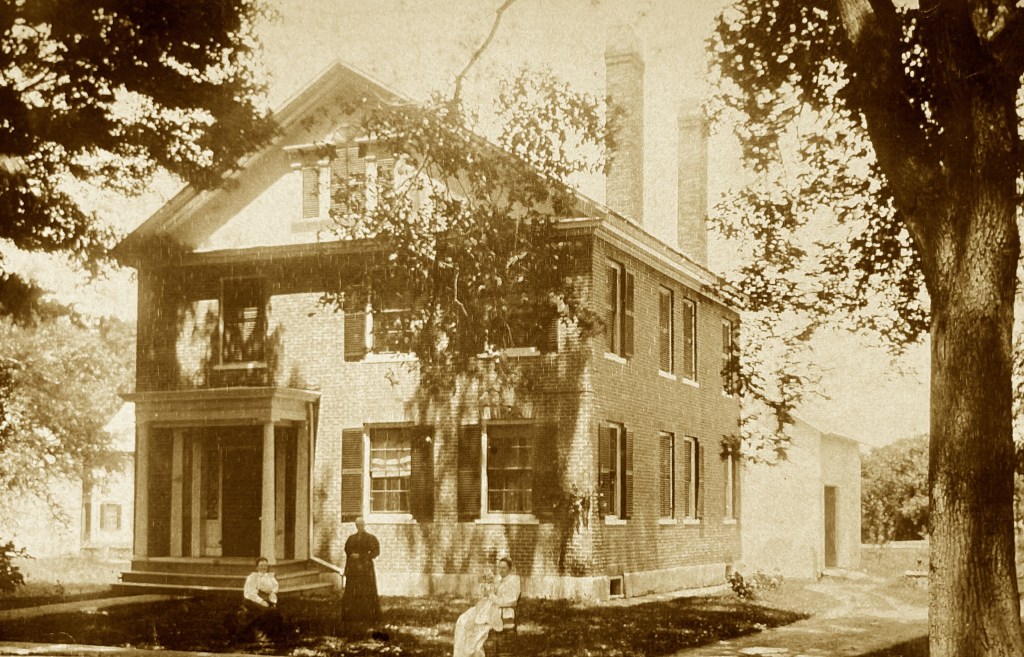
Rather than discarding Howland’s original entrance columns, the Spauldings moved them to a side porch, preserving a tangible link to the house’s first architectural moment. The side porch has since been re-built and the old columns are now in storage in the barn loft, awaiting their next chapter as a planned garden feature.
Jennie and Frank’s son Russell S. Spaulding inherited the residence, demonstrating a continuity of stewardship into the early twentieth-century.
In 1938, the house entered a new phase when it was purchased by Guy H. Bemis (1900–1996) and Marion K. Bemis (1907–1991). Widely known as “Mr. Walpole,” Bemis devoted much of his life to documenting and preserving the village’s architectural heritage. That the Howland House remained so intact into the late twentieth-century is due in no small part to the Bemises’ careful and appreciative occupancy. Their tenure connects the house to Walpole’s modern preservation movement and to the twentieth-century effort to value history as a foundation for community identity.
Why This House Matters: A Microcosm of Walpole’s History
The Aaron Howland House is far more than an elegant Greek Revival dwelling. It stands at the intersection—literally and figuratively—of nearly two centuries of Walpole’s evolution.
- Its architecture embodies the ambitions of early nineteenth-century America, grounded in classical ideals adapted for a growing New England village.
- Its location, near the junction of Westminster Street and Main Street, ties it to the transportation network that shaped Walpole’s prosperity, from early river crossings to bustling turnpike traffic.
- Under Otis Bardwell, the house becomes part of the story of stage lines, mail routes, banking, and the vibrant pre-railroad economy of the Connecticut River Valley.
- Under Jennie Spaulding, the house reflects shifting social norms and the expanding role of women as independent property holders.
- Under Guy Bemis, the property becomes a touchstone of community memory and architectural preservation.
These layers make 20 Westminster Street one of the most richly contextualized historic homes in Walpole. It offers not only architectural beauty but also a window into the lived experiences, ambitions, and economic forces that shaped the village from the 1760s through the twenty-first-century. It stands as a natural starting point for understanding Walpole as a community: how it grew, how it prospered, and how its residents have continually valued and preserved the built environment of their shared past. Together, these layers establish a foundation of civic confidence and public life upon which later generations would reflect more deeply on memory, meaning, and place.

