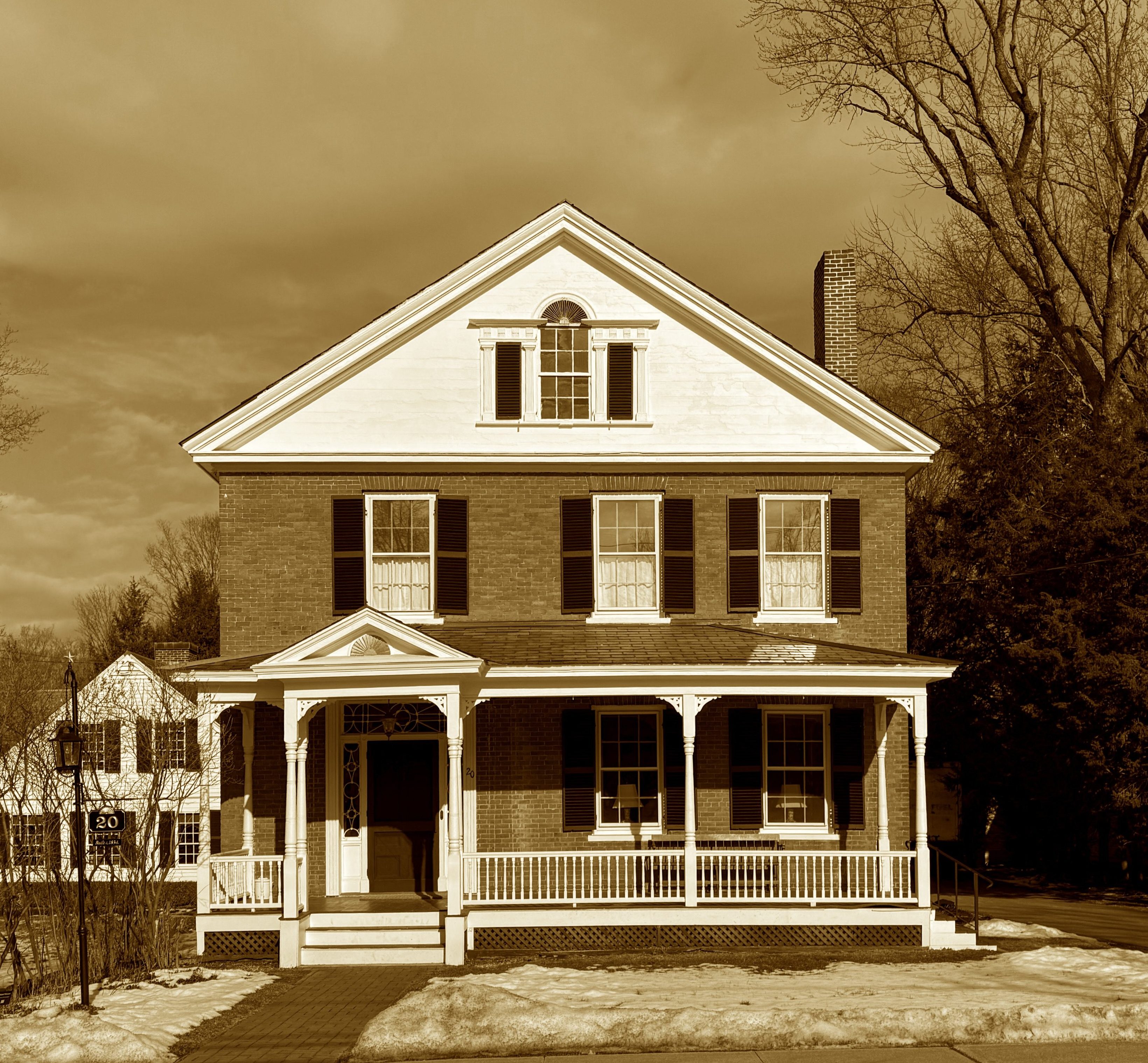
As we return to the center of the village, Walpole’s architectural story gathers its final threads here in Fountain Square, where the built environment expresses not only the classical ideals of the early nineteenth-century but also the reflective spirit that later took hold in New England. You have seen how the Greek Revival buildings lining Main Street and surrounding the Town Common embodied the aspirations of a young republic: its belief in democracy, integrity, civic purpose and cultural independence. Their bold pediments and careful proportions still assert those values today.
By the late nineteenth century, however, the region’s cultural imagination had been reshaped by the influence of Transcendentalism, a movement rooted in New England and led by thinkers such as Amos Bronson Alcott, Ralph Waldo Emerson, Henry David Thoreau and Sarah Margaret Fuller.
Drawing on European Romanticism and the liberal religious currents of Unitarianism, the Transcendentalists argued that genuine understanding arises not from institutions or inherited authority, but from the individual’s direct, intuitive encounter with the world.
Drawing on European Romanticism and the liberal religious currents of Unitarianism, the Transcendentalists argued that genuine understanding arises not from institutions or inherited authority, but from the individual’s direct, intuitive encounter with the world.
They championed self-reliance, moral sincerity, and trust in one’s inner compass over social convention or material ambition. Many also linked personal awakening to public responsibility, advocating passionately for the abolition of slavery, women’s rights, and educational reform. In many ways, the Transcendentalists were ahead of their time—their concerns remain compelling today.
This philosophical shift brought with it a renewed reverence for the natural world—not as scenery alone, but as a source of instruction, and no natural landmark loomed larger in the New England imagination than nearby Mount Monadnock, some thirty miles southeast of Walpole.
The mountain’s name comes from the Abenaki language, commonly translated as “the mountain that stands alone.” The Abenaki people are an Indigenous nation whose ancestral homelands encompassed much of present-day northern New England, southern Quebec, and the Canadian Maritimes. Long before European settlement, Monadnock was a significant presence in their cultural and geographic landscape, its solitary form marking the land both physically and spiritually.


Rising abruptly above the surrounding countryside, Monadnock became one of the most-climbed mountains in the world. For nineteenth-century writers and thinkers, its stark profile and exposed summit offered more than inspiration: they demanded attentiveness, humility, and endurance.
The arduous, weathered, unsheltered climb itself became a form of moral encounter. In this way, Monadnock served not merely as a symbol, but as a teacher.
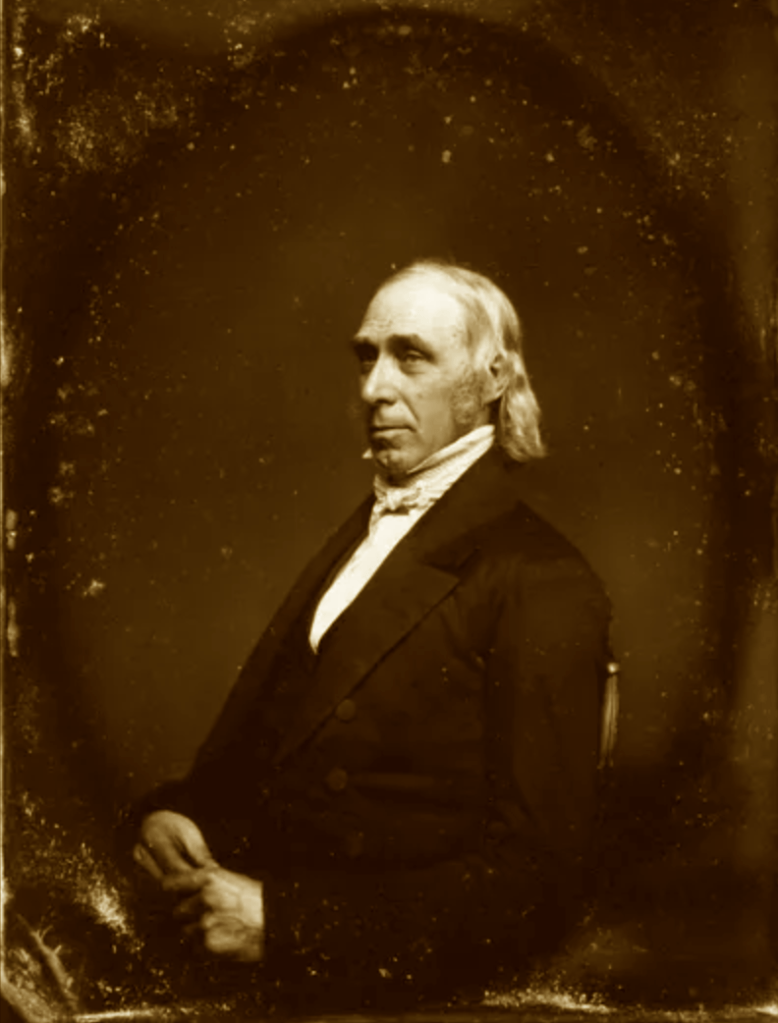
Emerson climbed Monadnock several times, describing it as “an aerial isle”—a place set apart, where the distractions of society fell away and deeper realities might be apprehended. In his poem Monadnoc, Emerson portrays the mountain as a stabilizing presence for the region, a moral axis as much as a geographic one.
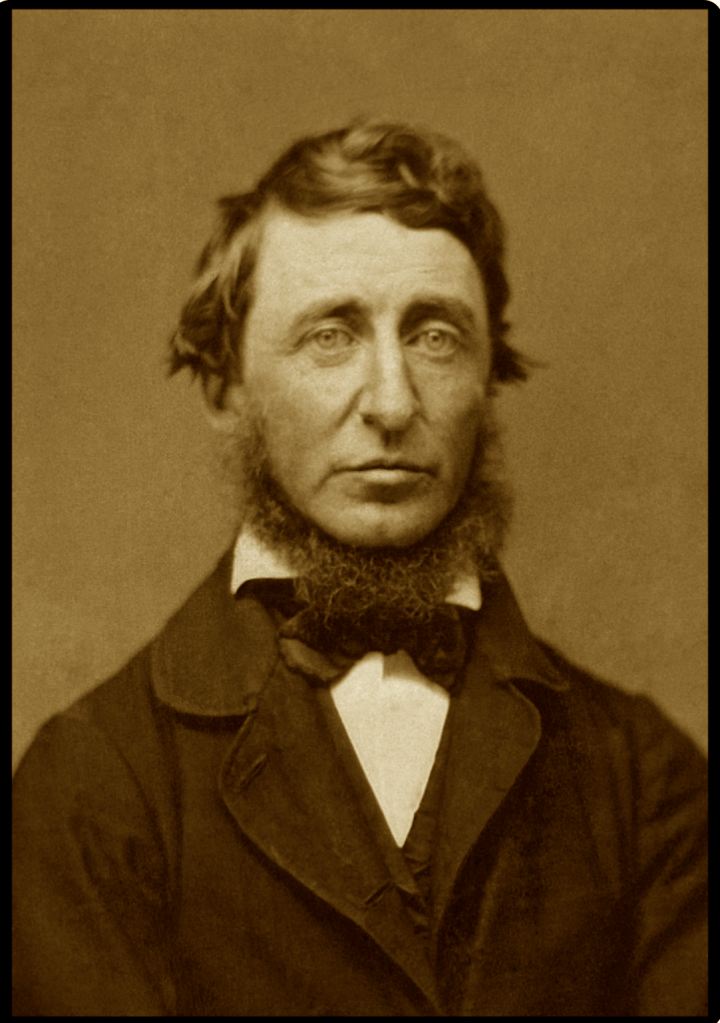
Thoreau visited Monadnock four times between 1844 and 1860, finding in its “sublime grey mass” a rebuke to intellectual posturing and human restlessness. In the opening of his poem Mountains, written in the early 1840s (but published posthumously in 1895), he praises the mountain not for its beauty alone, but for its steadfastness and its refusal to yield to fashion, theory, or haste.
For both Emerson and Thoreau, Monadnock embodied a disciplined freedom: independence without isolation, solitude without withdrawal. It affirmed a central Transcendentalist belief that nature, encountered directly and attentively, could steady the mind, clarify moral judgment, and restore a sense of proportion between the individual and the larger world.
For many New Englanders, Monadnock came to embody qualities they admired in themselves and aspired to cultivate: independence, steadfastness, humility before nature and clarity of thought. The mountain stood not only as a physical landmark, but as a moral guidepost, affirming the Transcendentalist belief that nature itself is a temple, offering insight, grounding and renewal.
By the late nineteenth century, Transcendentalism as an organized movement had passed, but its influence endured, absorbed into New England’s cultural memory and expressed through poetry, commemoration (public remembrance as a celebration of the individual) and civic design (organic forms harmonizing with the landscape). That inheritance finds tangible form here in Fountain Square.
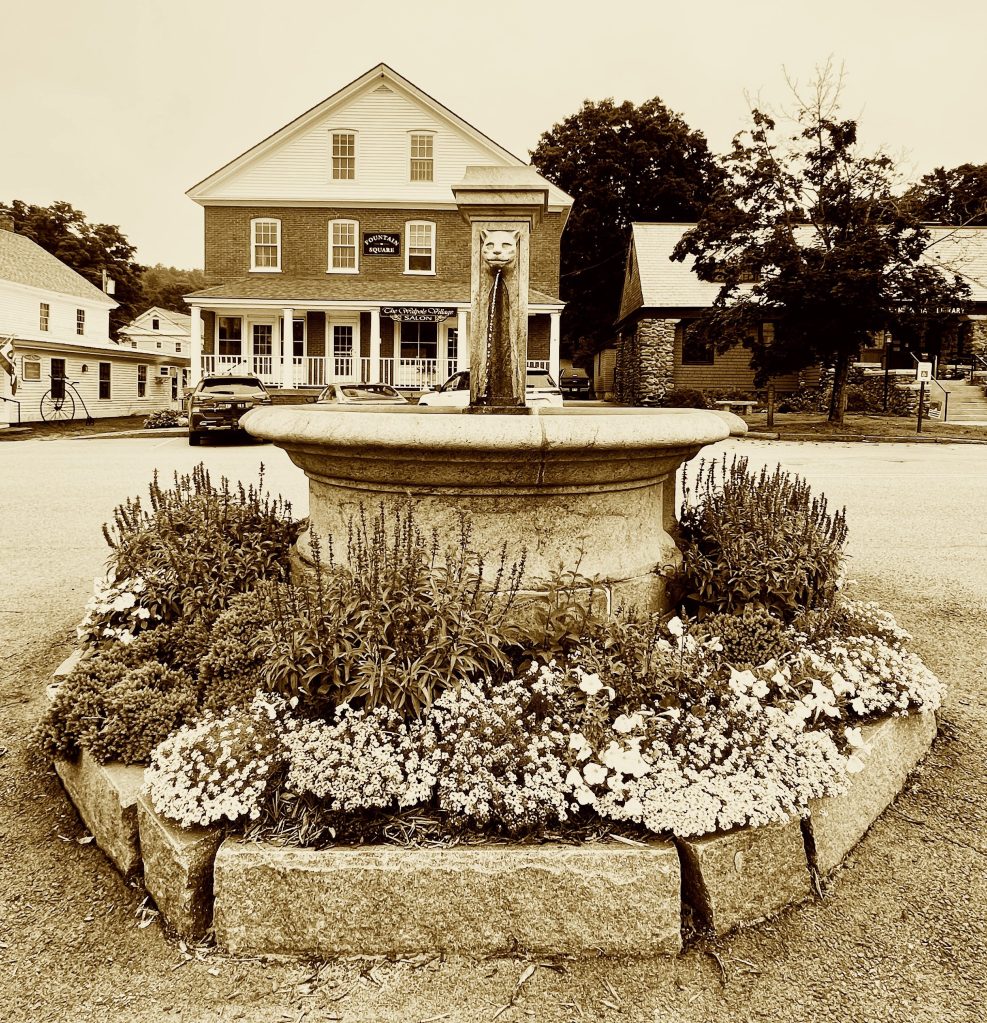
The site once featured a bandstand, removed in 1889, before Charles Prentice Howland (1870–1932), a son of Henry Elias Howland (1835-1913) and Sarah Louise Miller (1838-1884), and a grandson of Aaron P. Howland and Huldah Burke Howland, presented a gift to the village in 1905: a public fountain “for horses and human beings.”
Designed by the American Beaux-Arts firm Delano & Aldrich of New York City and carved from Branford Red Granite quarried at Stony Creek, Connecticut, the fountain brought both beauty and utility to the crossroads of Main and Westminster Streets.
Over time, the fountain fell into disrepair. By the 1940s its mechanism had failed, and by the 1960s it brimmed with summer flowers instead of flowing water. Yet Walpole’s sense of stewardship endured. In 1983 the community established a “Restore the Fountain Fund,” and the restored fountain was proudly rededicated following the Old Home Days Parade in 1984.
The fountain features a pillar crowned with the carved head of a catamount, from which a single spout fills the basin below. The choice of a catamount is itself richly symbolic. Once native to New Hampshire and throughout New England, the catamount (also known as the eastern cougar or mountain lion) was long associated with strength, vigilance, independence and a keen attunement to its surroundings.
By the early twentieth century, when the fountain was conceived, the catamount had largely vanished from the region, surviving instead in memory, story and emblem. The last confirmed sighting was in Maine in 1938, but the US Fish and Wildlife Service did not declare the eastern cougar extinct until 2018. The catamount’s presence here reflects more than nostalgia for a lost wilderness; it signals a desire to preserve, in symbolic form, the qualities that wilderness was believed to cultivate.
Like Mount Monadnock, the catamount was understood as solitary rather than social, self-possessed rather than domesticated. Both stood apart from human systems, governed by their own internal order. In this way, the carved head atop the fountain translates the moral lessons of the mountain into a civic setting. Positioned at the heart of the village, it reminds passersby that strength need not be aggressive, independence need not be isolating, and that attentiveness to the natural world remains a form of ethical discipline, even within an ordered town.
On the rear of the pillar, above the smaller basin intended “for human beings” is an inscription drawn from Emerson’s poem Monadnoc—a deliberate tribute to the mountain that so profoundly shaped New England’s literary and philosophical life. Emerson composed part of the poem during an 1845 ascent of Mount Monadnock. The lines chosen for the fountain read:
Take the bounty
of thy birth
Taste the lordship
of the earth
From “Monadnock”
Emerson
The inscription comes from Emerson’s 1876 revision of the poem, published posthumously in 1904. In the version first published in 1847, he had written “Accept the bounty,” later strengthening the phrase to the more active “Take the bounty,” a subtle shift that underscores the Transcendentalist conviction that moral and spiritual insight must be affirmatively claimed through direct experience. The stonecutter’s erroneous addition of the final “k” to “Monadnock” firmly anchors the words to the mountain itself.
Here, at the meeting point of Walpole’s early republican architecture and its later philosophical inheritance, the village’s character comes into focus. The Greek Revival buildings on Main Street and surrounding the Town Common speak of civic order, shared purpose and confidence in public life. The fountain, with its poetic inscription and watchful catamount, introduces a contemplative note that values reflection, attentiveness and the influence of the natural world.
Together they reveal a community informed by both reason and intuition, by public aspiration and interior life. Walpole’s enduring charm lies not only in the preservation of its historic buildings, but in the ideas those buildings continue to hold: democratic optimism on one hand, and the Transcendentalist insistence that truth is found through lived experience on the other.
As you conclude your tour, take a moment to reflect on what you’ve learned and experienced, and on the enduring character of Walpole revealed along the way. Fountain Square gathers the village’s story into a single space: architecture and landscape, memory and aspiration, human design and natural presence. In that balance, Walpole continues to affirm a belief shared by Emerson and his contemporaries—that a community flourishes when civic life remains open to reflection, and when the natural world is recognized not as backdrop, but as guide.
Take the bounty of thy birth — Taste the lordship of the earth

