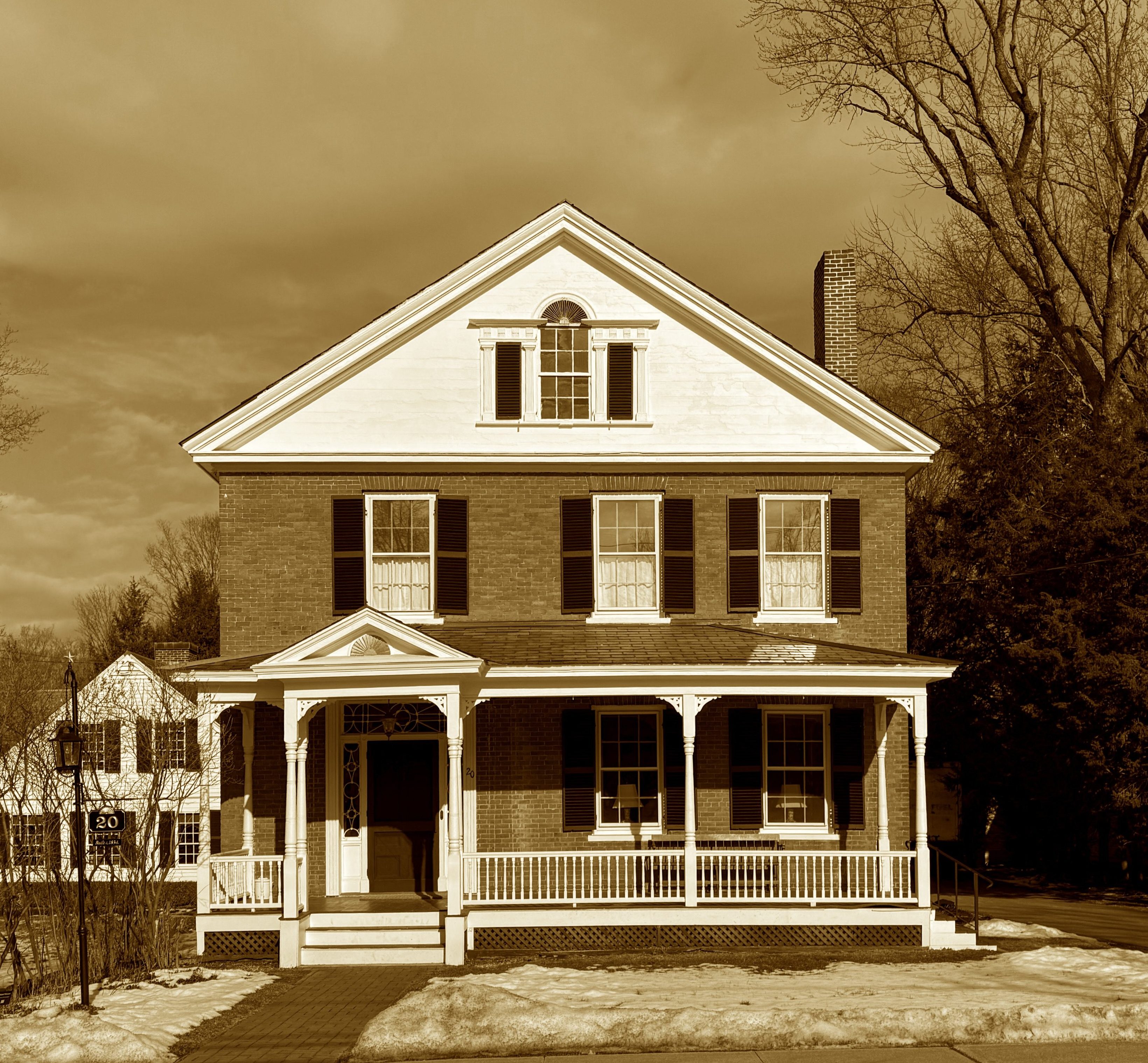

This unassuming building on High Street holds one of Walpole’s most celebrated literary connections. Although its exact construction date is unknown, the house became a two-family dwelling in the mid-nineteenth-century, and from 1855 to 1857 the left side served as the residence of Louisa May Alcott and her family. This period formed an important chapter in the Alcotts’ lives.
Originally, the house stood beside the Bellows-Grant House at 42 Main Street. When Benjamin Willis purchased the Main Street property in 1846, he also acquired the lot to its north. Willis had the existing house moved from that location up to High Street and converted it into a duplex. It was in this newly relocated and adapted dwelling that the Alcotts found a stable home during their Walpole years.
The Alcotts’ arrival in Walpole came at a moment when the family was recovering from the difficulties that often followed Bronson Alcott’s idealistic ventures. A central figure in the Transcendentalist movement and a close associate of Ralph Waldo Emerson (1803-1882) Henry David Thoreau (1817-1862), and Sarah Margaret Fuller (1810-1850), Amos Bronson Alcott (1799-1888) was known for his progressive, and sometimes polarizing, educational and social philosophies. His utopian experiment at Fruitlands (his agrarian commune in Harvard, Massachusetts) had collapsed just a decade earlier, and the family continued to feel the economic aftershocks of his lofty but impractical ideals. Walpole offered a place where the family could enjoy some measure of stability and where Bronson could reconnect with sympathetic relatives who appreciated his intellectual pursuits, even if they did not always share his reformist zeal.
The Alcott connection to Walpole arose through family ties. Benjamin Willis had married Elizabeth Sewall May (1798-1822), sister of Abby May Alcott (1800-1877), Louisa’s mother. Willis’ son, Hamilton Willis (1818-1878), and Hamilton’s wife, Louisa May Windship Willis (1819-1862), were Louisa May Alcott’s cousins. It was Hamilton and Louisa May Windship Willis who invited their cousin Louisa to come to Walpole in June 1855. Louisa’s sister Anna worked for Benjamin Willis as a governess in 1846 while they were living at Hillside in Concord, Massachusetts, and later in Walpole.
Louisa arrived first, settling into the left side of the duplex. The rest of the Alcott family joined her in July 1855. Though Walpole provided a more orderly life than the family had often known, their time here was marked by both creative growth and emotional strain. During these years, Louisa’s beloved younger sister, Elizabeth Sewall Alcott—“Beth” in Little Women—suffered lingering complications from scarlet fever, an illness she had contracted several years earlier while helping a destitute immigrant family. Elizabeth’s fragile health shadowed the family’s stay in Walpole, underscoring the precariousness of their circumstances and deepening Louisa’s sense of responsibility.
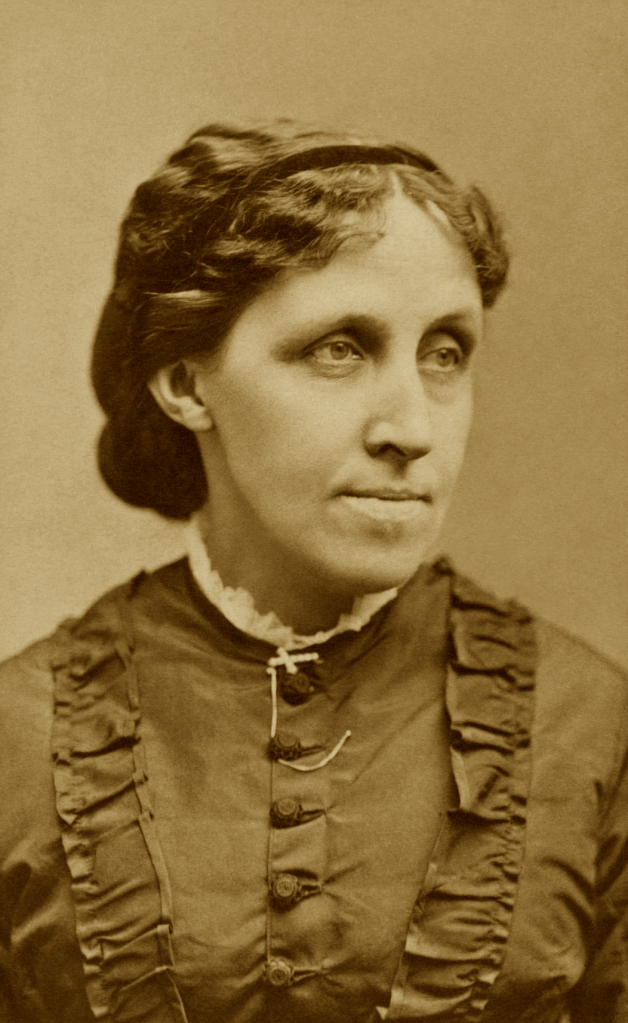
The environment in Walpole offered Louisa space to write, read and reflect. The intellectual atmosphere shaped by her father’s Transcendentalist convictions (belief in individual conscience, self-reliance, educational reform, and the moral imperative to challenge injustice) continued to influence her thinking during these years. Bronson’s commitment to abolition, educational equality and women’s moral and intellectual capabilities left a lasting imprint on Louisa, informing her own progressive views on feminism and the abolition of slavery. Her later works, most notably Little Women, would carry these values forward in ways that were both subtle and revolutionary for their time.
Though less often highlighted in biographies, the years Louisa May Alcott spent in Walpole were formative in her development as both a writer and an adult navigating the demands of supporting her family, caring for an ailing sister, and finding her own voice.
Today the building is known as the Alcott Apartments. Its connection to one of America’s most beloved authors and to a family central to American literary and reform movements remains a key piece of Walpole’s cultural and literary heritage.

