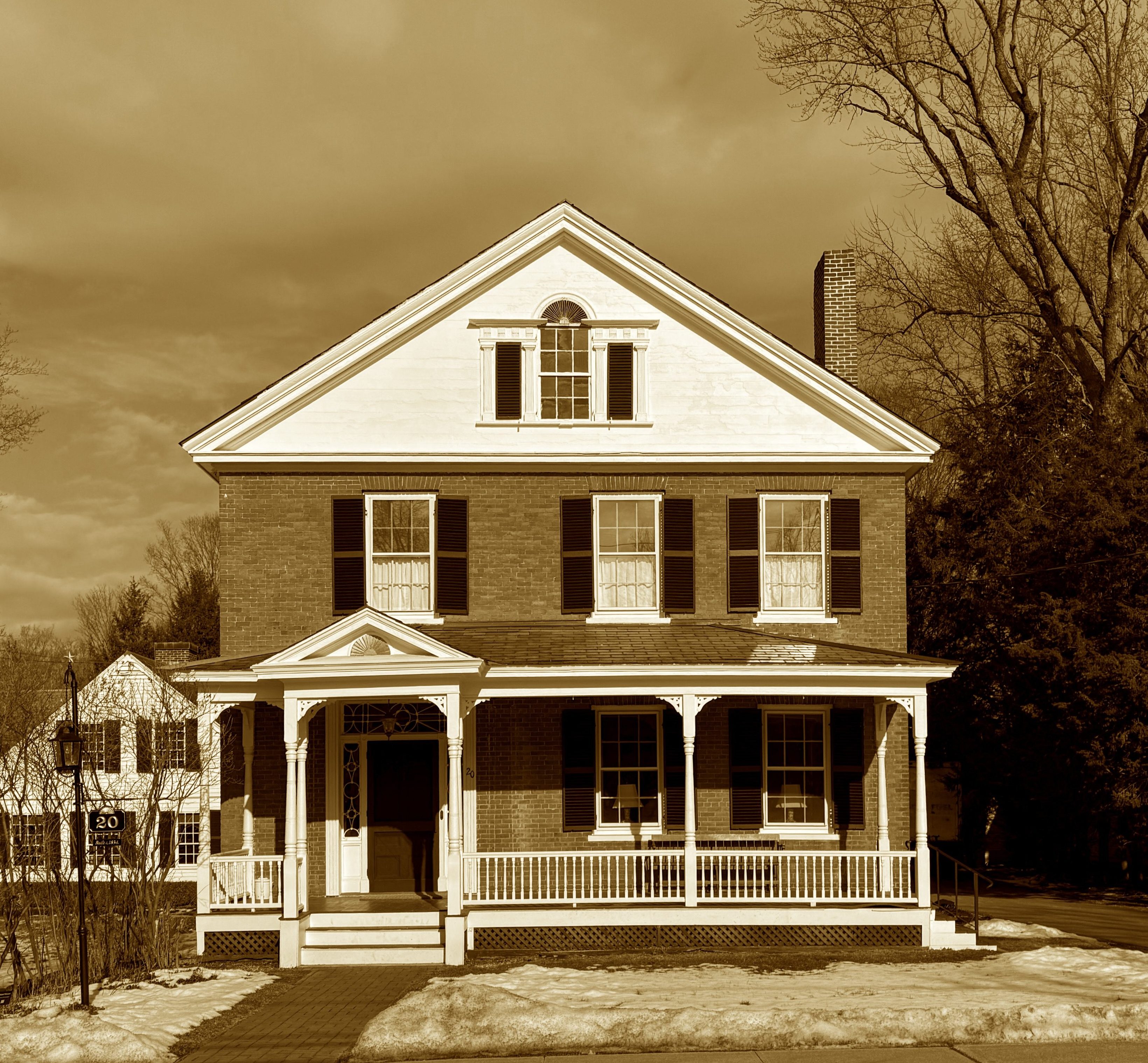

The land on which this house stands was originally part of the Grants’ extensive holdings associated with the Bellows–Grant House at 42 Main Street. In 1806 they sold this portion of their property (eight rods south on the west side of what was then Washington Square), beginning a long sequence of transactions that helped transform large house lots into the dense, walkable village center we recognize today.
By 1810 the property was occupied by Oren Hall, who lived here while operating a shop just to the south. This detail highlights an essential feature of early Walpole: it was a working village, not rigidly divided into residential and commercial zones. Houses, shops, and small enterprises stood side by side, especially around Washington Square, allowing daily life to unfold within a compact area.
Over the next several decades, the house passed through the hands of clothiers, merchants, clergy, and families whose names recur throughout Walpole’s records: Chandler, Adams, Gage, Bellows, Sherman and Johonnot. The succession of owners illustrates continuity rather than change. The house was repeatedly adapted, maintained, and inhabited, rather than replaced. Its significance lies not in prominence or display, but in how it helps explain the lived-in, layered character of Walpole village itself.

