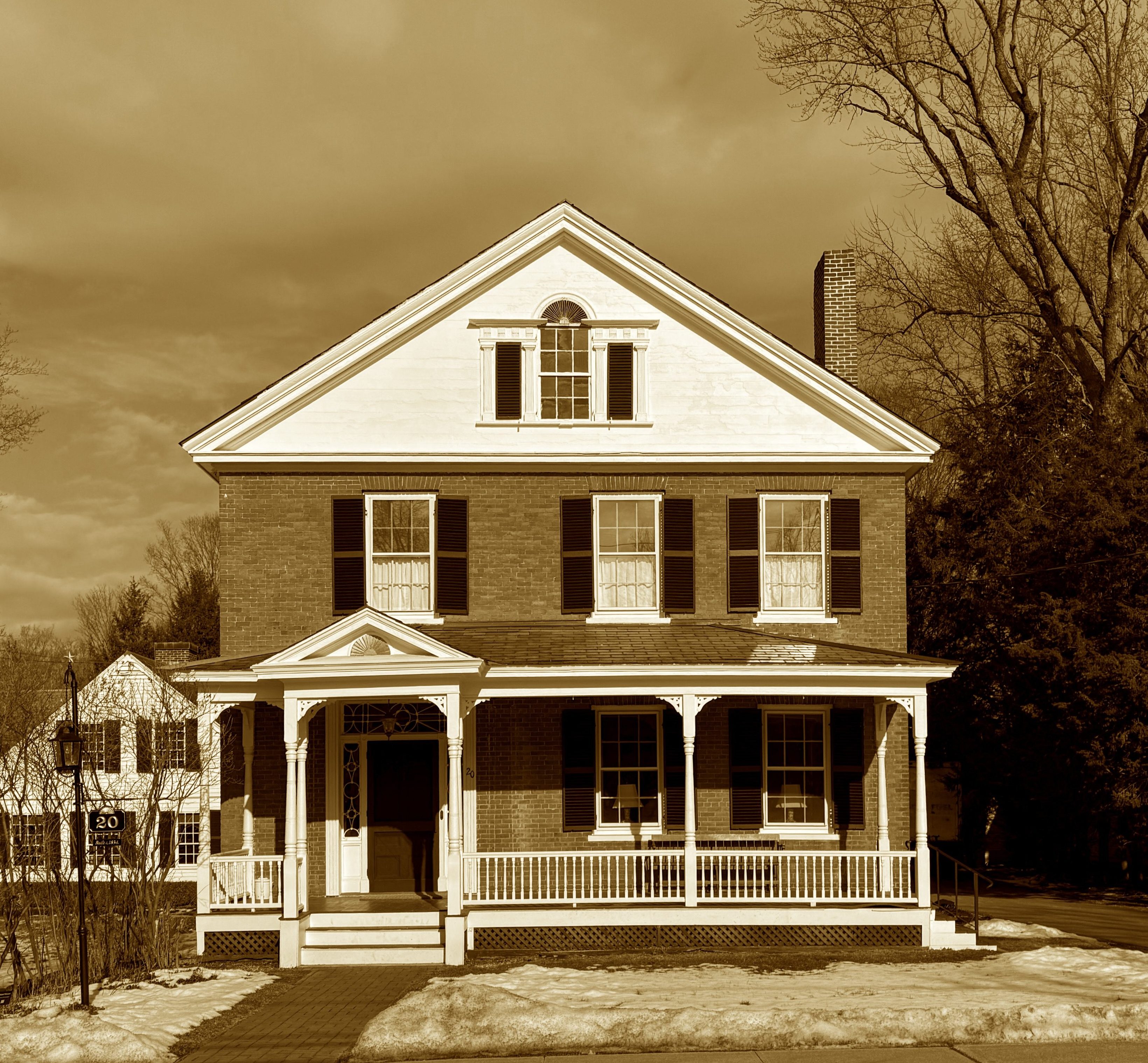
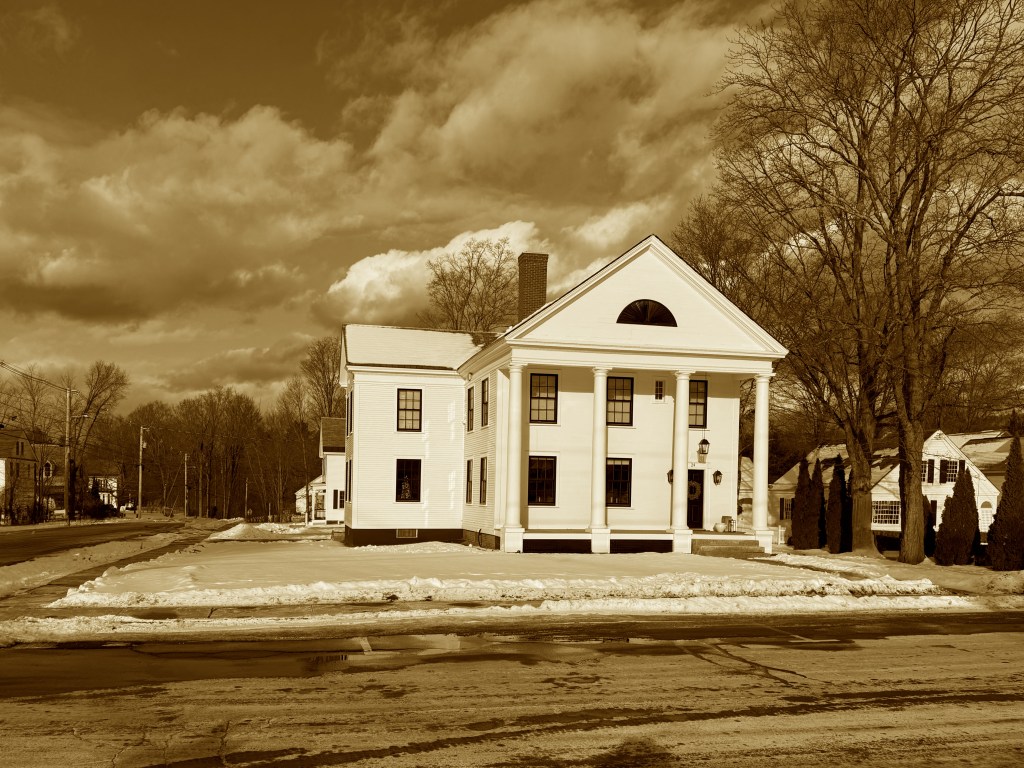
Built circa 1821, this refined house is widely regarded as Walpole’s earliest example of Greek Revival architecture. Modest in scale yet formal in expression, it marks a clear departure from the older Colonial houses nearby and reflects the town’s early embrace of a national architectural fashion.
Its temple-like front is dominated by a full-height portico, where tall classical columns support a triangular pediment. The smooth white exterior, strong cornice line, and evenly spaced windows emphasize order, proportion, and restraint — the hallmarks of the style. Unlike the more elaborate examples that followed, this early version is deliberately spare, translating monumental classical forms into a dignified village residence suited to a small household.
The house was designed and built by Levi Hubbard (1764–1831) for Susan Bellows Robeson (1780–1860), eldest daughter of Colonel Joseph Bellows (1744–1817) and granddaughter of Colonel Benjamin Bellows (1712–1777), Walpole’s founder. Recently widowed when construction began, Susan raised two children of her own alongside four stepchildren from the earlier marriage of her late husband, Major Jonas Robeson — managing the household with an independence and sense of civic duty that the town long remembered.
Local tradition preserves a vivid measure of her character. On the night she died, Walpole was preparing a torchlight procession for Abraham Lincoln’s candidacy in 1860, and every house around the Common was to be illuminated. Told that her own windows had been left dark so she might rest, Susan answered:
Let every pane of glass in every window of this house be lighted at once if there are candles enough in town to do it.
She died before morning.
In the twentieth century, the house entered a new chapter when it was purchased in 1932 by P. Lucile Tucker (Hawley) Bragg (1879–1953), a schoolteacher and antiques dealer who sold and displayed items from the barn on the property. It later served as a multi-family commercial property with a dentist’s office on the first floor, then restored and converted back to a single family dwelling in 2021.
The Susan Bellows Robeson House stands as a landmark of architectural transition on Westminster Street, linking Walpole’s founding families, early Greek Revival design, and generations of residents whose lives shaped the village’s civic and cultural identity.

