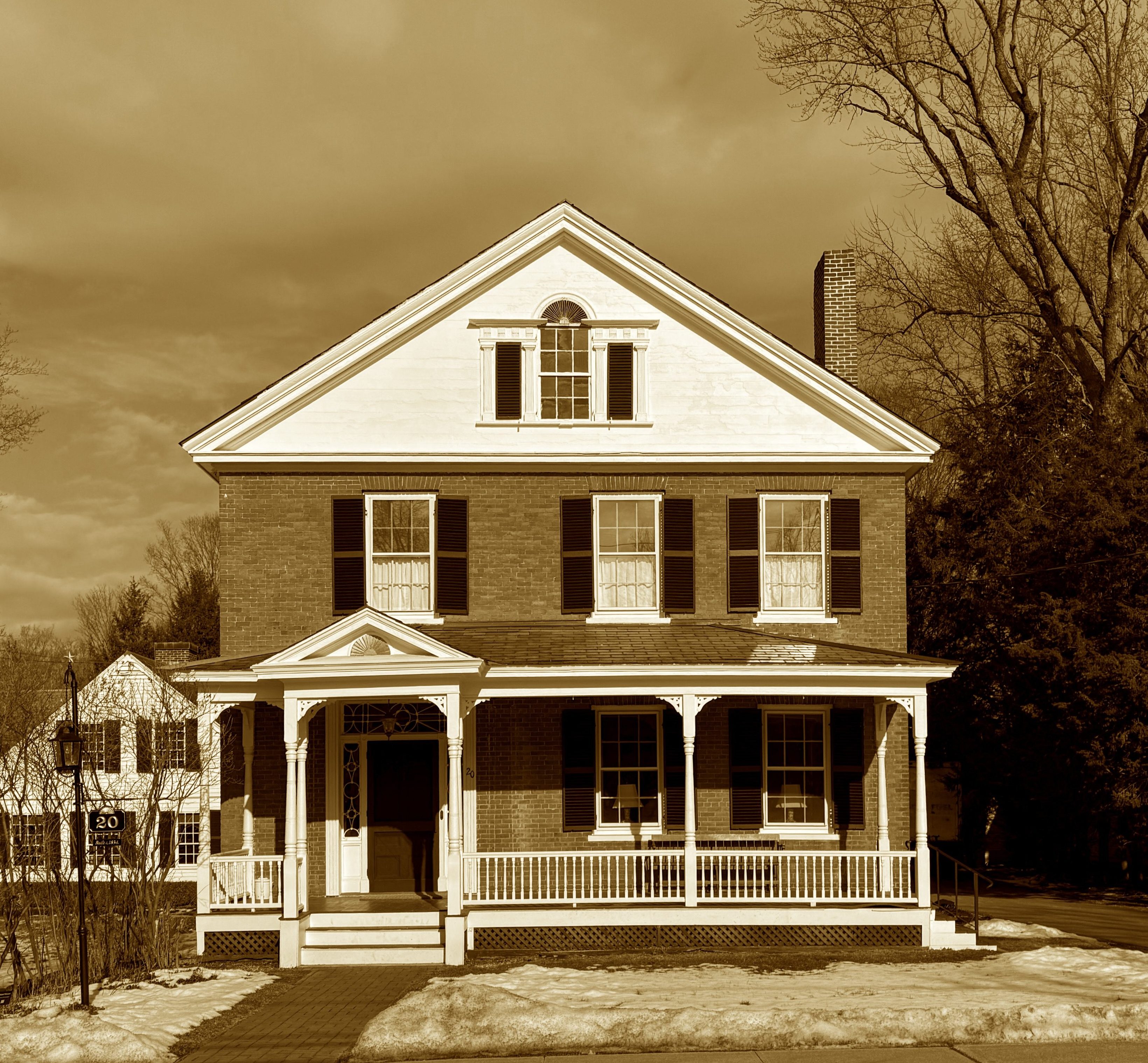

Built circa 1811 by tanner Daniel W. Bisco (1766-1828), this house is an excellent example of rural Federal-period design distinguished by the large extended ell that connects the main block to the barn. This configuration is seen in many early New England farmsteads, but executed here with unusual scale and refinement. The main house retains hallmark Federal features, including its symmetrical façade, understated ornament, and delicately proportioned windows.
Tradition holds that this was the first house in Walpole to include an indoor bathroom, a notable innovation for a small New Hampshire village in the early nineteenth-century. This detail points to the prosperity and progressive interests of its early owners, who embraced modern conveniences well ahead of many contemporaries.
In 1905, the house underwent a significant update with the addition of the front portico and the projecting two-story bay, both of which introduced late Victorian and Colonial Revival elements while preserving the original Federal core. The result is a distinctive blending of architectural eras, characteristic of Walpole’s long history of tasteful renovation rather than wholesale replacement.
Though not associated with a single nationally known figure, the house stands as a testament to the town’s evolving architectural tastes and the comfort, status, and permanence sought by generations of Walpole families who lived in and adapted it over more than two centuries.

