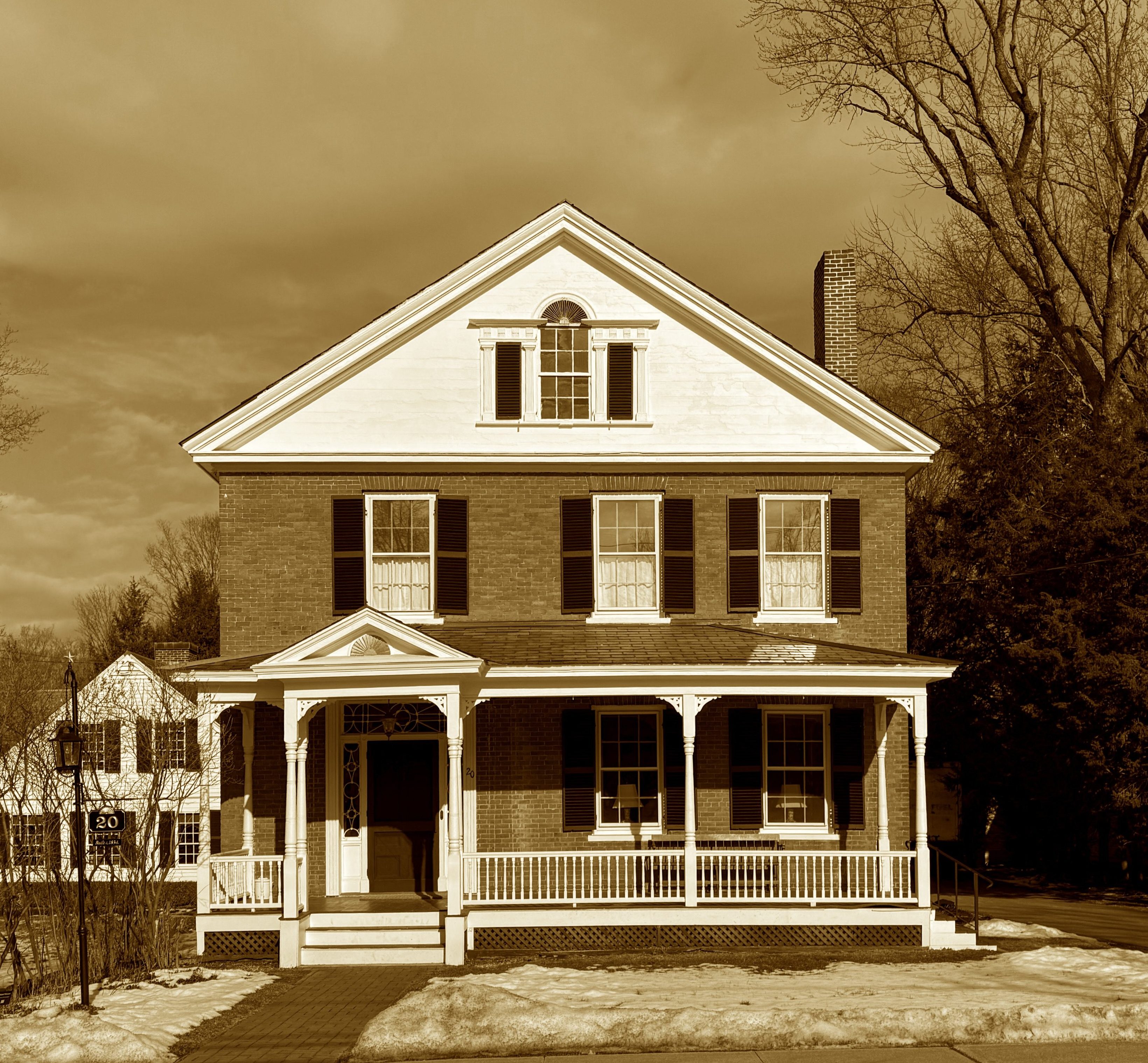

Built around 1863, the Charles Hooper House is one of Walpole’s finest examples of the Italianate style—fashionable in mid-nineteenth-century New England for its evocation of Italian villas and its emphasis on decorative detail. The house displays hallmark features of the style: bracketed eaves, tall narrow windows, and especially the elegant repetition of an arched motif. The arch that frames the entrance porch echoes in the window caps and rises again in the cupola, unifying the building’s design and giving the house its distinctive vertical emphasis.
The original owner, Charles Hooper (1809-1866), was a successful ship owner whose presence in inland Walpole reflects the town’s far-reaching commercial ties during this period. Hooper was known locally for his friendly rivalry with Silas Bates, the prosperous shirt manufacturer whose residence stood up the road at 34 Old North Main Street. When Hooper built a cupola on his house, Mr. Bates in turn added an even larger one to his house. Their side-by-side displays of prosperity symbolized Walpole’s mid-nineteenth-century economic vitality, when mercantile fortunes and small-scale industry helped shape the village.
In 1926, the property took on an entirely new community role when it was purchased by Dr. Bayard Mousley (1879-1935), who converted the carriage house into Walpole’s first and only hospital. For many residents, this small facility offered the first local access to modern medical care, making the Hooper House not only architecturally significant but also an important site in the town’s social history.

