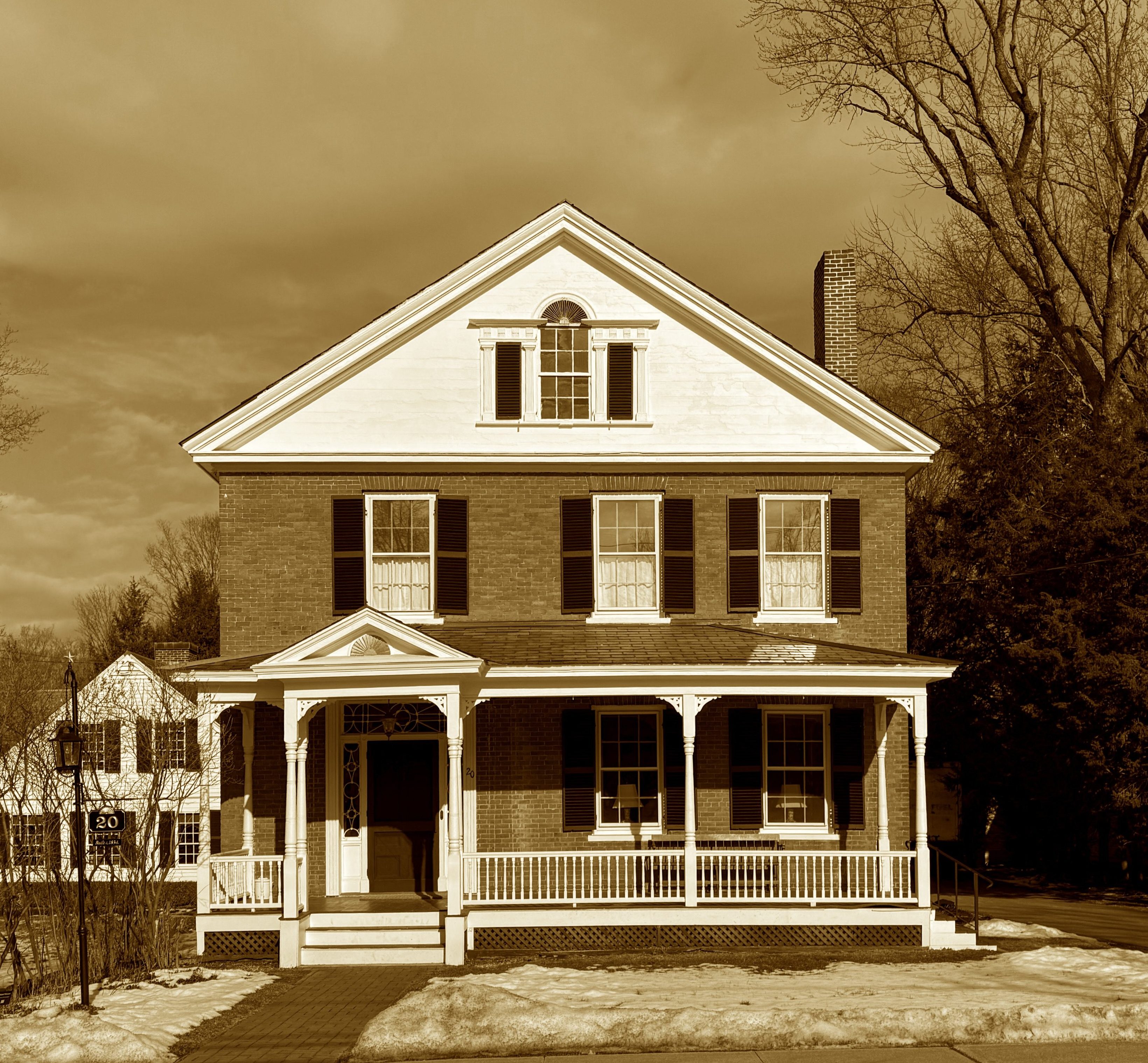

The parcel at 11 Westminster Street was originally developed around 1841 when James L. Mitchell (1817-1880), a prosperous hotelier based in New York City, built a large house here for his father, William Mitchell (1788-1881). Mitchell was the owner of the “Hotel Brunswick” in New York City and had the means to build a substantial and comfortable dwelling in Walpole for his father’s retirement.
Although built by someone experienced in hospitality, the house initially served as a single-family residence, reflecting both its scale and its rural setting just off the village’s Main Street. Over the ensuing decades, the property passed through several private owners, each contributing to the architecture and character of the building.
In 1902, the property was purchased by Copley Amory (1866-1960), a scion of a prominent Boston family. Copley Amory came from a well-documented mercantile and socially prominent New England lineage: the extended Amory, Sullivan, Coffin, and related families of Boston long maintained business, estate, and social ties, with records going back to the seventeenth and eighteenth centuries.
Under Amory’s ownership, the house was completely remodeled and converted into The Walpole Inn. Porches were added, new wings constructed (including an east wing and a rear wing), and a stable was removed to make way for modern accommodations. Early in its life as an inn, the property was quite active: the main house served as the core lodging, while a nearby building was acquired as an annex to house overflow guests; its barn became a garage as automobile travel became more common.
But Amory’s influence on Walpole extended beyond hospitality. As he developed the Inn, he also launched major civic infrastructure projects: in 1903 he was one of seven Walpole men granted a charter to create the Walpole Water & Sewer Company to supply pure water to the village for domestic use, manufacturing and fire protection. He laid sewer lines along Westminster Street and down to the river, laying the groundwork for modern municipal services.
The transformation of the Mitchell house into The Walpole Inn under Copley Amory reflects more than a change of use; it marks a phase of modernization, linking the village’s nineteenth-century architecture and commerce to the evolving demands of the early twentieth-century.
The Inn operated for decades, drawing visitors, summer residents, and travelers. According to local histories, in its peak years the lawn was used for dancing, and the annex accommodated guests at high demand. The property at one time even featured a swimming pool below grade and lawns used for bowling.
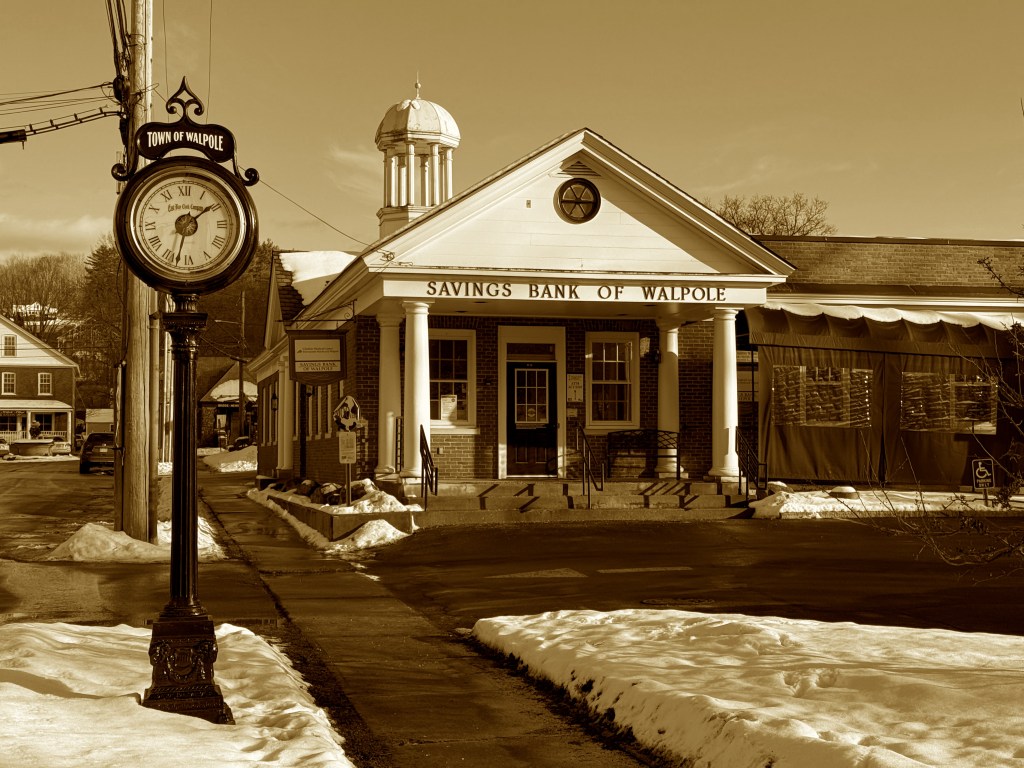
By the mid-twentieth-century the building had fallen into disrepair. In 1962, the house was razed when the property was taken over by the Savings Bank of Walpole, which built a new facility on the site. Later, the site was acquired by The Walpole Foundation, ensuring that the property would remain under local stewardship and serve community needs. The Savings Bank of Walpole maintains a branch here, and a majority of the office space is now home to the Dartmouth-Hitchcock Clinic, which has been providing medical services to the community since 1982.
While the original inn no longer stands, its memory and the significant contributions of both the Mitchell and Amory families to Walpole’s built and civic environment remain central to understanding the village’s evolution.

