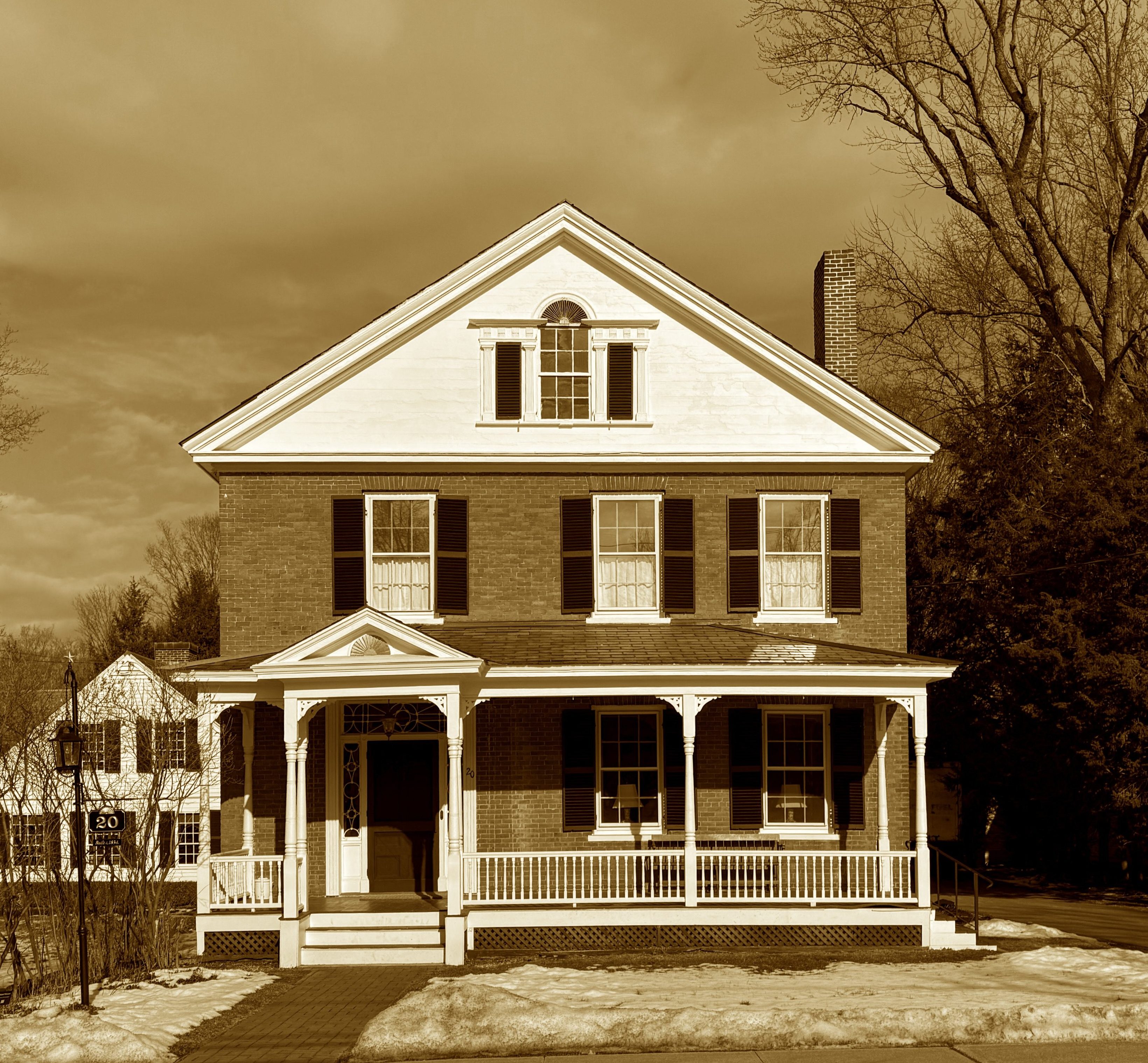
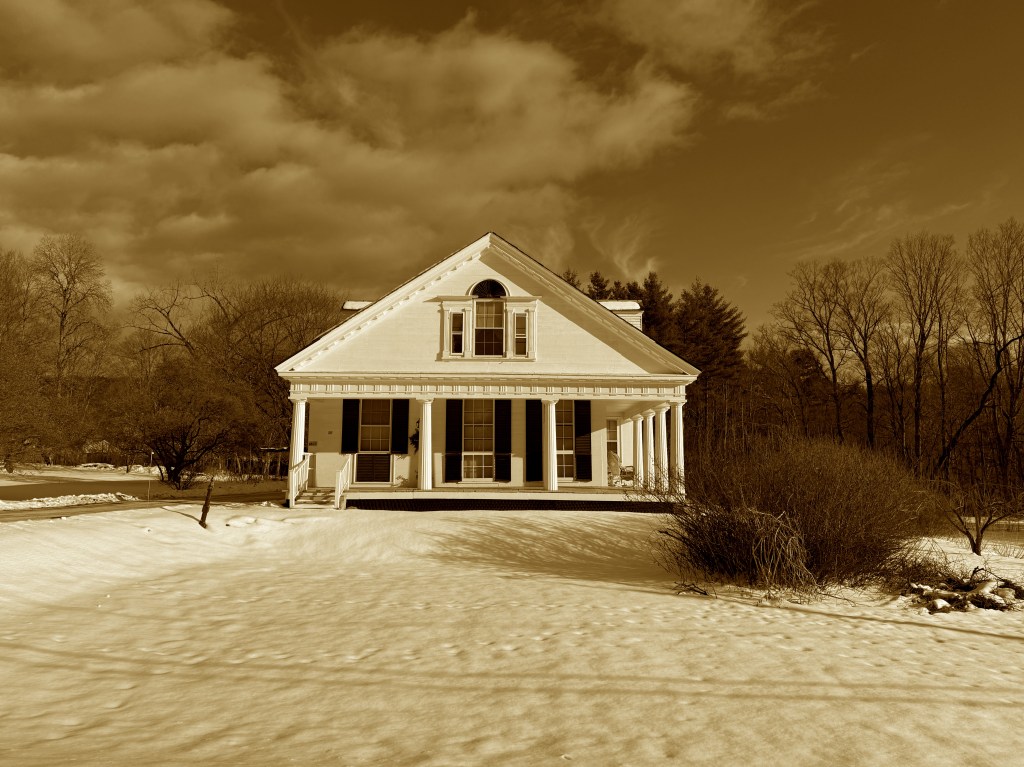
Set along Old North Main Street, the house long known as the Bates Cottage carries with it a meaningful strand of Walpole’s nineteenth-century story. According to The Bellows Genealogy, the cottage was built in 1832 for Mrs. Louisa Bellows Hayward (1792-1868), the widow of John White Hayward (1786-1832). Louisa was the daughter of Josiah Bellows and Rebekah Sparhawk, and a granddaughter of Col. Benjamin Bellows. For more on Josiah Bellows, see the description of the next site on this tour.
Recently widowed, Louisa returned to her hometown and constructed a modest dwelling near her father’s residence on a portion of the family farm. Here she lived with her children for several years before eventually moving to the farm of her son Waldo Flint Hayward (1831-1897) on Prospect Hill in Walpole. The house remained small in scale and domestic in character, but its long association with the Bellows and Hayward families, both central to Walpole’s early civic life, gives it a place in the town’s broader narrative.
Its better-known name, however, comes from a later chapter. The cottage became widely recognized as the “Bates Cottage” because it was rented for many years by Mary Georgiana Bates (1861–1936), a devoted Walpole resident whose civic contributions helped shape the town’s historical memory. Bates was a founding director of the Walpole Historical Society, and her long tenancy here cemented the house’s identity in the minds of local residents. Under her occupancy, the cottage became a familiar and well-loved part of the Old North Main Street streetscape.
The cottage exhibits massing and detailing that strongly suggest the hand of Aaron P. Howland, the master builder responsible for some of Walpole’s most significant early nineteenth-century structures, including the Walpole Academy. While simpler than his major civic works, the Bates Cottage shows the same sensitivity to proportion and restrained ornamentation that characterize Howland’s domestic buildings. This association enriches the house’s importance, placing it within the continuum of Howland’s work and highlighting the influence he had on the town’s architectural character during the 1830s.
The Bates Cottage stands as a modest but telling piece of Walpole’s history: a home built for a young widow seeking stability, later associated with one of the town’s foremost champions of local heritage, and likely shaped by the craftsmanship of Walpole’s preeminent builder. Its presence on Old North Main Street evokes both the personal stories and the architectural traditions that together form the fabric of the village.

