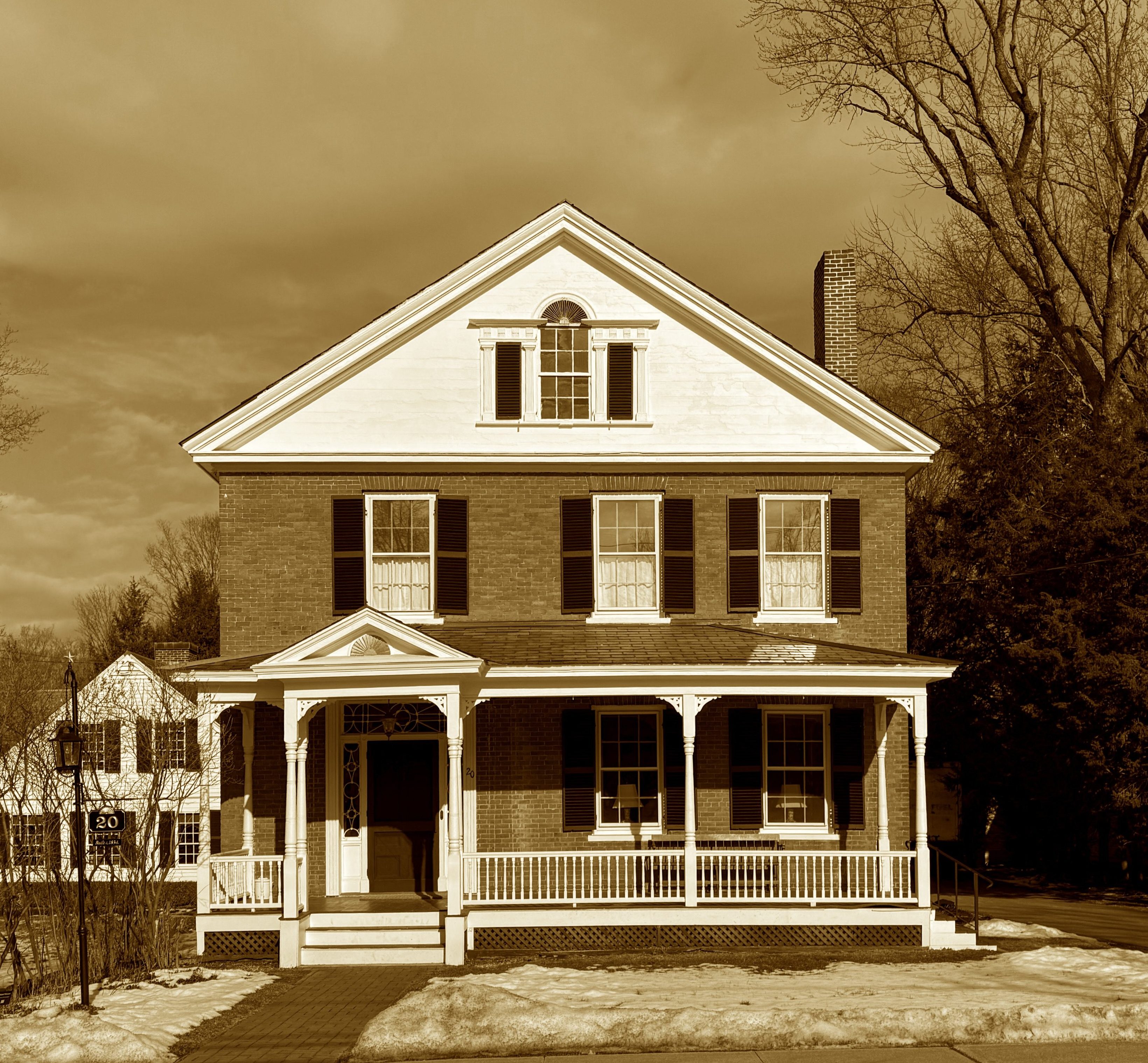
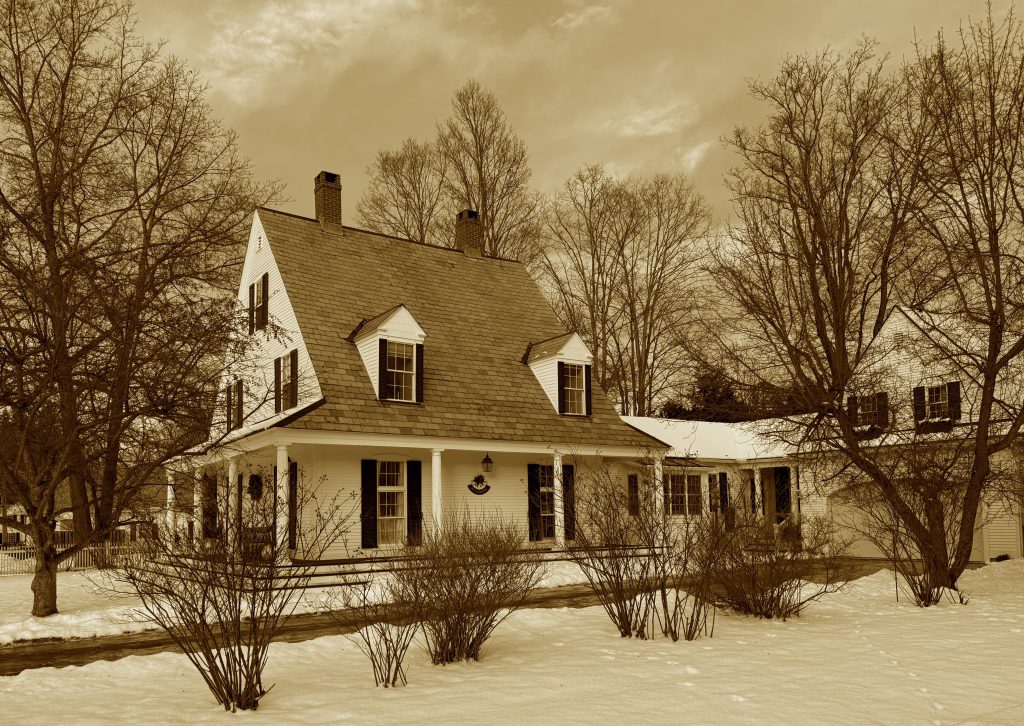
Its steep, front-facing gable gives the building its distinctive triangular profile, a form that became popular in the 1830s as Greek Revival ideas were adapted to traditional New England houses. The white clapboard exterior, dark shutters, and overall restraint reflect Walpole’s long-standing preference for dignified simplicity rather than display.
The façade is carefully balanced, with symmetrically placed windows and a broad, full-width porch supported by slender classical columns. That porch introduces a clear Greek Revival note, while twin interior chimneys rising behind the ridge recall the house’s original heating and room arrangement. Set back on its lawn and framed by mature trees, the house retains the character of a prosperous nineteenth-century village residence.
The house’s ownership history is equally revealing. It was likely built for John Williams of Cambridgeport, Massachusetts, who purchased the land in 1839 and appears to have invested in a substantial, up-to-date home in Walpole. By the mid-nineteenth century, however, the house was occupied by three women: Eliza and Sophia Williams and Margaret Harrington. The fact that the house was occupied by three single women was not uncommon, but is often overlooked in village histories. Eliza later left the property to Margaret, who married Dr. George A. Blake in 1856.
Over time, the property passed through a succession of mostly absentee or non-local owners, including residents of Maine, New York and Rhode Island, reflecting Walpole’s gradual transition from a self-contained village to a town connected to wider regional networks. Despite these changes in ownership, the house has retained its essential 1840s character.

