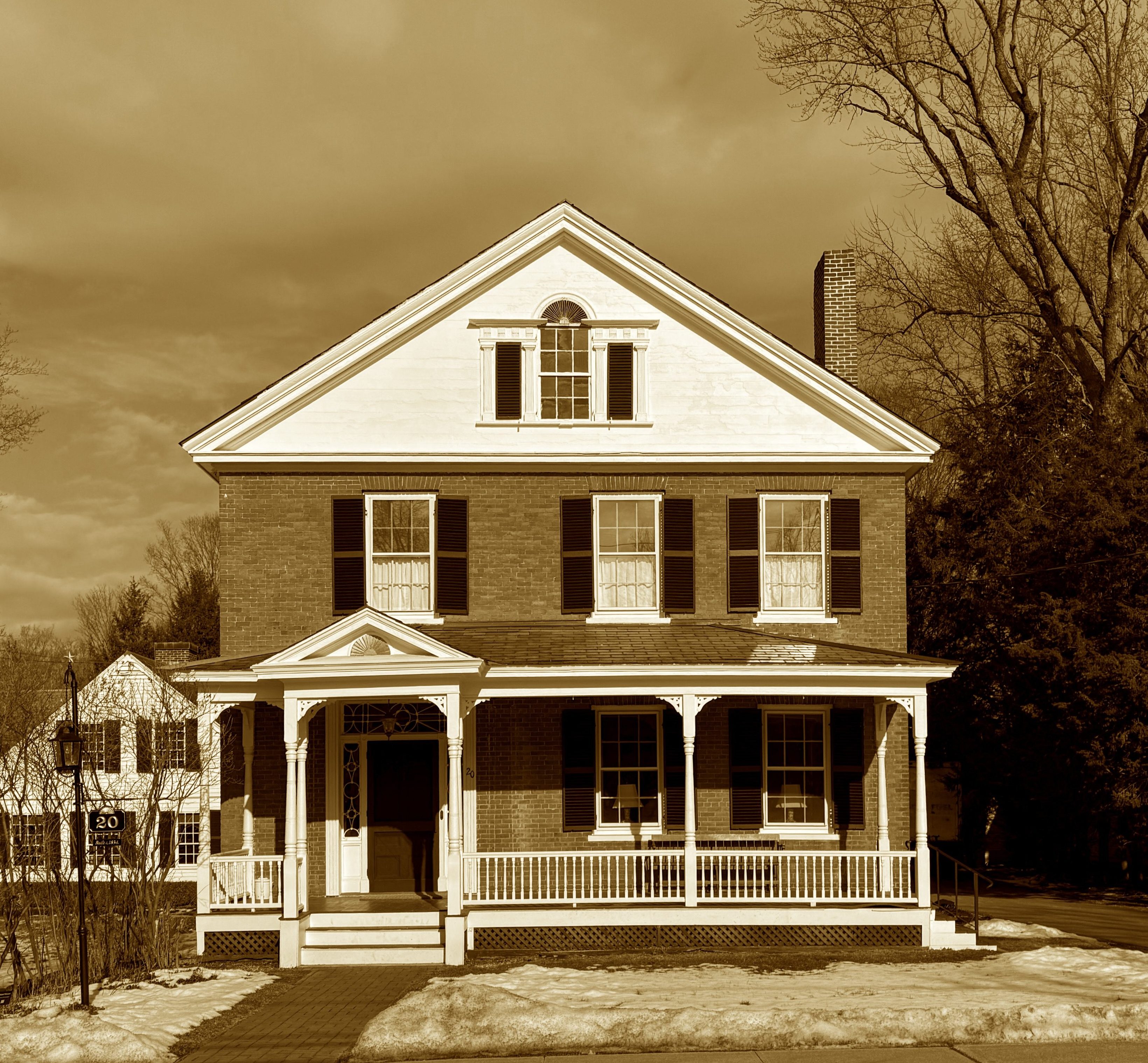

Col. Benjamin Bellows was the central figure in the founding and early development of Walpole, New Hampshire. Born in Lancaster, Massachusetts, in 1712, he began his career as a surveyor and became well known on the colonial frontier for his skill in land assessment and his relations with Indigenous communities. His surveying work for the colonial government brought him into the upper Connecticut River Valley, where he recognized the agricultural promise of the region’s fertile intervale lands.
In 1736, Bellows received the original grant for what was then known as “Number 3,” the third in a chain of strategically placed settlements intended to secure the Massachusetts frontier. He organized the first proprietors, oversaw early surveys and lot divisions, and led the initial group of settlers who established the community. As Walpole grew, Bellows emerged as its most influential figure: serving as militia colonel, magistrate and principal landholder. His leadership during periods of frontier conflict, when fortified houses and coordinated defense were essential, helped ensure the settlement’s survival.
Since Bellows’ original homestead stands on the outskirts of town, it lies too far from the village center to be included in this walking tour. If time allows, drive north to 297 Main Street. The house is visible from the road.
The property remained significant long after Bellows’ death in 1777. In the late nineteenth and early twentieth centuries it entered a new phase when it became the residence of Copley Amory (1866-1960) of Boston, who owned the estate for thirty-five years (he also owned The Walpole Inn on Westminster Street). A member of a prominent Boston family, Amory invested heavily in the preservation, improvement and adornment of the historic homestead, ensuring that the house and grounds retained their stature as one of Walpole’s most distinguished properties. His stewardship represents an early example of the interest urban elites took in the preservation and enhancement of New England’s historic rural properties. In the year 1900, Amory acknowledged the legacy of the Bellows family by erecting a trough for watering horses bearing this inscription:
TRAVELLER REMEMBER
here lived Col. Benjamin Bellows, founder of Walpole, from 1750 until his death in 1777. His son, Honorable Thomas Bellows, a distinguished citizen who died 1848, his grandson, Reverend Thomas Bellows who died 1890, and that they owned and tilled this farm 138 years.
The trough still stands across from the house on Main Street. No longer servicing horses, it has been re-purposed as an ornamental planter.
Following the Amory era, the house evolved with changing community needs. It was operated for a time as The Stagecoach Inn, providing lodging and hospitality, and later served as a nursing home, a role that reflected mid-century adaptations of large historic houses for institutional use. Currently the property operates as The Bellows Walpole Inn, offering lodging, dining and an event venue. Its modern function continues a centuries-long tradition of the homestead serving as a prominent and welcoming presence in the life of the town.
By the time of his death, Bellows had laid the essential foundations for the enduring New England community we explore today. His descendants would continue to shape local and national history, but Col. Benjamin Bellows remains the energetic founder whose efforts transformed a remote frontier tract into a thriving village.

