Works Attributed to Aaron P. Howland
Walpole, New Hampshire, is renowned for its collection of Greek Revival buildings, many of which were constructed in the 1830s by the skilled local master builder Aaron P. Howland. Despite the architectural significance of these structures, no comprehensive architectural study has yet been conducted to analyze and document Walpole’s historic buildings in detail. The historic resources survey completed in the 1950s lacks a summary or comparative analysis that would provide a deeper understanding of the town’s architectural evolution.
Walpole boasts numerous exemplary examples of both Federal and Greek Revival styles, reflecting the architectural transitions and developments of the early nineteenth century. Some buildings display characteristics that bridge the Federal and Greek Revival styles, illustrating a period of stylistic transition. Others reveal evidence of multiple construction phases, combining elements from different architectural movements as the town developed.
Furthermore, Aaron P. Howland’s career and influence remain underexplored. As a prominent figure in Walpole’s architectural history, Howland’s work significantly shaped the town’s built environment. A detailed study of his contributions could shed light on his craftsmanship, design choices, and impact on Walpole’s historical and cultural landscape.
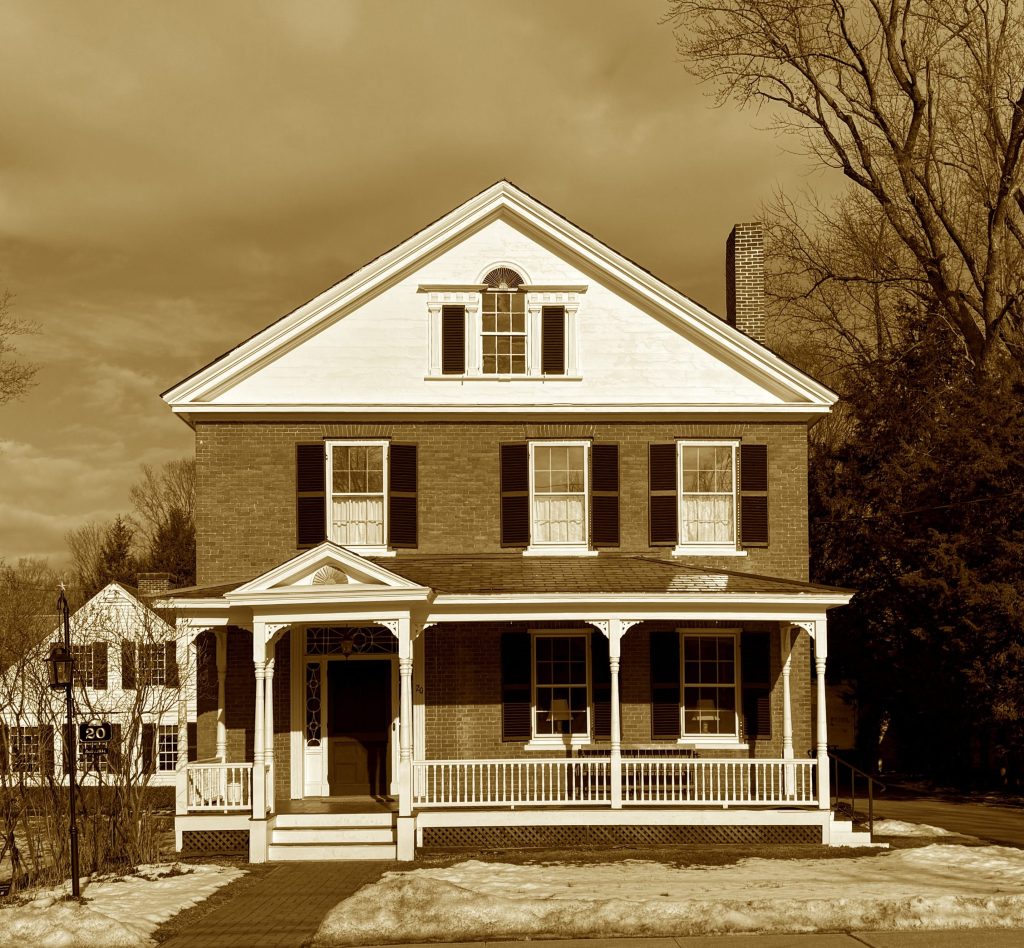
Aaron P. Howland House, c. 1834
20 Westminster Street
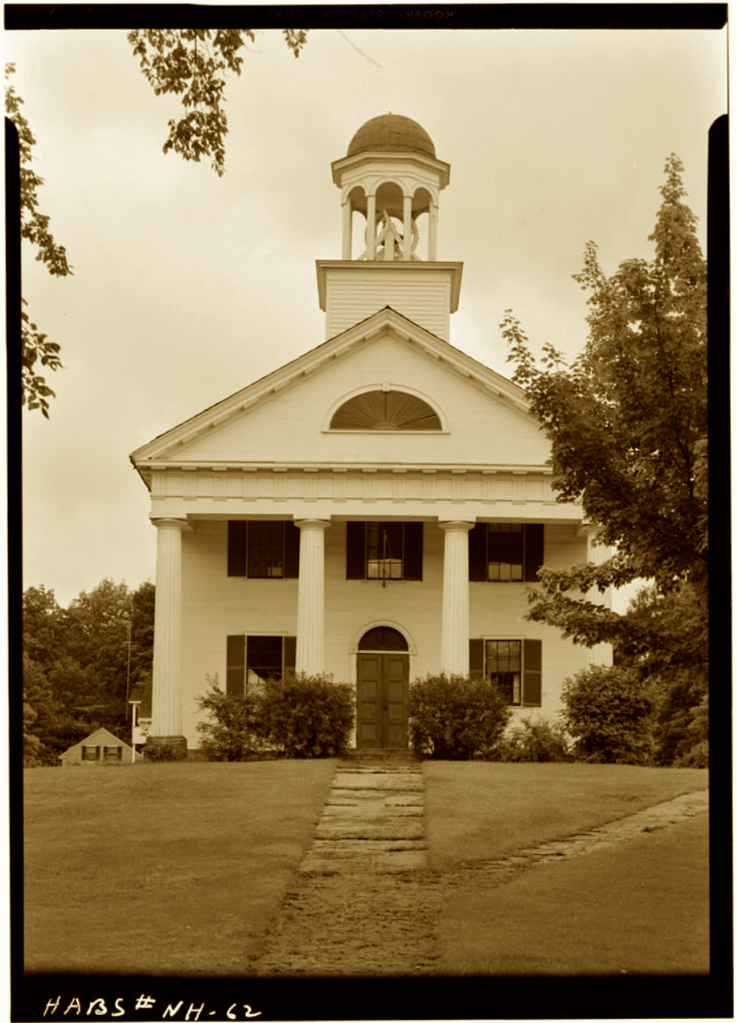
Walpole Academy, c. 1831
32 Main Street
The 1959 Historic American Buildings Survey (HABS) states categorically that the property is the work of Aaron P. Howland, while the 1975 National Register for Historic Places (NRHP) application states “In all likelihood it was designed and built by a local master builder of some competence, Aaron Prentiss Howland (1801-1867).” The NRHP application lists the following properties as likely works by Howland: Bates Cottage, Peck-Porter House and Buffum House.
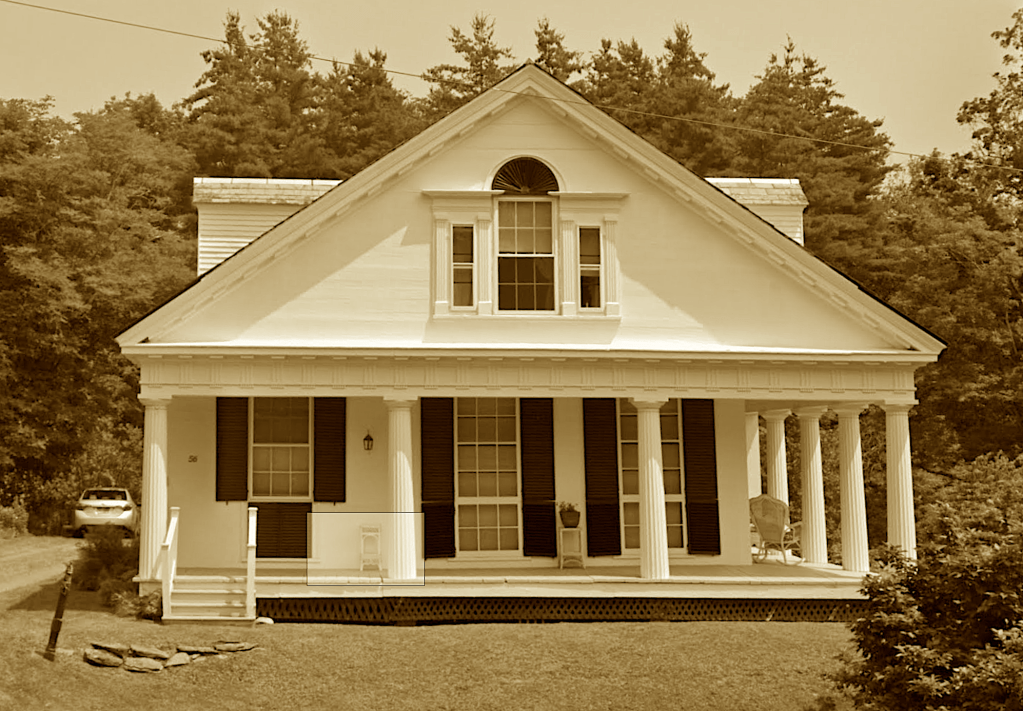
Bates Cottage, c. 1833
38 Old North Main Street
Martha M. Frizzell, citing a genealogy of the Bellows family in her History of Walpole, wrote that
“In 1832, after the death of her husband, Mrs. Louisa Bellows Hayward returned to Walpole to live and soon built a cottage near her father’s residence and on part of his farm. Here she lived with her children until her removal to her Prospect Hill farm. The house came to be known as the “Bates Cottage” because the house was rented by Mary Bates.”
Mary Georgiana Bates (1861-1936), a lifelong resident of Walpole, was a founding director of the Walpole Historical Society.
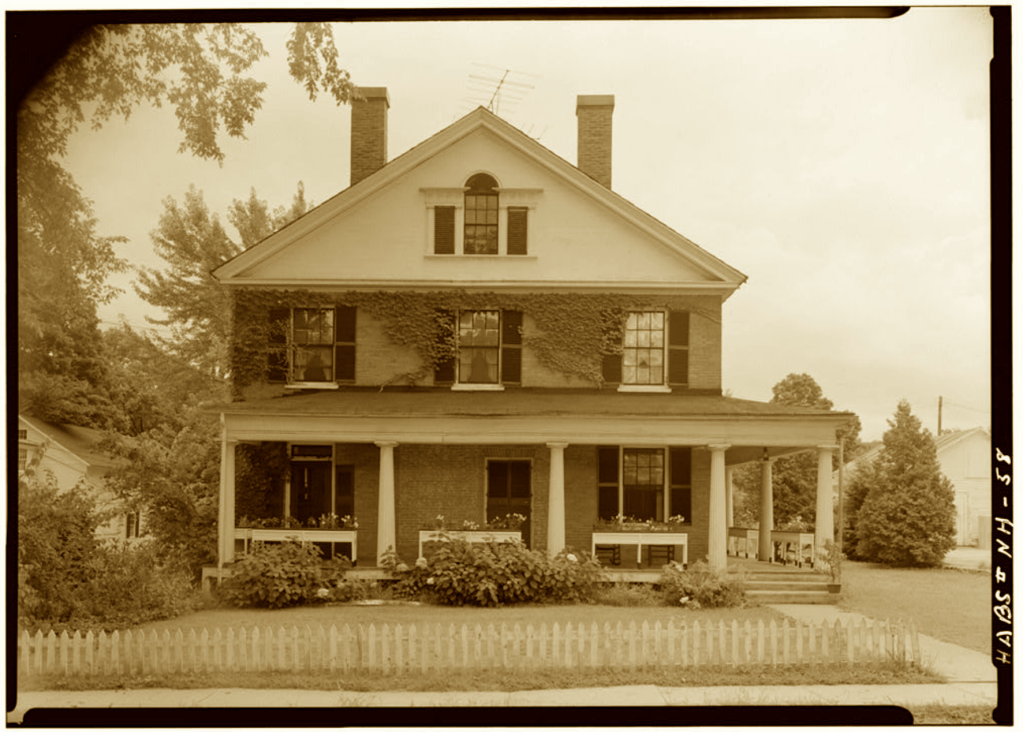
Griswold Place, c. 1834
16 Westminster Street
In 1959 identified as “The Rodney Wing House,” the HABS report recites that “this is possibly the work of Aaron Howland, who built the Howland House next door which has a similar Palladian window.”
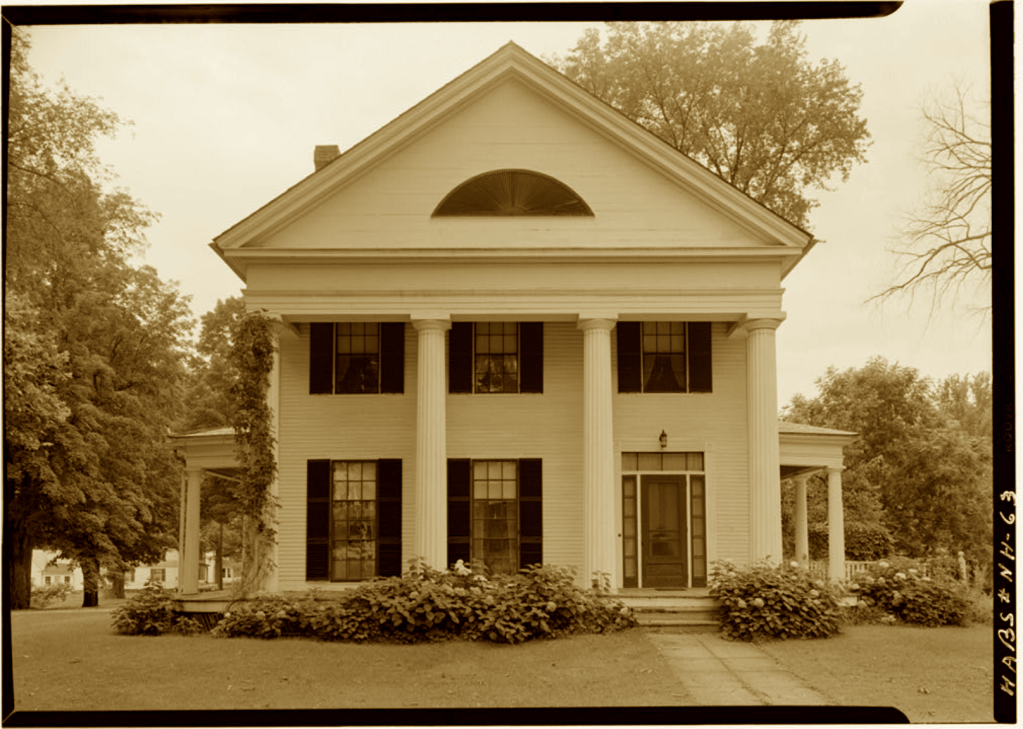
Philip Peck House, c. 1839
27 Main Street
This house is mentioned in the NRHP application for The Walpole Academy as a possible Howland work, but the NRHP application for the Peck-Porter House specifically states “The Academy is thought to have been constructed by master Builder Aaron P. Howland although no connection has [been] found linking Howland to the Peck House.” Nevertheless, the nearly identical pediment detail used in both the Walpole Academy and the Peck House and the construction of the Doric columns suggests Howland may have been involved in its construction.
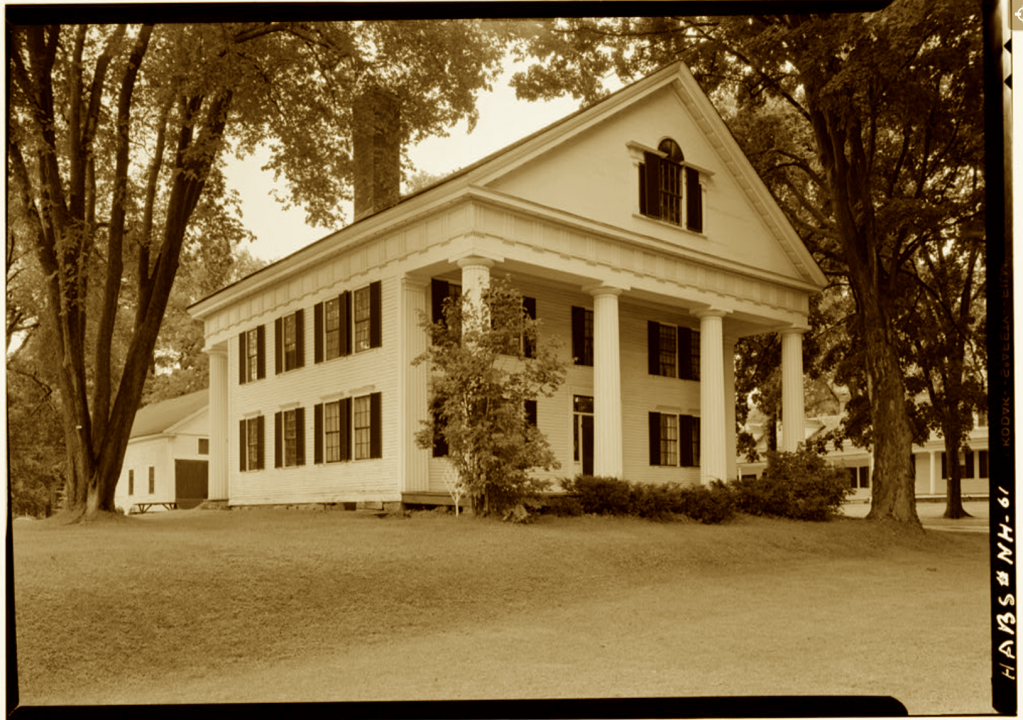
William Buffum House, c. 1785; addition c. 1830s
23 Main Street
The HABS makes no mention of Howland in connection with this property. The original house is believed to have been built c. 1785 in the Georgian style, with a Greek Revival addition made in the 1830s. While it is not known if Howland worked on this house, it does feature Howland’s typical Palladian window detail in the pediment, as seen in the Aaron Howland House, Griswold Place, and the Bates Cottage.
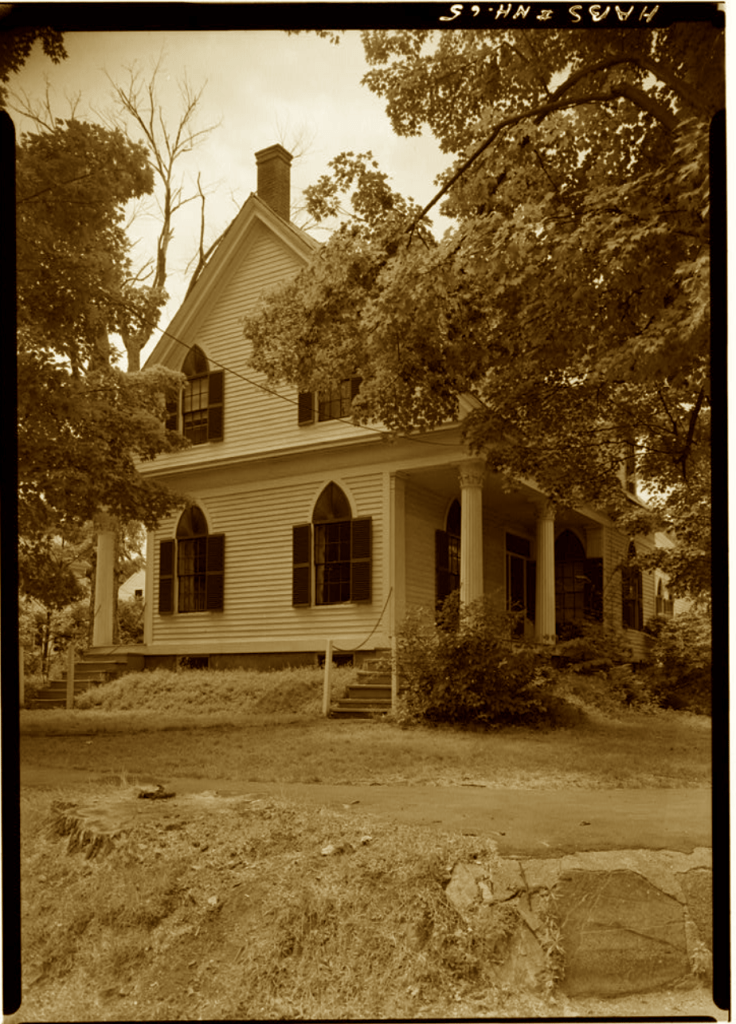
Howland-Schofield House, c. 1843
14 Elm Street
William Jennison sold this lot to Aaron P. Howland, who is believed to have built the house about 1843. Huldah B. Howland, Aaron P. Howland’s widow, sold in 1884 to George P. Porter. Later, the property was acquired in 1941 by Lucille Bragg. Martha M. Frizzell reports in her History of Walpole:
“When Mrs. Bragg took over the property it presented a sad sight with its run-down buildings, trees overturned by the hurricane, garden lands grown up to weeds.” Mrs. Bragg wrote:
“It was the superior and unusual construction of the house with its attractive Gothic windows and detail that tempted me to see just what I could make of it. The fact that the house was built by Aaron P. Howland for his own family undoubtedly accounted for its superior construction. The cellar walls are unusually thick and the cellar itself is divided into three separate rooms. The outside walls of the house are of brick covered over with wood, while the chimney at the back of the house has built into it on the second floor a complete outfit for smoking meat.”
 Aaron Howland House